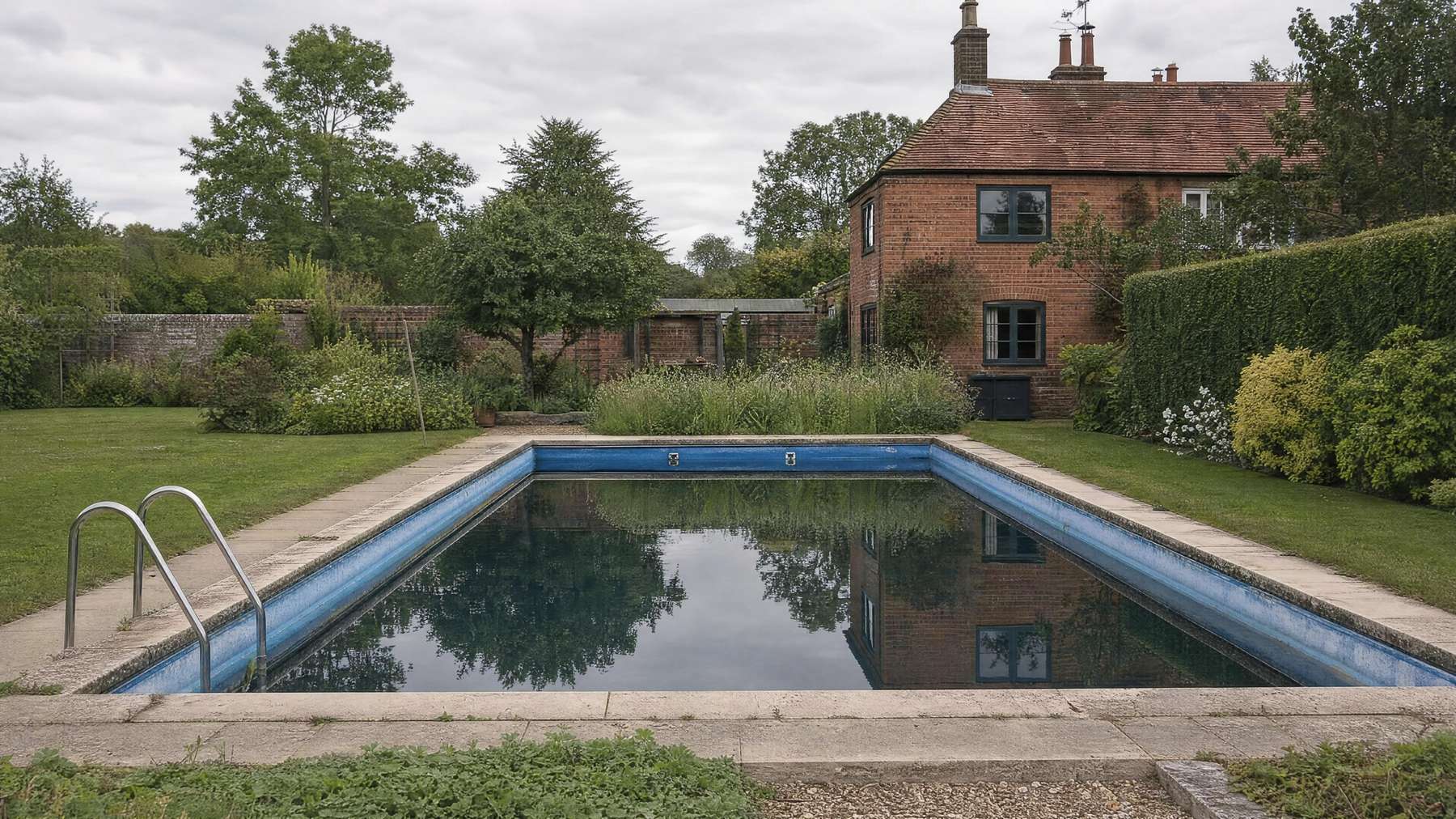
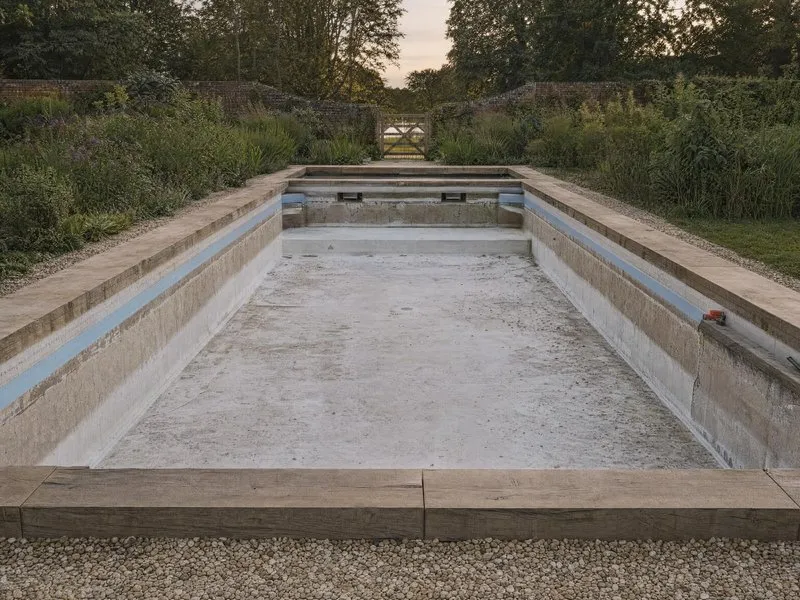
The excavation and the shell, in most cases. A sound concrete or blockwork pool that holds water is a good starting point. Often the plant room, the main pipe runs and the electrical supply can stay as well.
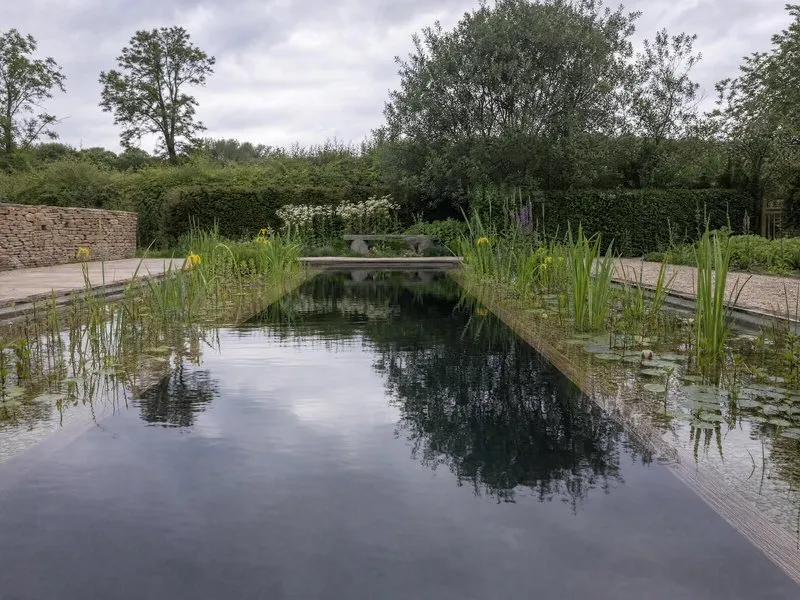
Chemical dosing goes, and so does the chlorinated water: the pool is refilled for its new life, with rainwater where the site allows, because mains water carries added phosphate that feeds algae. Filtration is replaced, the pool gains a planted regeneration zone, and the chemistry is rebalanced to suit plants and biology instead of chlorine.
This is the question that decides most conversions. Planting needs its own volume of water and its own surface area, and it cannot share that with swimmers. There are two ways to find the space. The site decides which one you get.
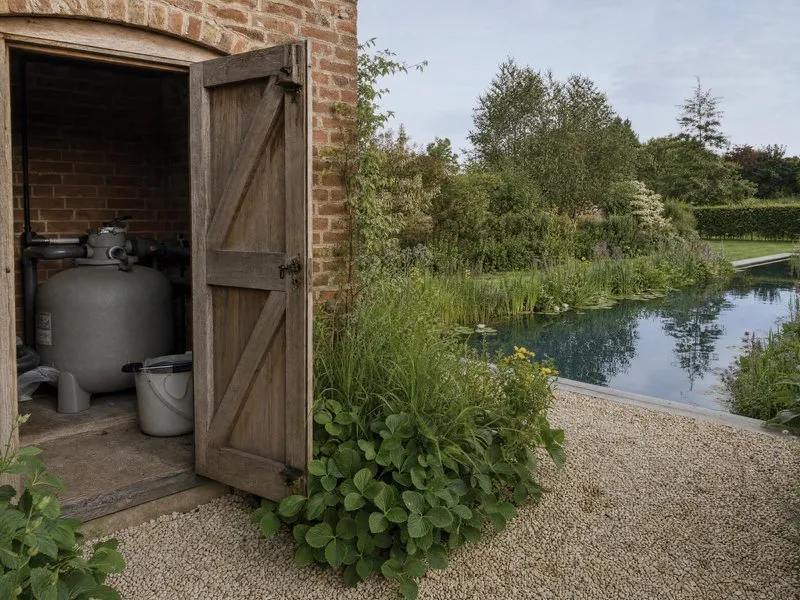
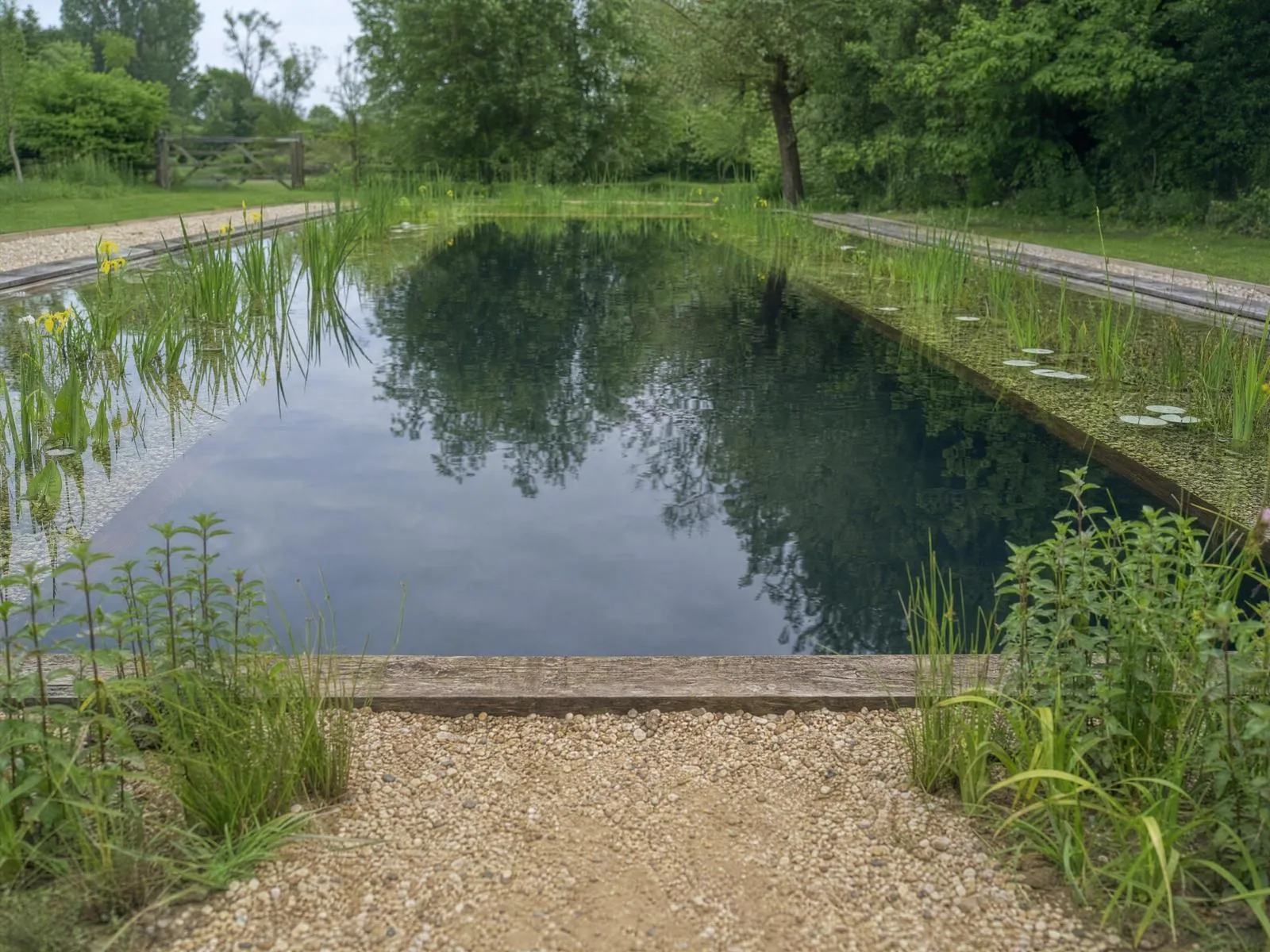
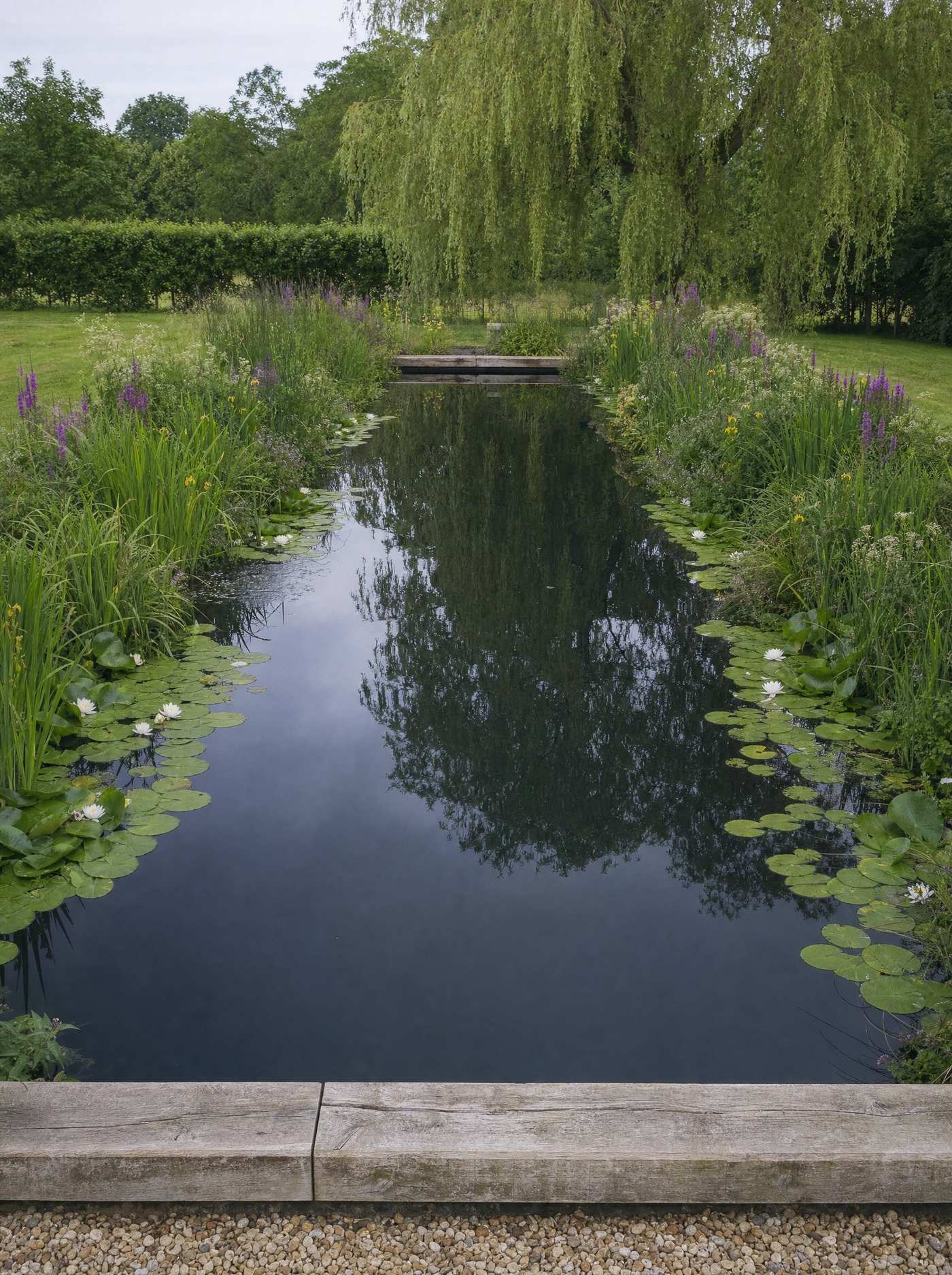
The usual answer. A planted zone is excavated alongside the existing pool and linked to it, so you keep the swim area you already have. It needs room next to the pool and levels that work with the existing shell.
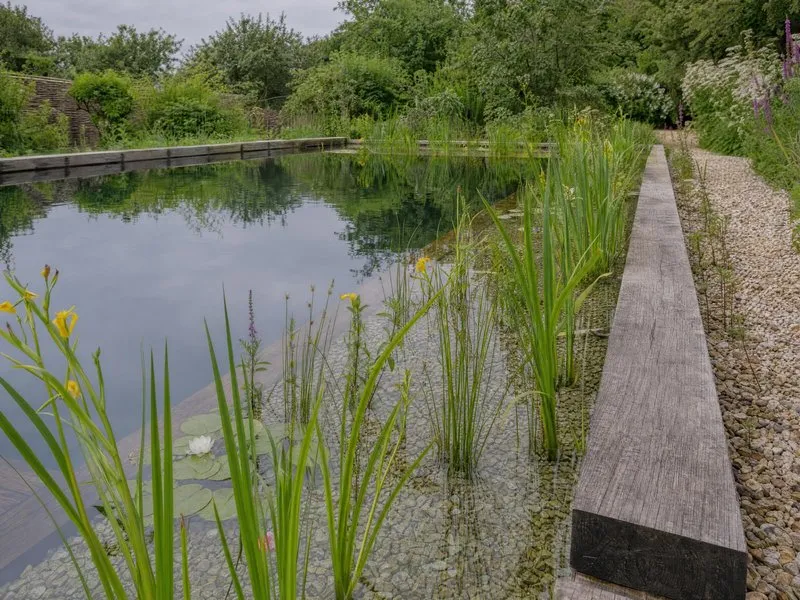
Where there is nowhere to extend, part of the existing pool becomes the regeneration zone, divided from the swim zone by a submerged oak beam. You swim in a shorter pool, in better water.
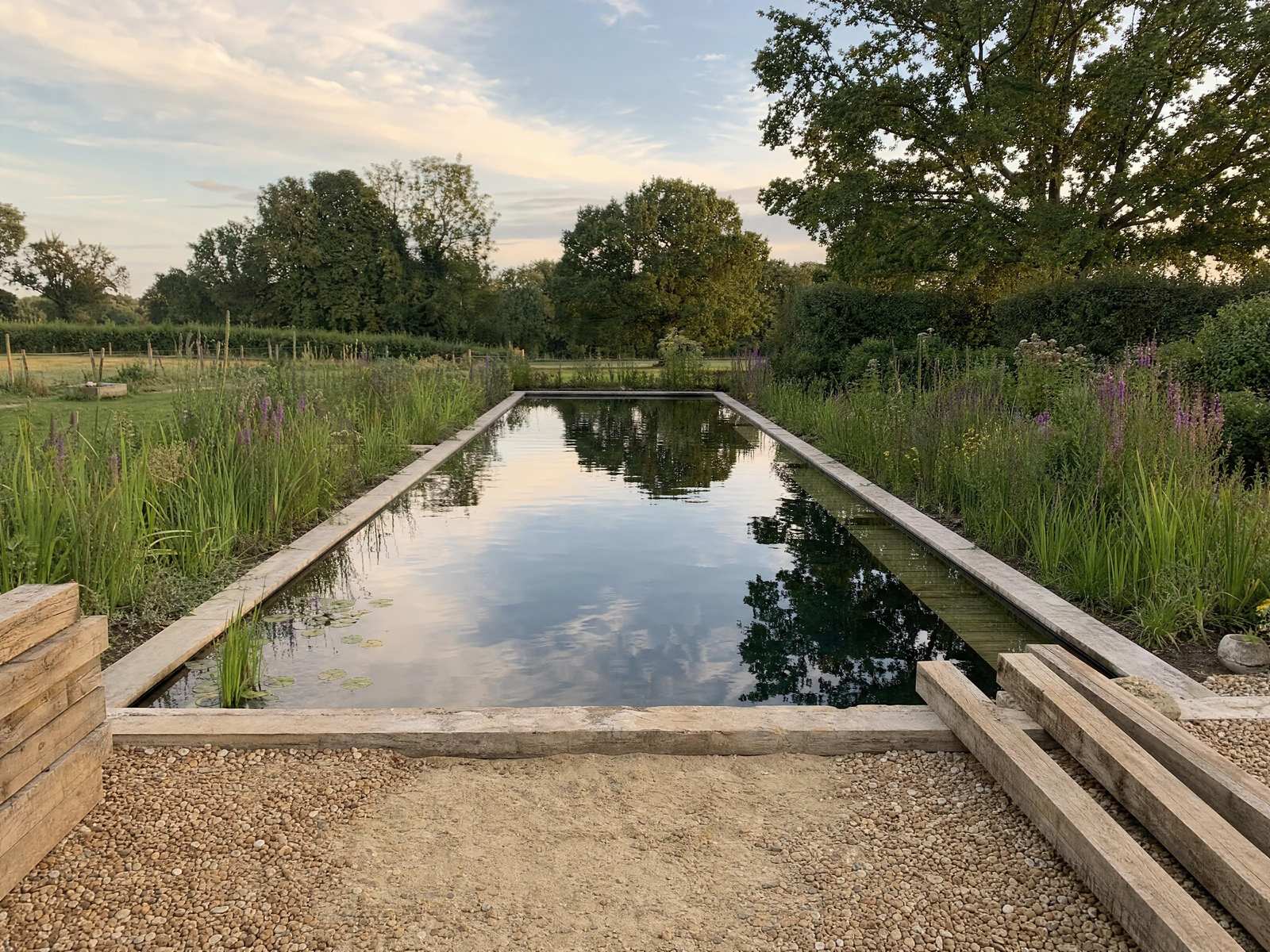
A conversion is less predictable than a new build, because we are working with someone else's construction. The survey comes first and it decides everything after it.

Survey and design, two to four weeks. We open up the plant room, check the shell for movement and leaks, and test the water and the ground.
Build, typically eight to sixteen weeks, depending on how much new excavation the regeneration zone needs.
Then one growing season for the planting to root, the microscopic life to build up and the water to settle. You can swim well before that; a faint early haze is the biology arriving, not a fault.
Existing equipment is assessed, not assumed. Some of it earns its place. A lot of it was sized and specified for chemically treated water and does not suit a planted system.
Sand filters, chlorinators and dosing lines come out. Pumps and pipe runs are reused where condition and flow rates allow.
Filtration is either our own engineered system or a proven industry-leading one, chosen for the pool in front of us rather than fixed in advance.
Conversion usually lands below the cost of an equivalent new build, but not always. A tired shell can cost more to make good than to replace.
Not every pool suits conversion. A shell that leaks, a plot with no room for planting, or a pool sited badly for light and leaf fall can all make a new build the better answer, and we will say so rather than sell you the work. For comparison, new builds start at £45,000 plus VAT for a swimming pond and £80,000 for a natural pool; our what it costs page sets out the rest. Only a site visit settles it. Arrange a free design consultation and we will give you a straight view.