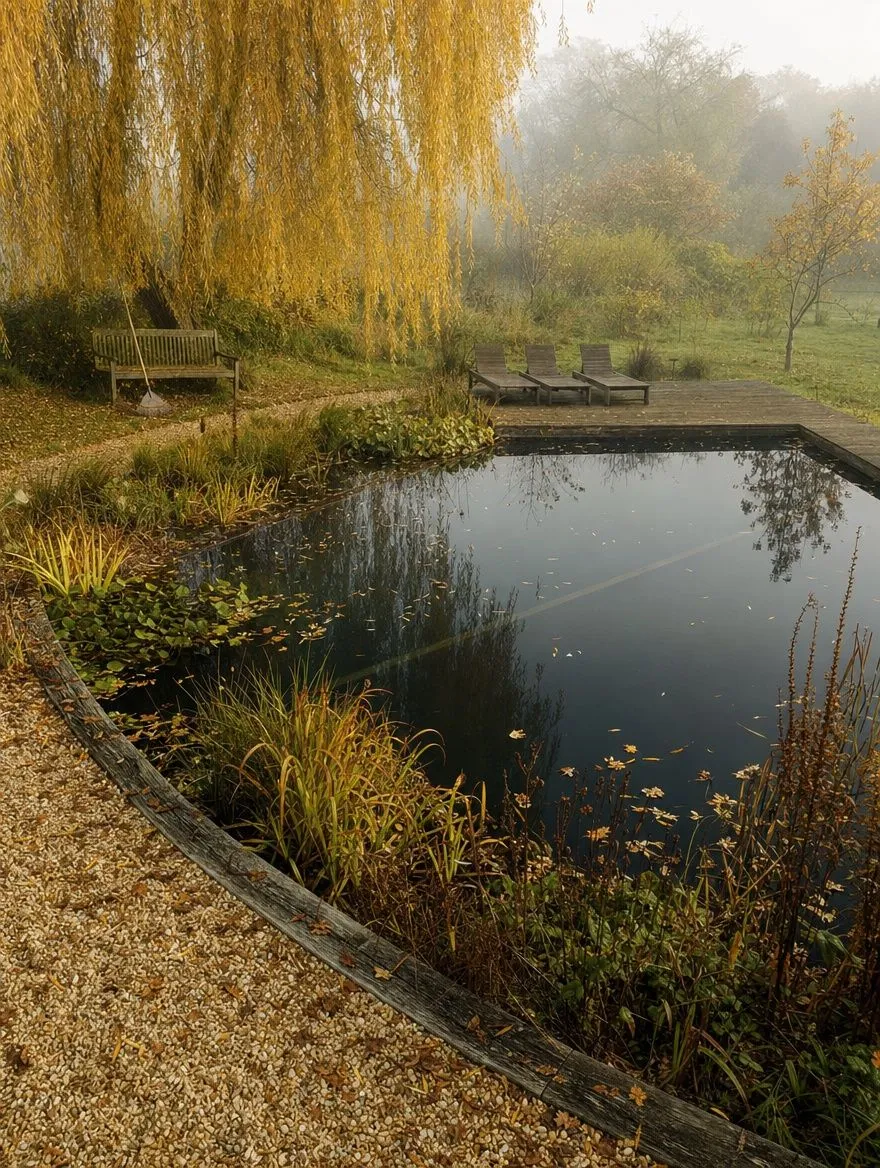
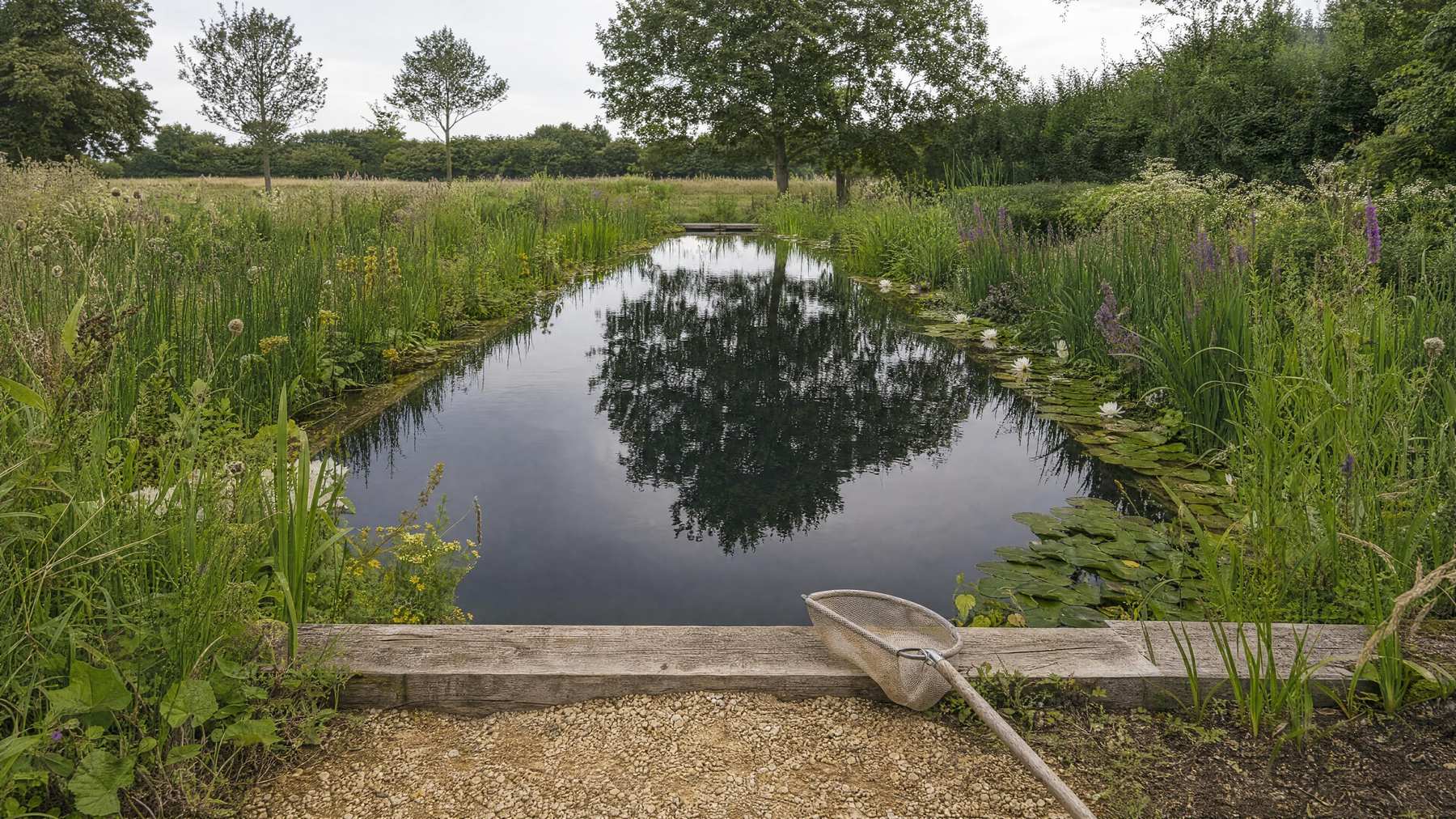
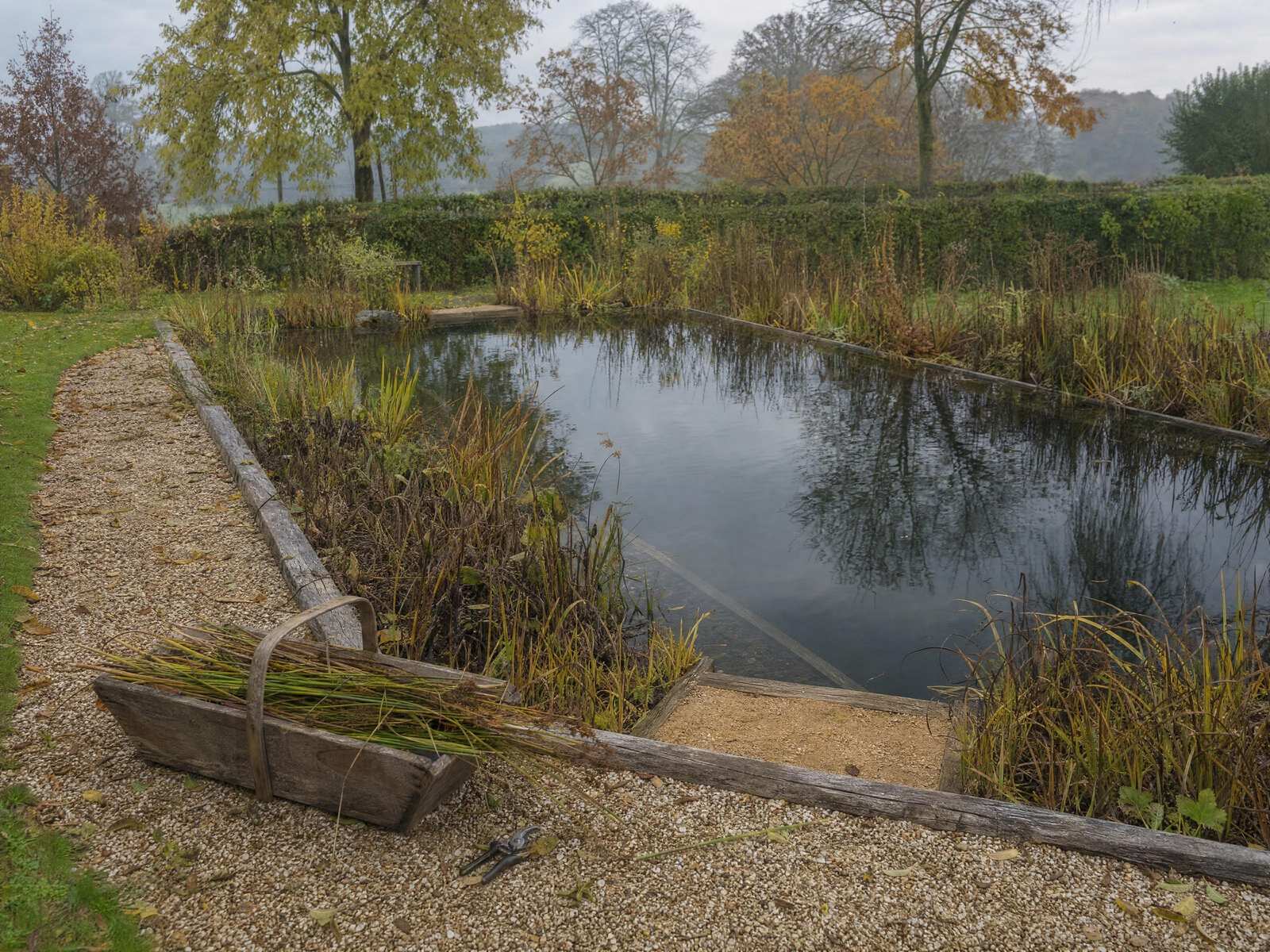
Skim the floating leaves off the surface. Empty the skimmer basket. Check the pump is running as it should. Top up with rainwater rather than mains where you can. That is most weeks, most of the year.
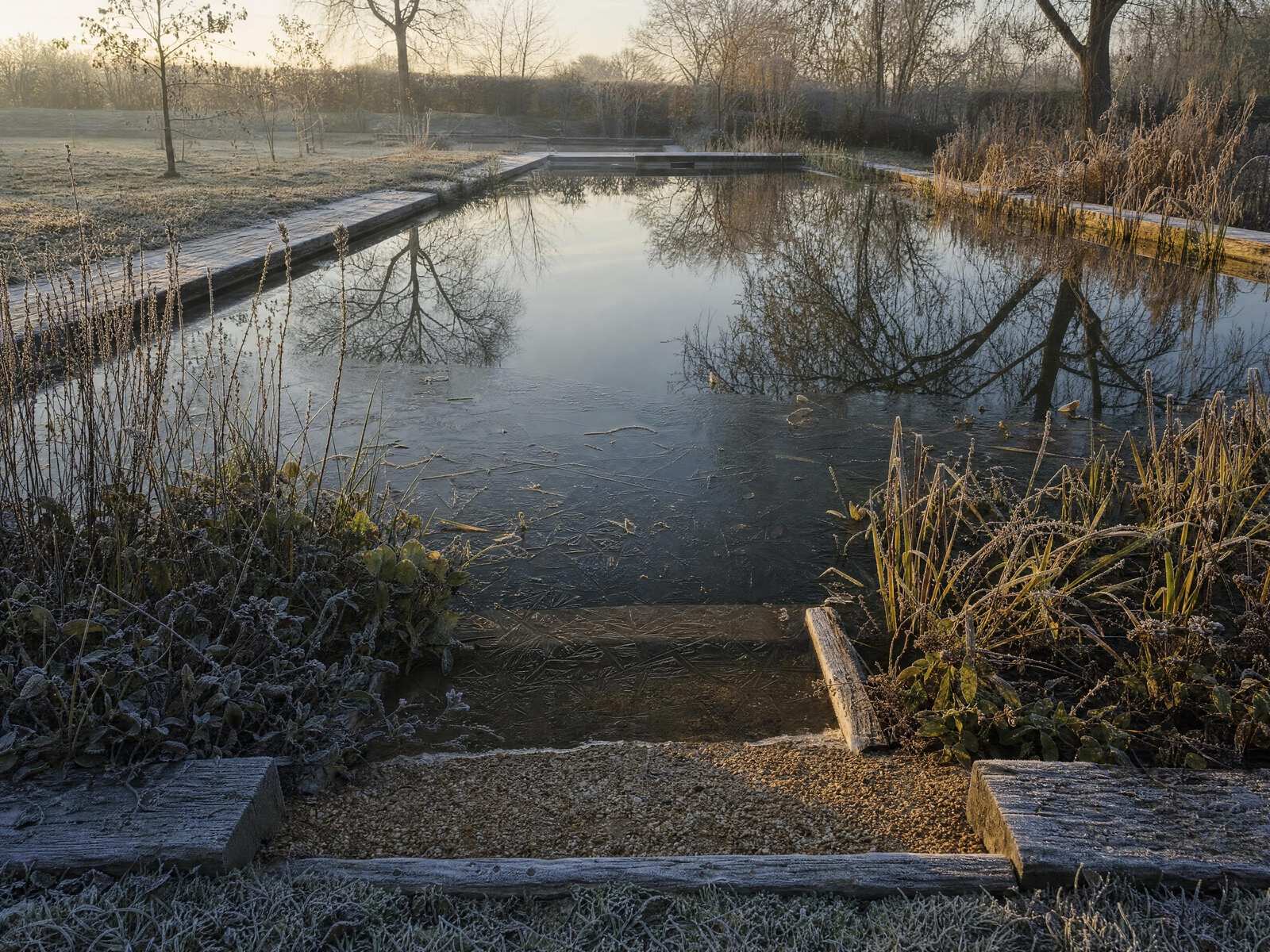
Cut the regeneration zone planting back once a year in autumn, once growth has died down, and take the material off site so its nutrients go with it. Left to rot in the water, those stems hand their phosphorus straight back to the algae. A morning's work on most pools.
A new pool is a new ecosystem and it takes a year to find its balance. Planting has to root, the biology has to establish, and the water gradually learns to look after itself. What you see in month three is not what you will have in year two. We tell owners this before they sign, not after.
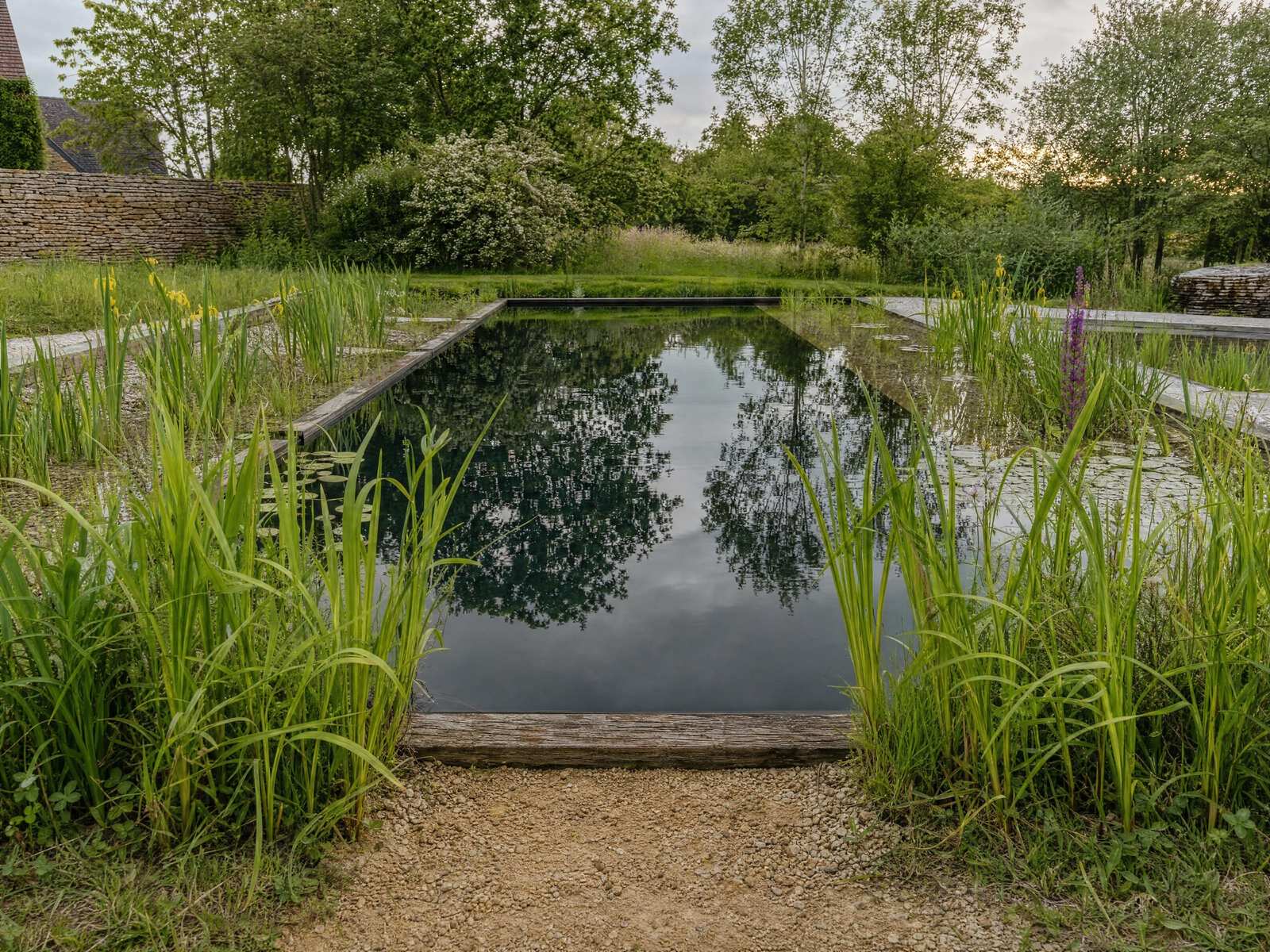
Common, and usually temporary. Young planting has not taken up the available nutrients yet, so algae get there first. It clears as the plants establish. It is not a fault, and it is not a reason to reach for chemicals.
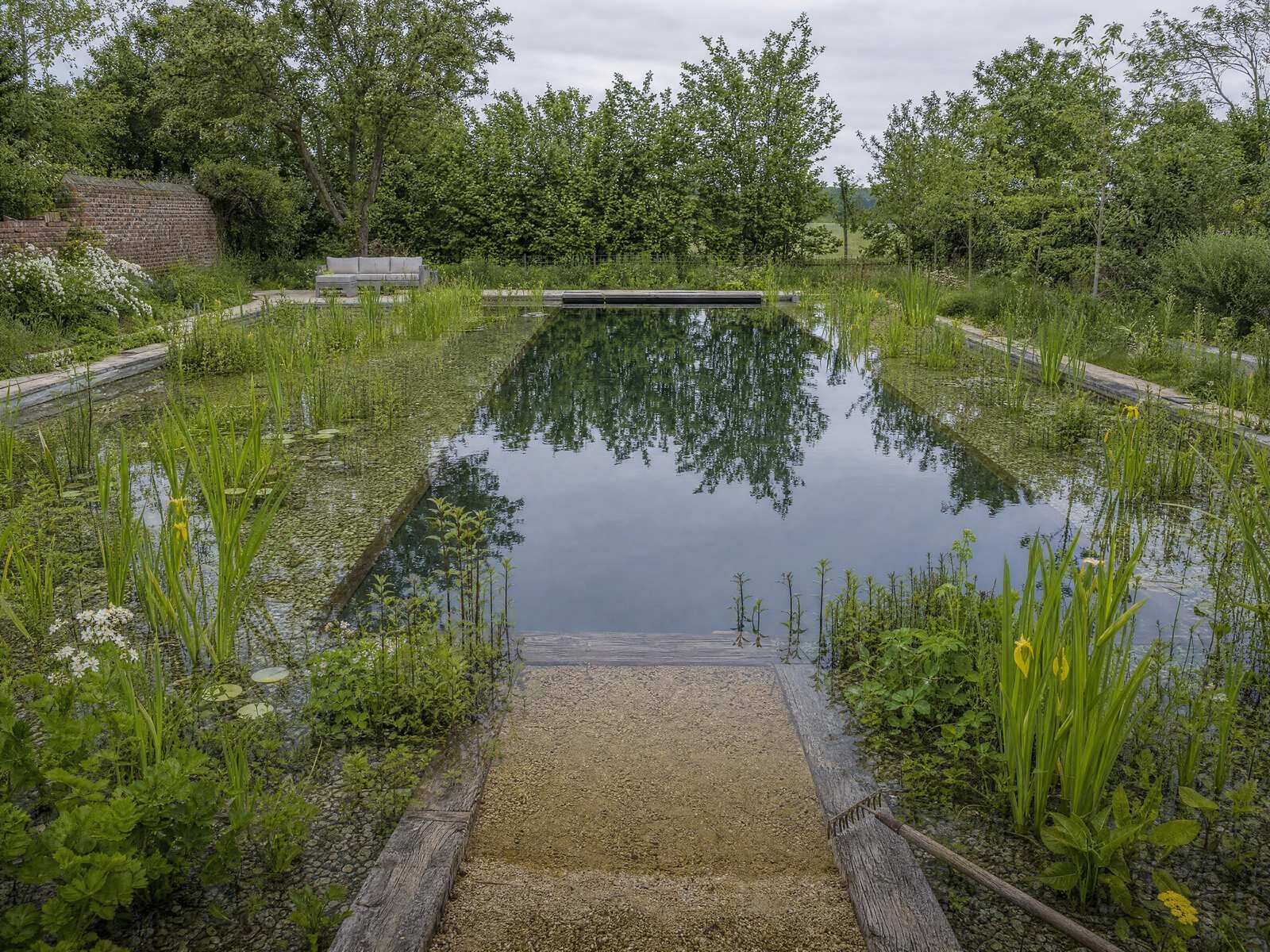
A settled pool runs clear, with a seasonal wobble in early spring and again after heavy leaf fall. Clarity comes from planting, circulation and keeping nutrients out. There is no dosing schedule behind it.
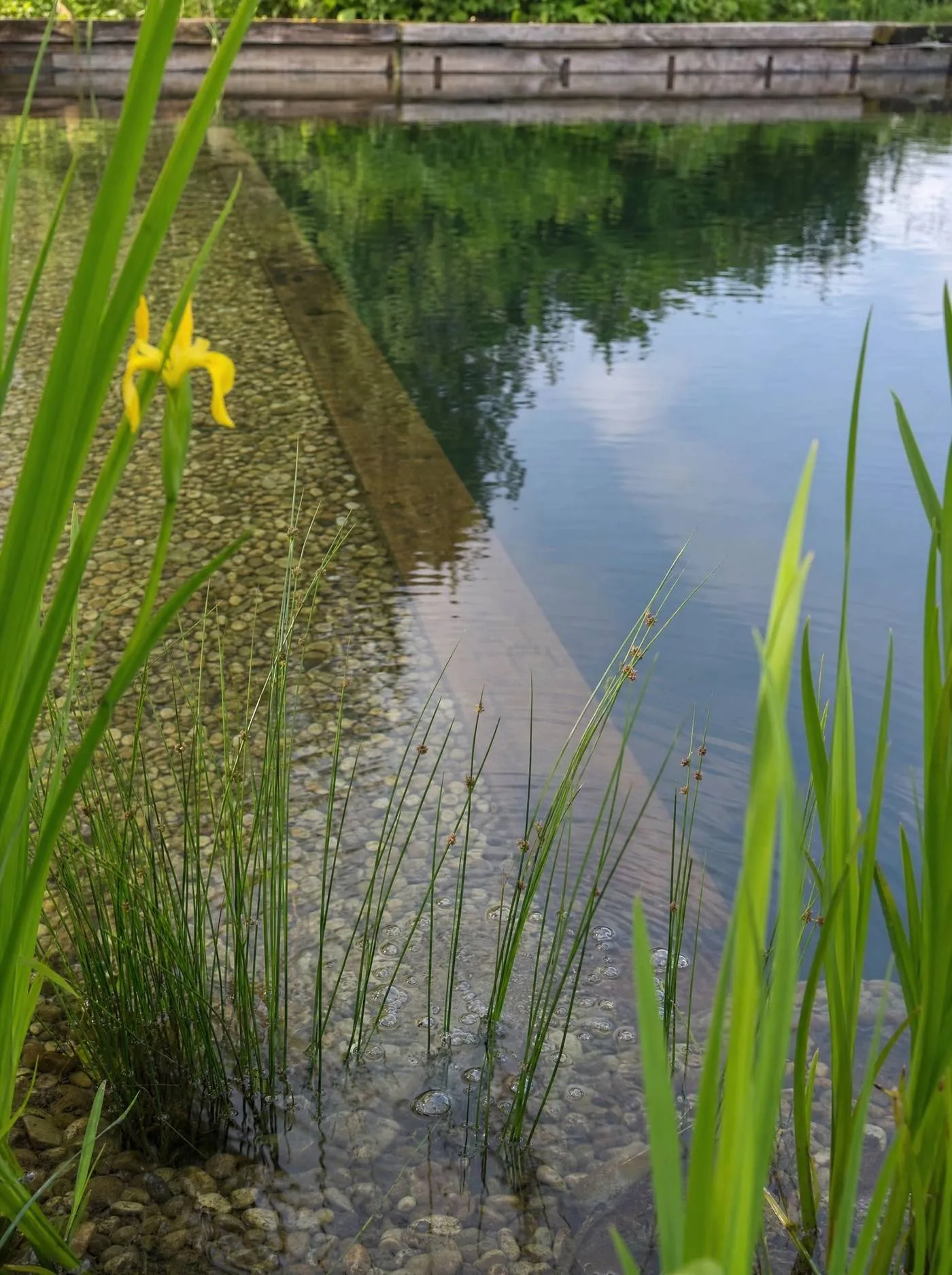
We maintain pools across Suffolk, Norfolk and Cambridgeshire on visit schedules that suit how the pool is used. Some owners want everything done. Most want the seasonal work covered and are happy to skim leaves themselves.

Seasonal planting work: thinning, dividing and the autumn cut back, with material taken away.
Pump, skimmer and filtration checked and serviced, with parts replaced before they fail rather than after.
Water tested, and a written note of what we found, what we changed and what to watch.
Winter is the quiet part. The pool stays full, the planting dies back and the biology slows with the temperature. Nothing needs draining. Nothing needs covering. Clear the leaves before they sink and the pool looks after itself until spring.
There is almost always a cause: leaf litter left to rot, run off from a fed lawn, mains-water top-ups adding phosphate, a blocked skimmer, or a pump that has quietly stopped.
We test, find it and correct it. Planting, circulation and nutrient load are the levers we use. Chemicals are not one of them.
We take on pools built by others, including ones that are not performing. A visit tells us whether it is a management problem or a design one.
Every pool we build is handed over with a first-year plan, so you know what to expect and roughly when. If you already have a natural pool that is not behaving, or you are weighing up how much work one really is before you commit, we are glad to look at it. The first design consultation is free and there is no obligation.
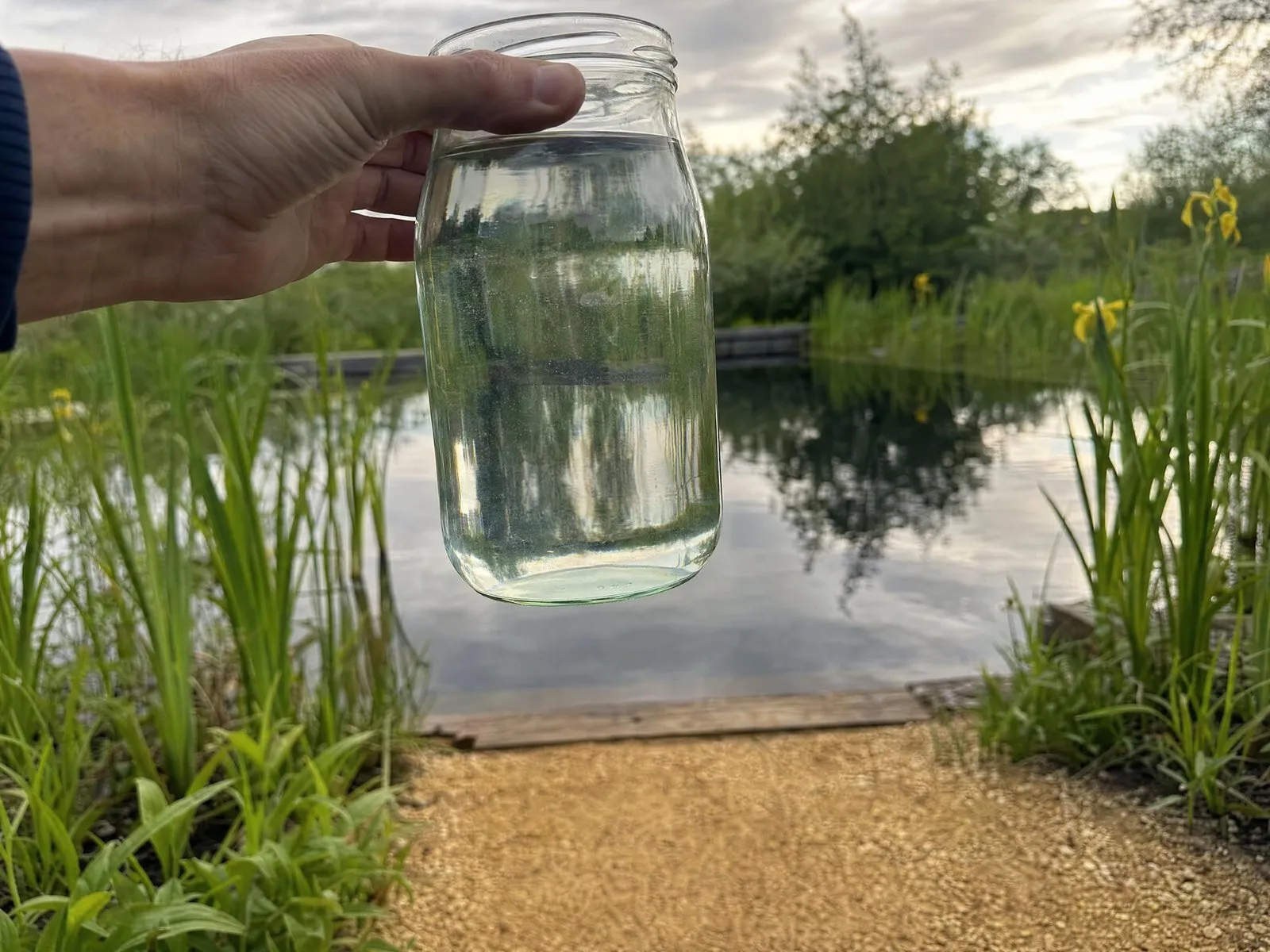
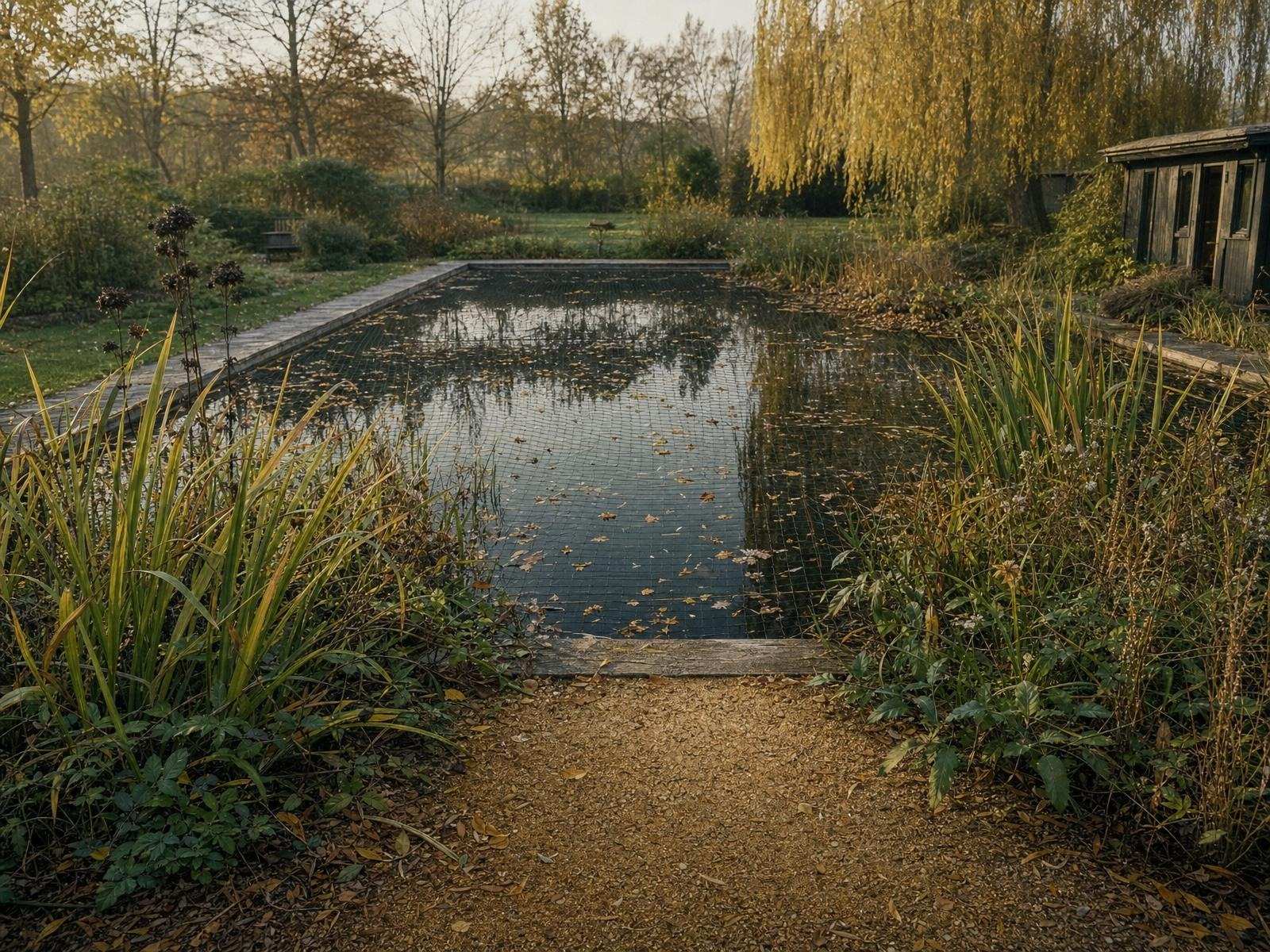
The rhythm is closer to gardening than pool ownership. The water is never drained, dosed or changed; the same body of water matures year on year, and the jobs simply follow the seasons.
Spring. The biology wakes before the planting does, so a brief green haze can appear and clear on its own. Check the pump and skimmer after winter.
Summer. Skim the surface, watch the water level and top up with rainwater where you can. This is the pool earning its keep.
Autumn. The one big job: cut the planting back and take it off site, and net the surface if trees stand nearby so leaves and their nutrients stay out.
Winter. Leave the pool full and let it sleep. Ice does no harm, there is nothing to winterise beyond the pump, and cold-water swimmers keep going.