On drained arable fen the groundwater is typically held only 600 to 800 mm below the surface, so almost any pool excavation goes below the water table. That means dewatering during the build and uplift pressure on the finished structure. Peat is not a liner: it is porous, fibrous and shrinks irreversibly. Fen sites get an engineered liner and, where we can, foundations taken down into the mineral ground beneath the peat.
Drained fen peat is still oxidising away at roughly one to two centimetres a year. Over the life of a pool that is a lot of relative movement between anything founded in the peat and anything founded below it. The Holme Fen post, driven in around 1850 and now standing some four metres proud, is the local measure of it. It matters most for level-critical details: coping, overflows and paving joints.
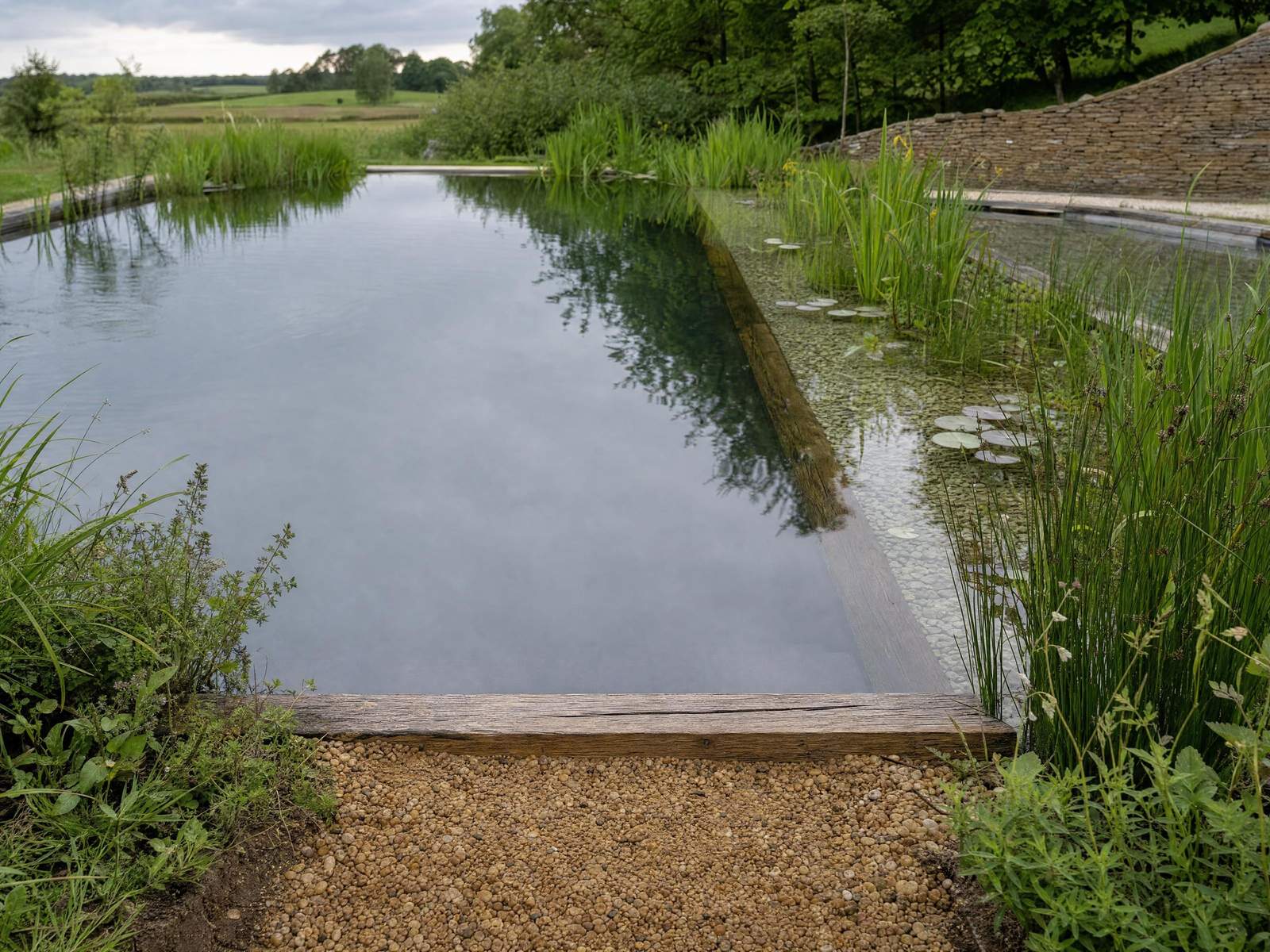
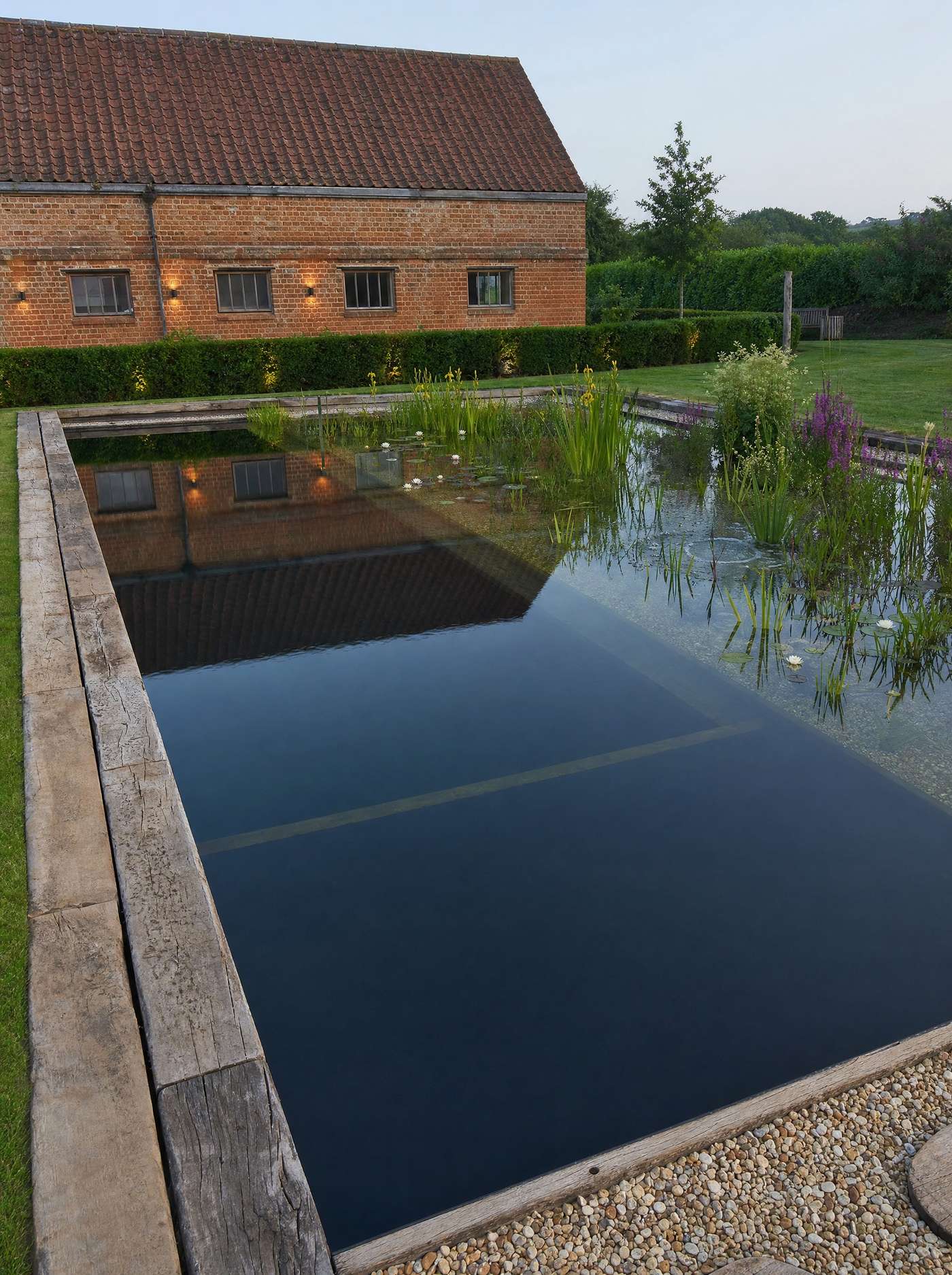
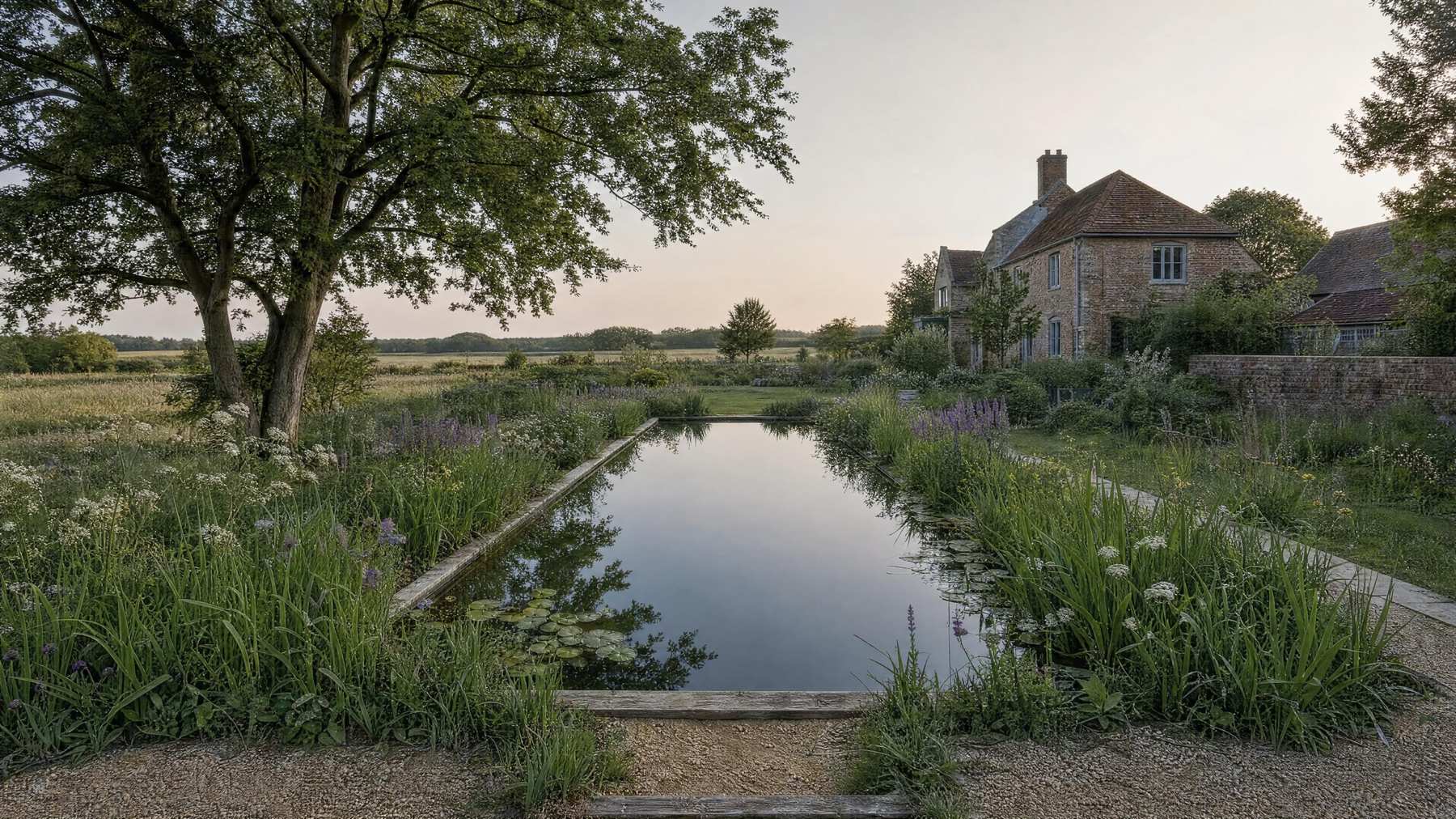
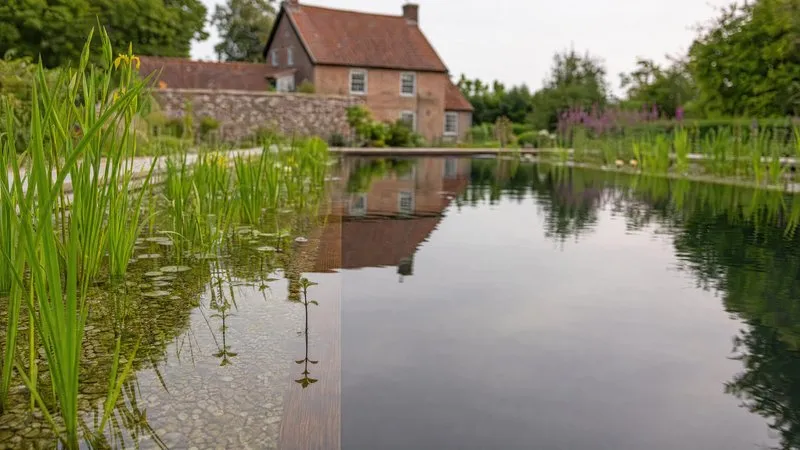
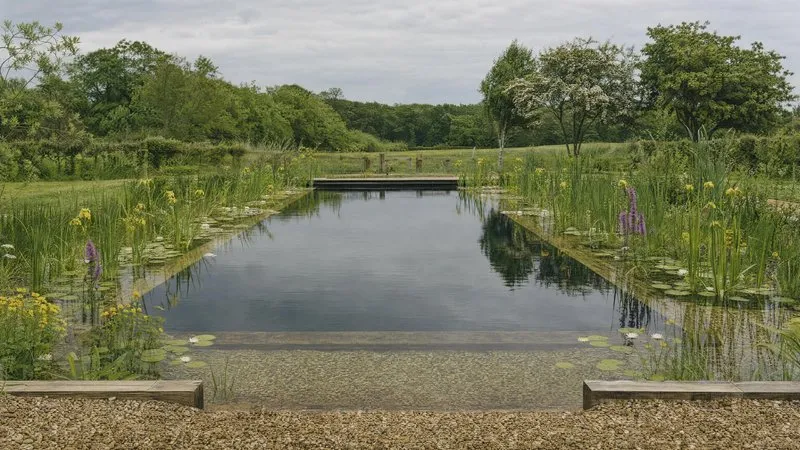
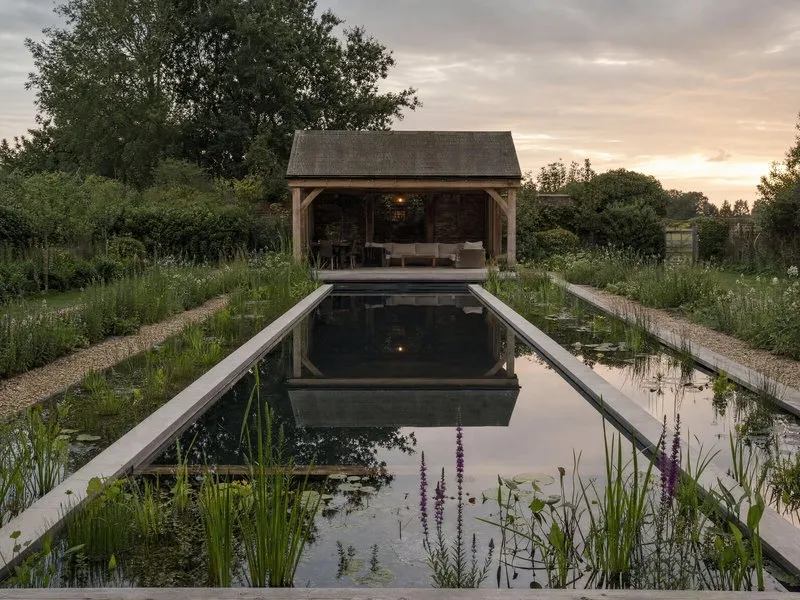
Trial pits first, always, and on fen sites a proper look at what the surrounding drainage is doing. Luke handles the water chemistry and the biology of the regeneration zone. Elliot, who founded Suffolk Garden Maintenance, handles the landscape and the finish. A submerged oak beam separates the swim zone from the planting. Plants and biology keep the water clear, not chlorine.
Much of the county sits inside an Internal Drainage Board district, run by boards such as the Middle Level Commissioners and the Ely Group. Inside a drainage district it is the board, not the county council, that consents work near a watercourse, and the consent has to be in place before you start. A site near both a board drain and a main river can need an Environment Agency permit as well.
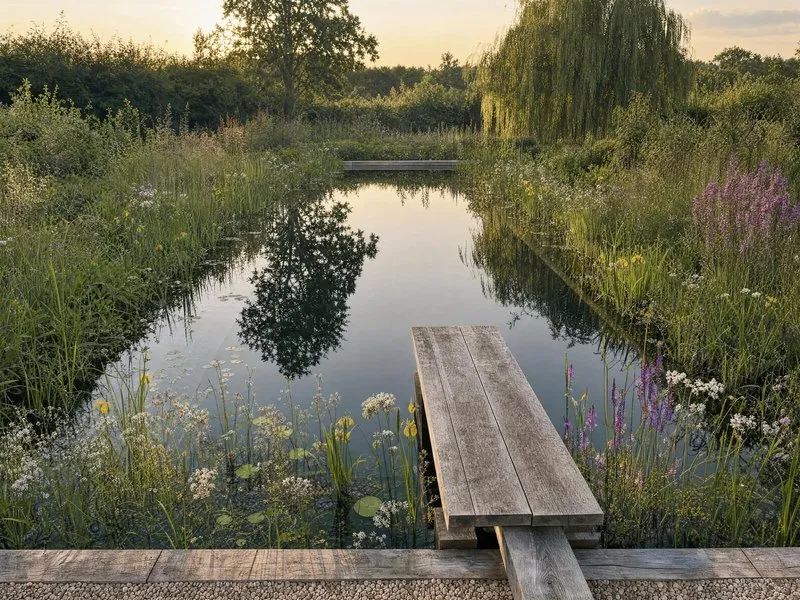
The Backs are a Grade I registered landscape and the local benchmark for what water does in a garden here: mown lawn run right to the edge, specimen trees, long framed views, nothing fussy at the margin. Capability Brown's wilderness planting at St John's, laid out in 1772, still survives. Out in the villages the register changes again, to clunch garden walls on the chalk, fen farmhouses on the old islands and roddons, Georgian fronts in Ely and Wisbech.
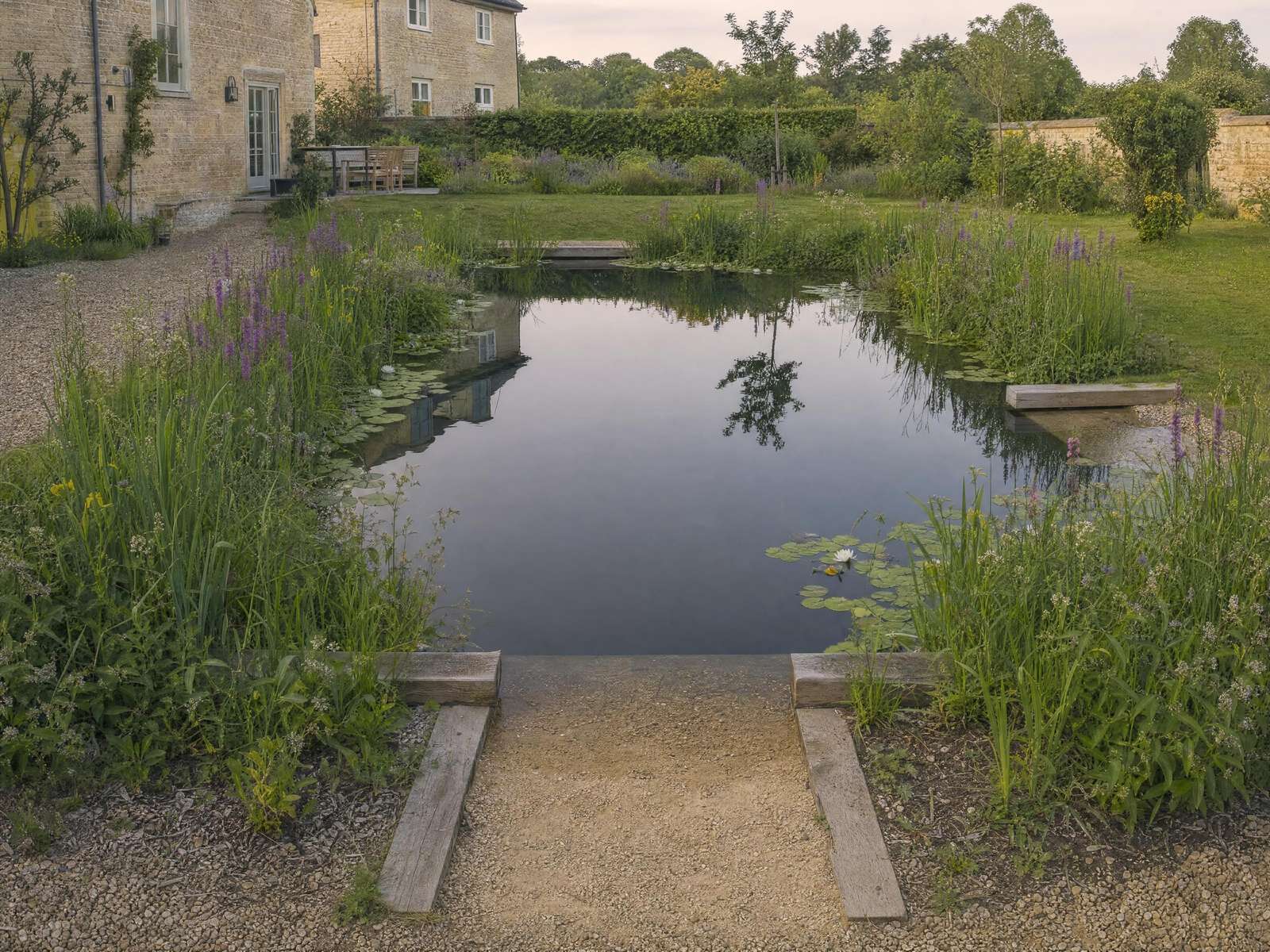
Cambridgeshire's ground splits sharply. Gault clay, along the fen edge and the base of the chalk escarpment, is the one material here that genuinely holds water on its own, although it shrinks and swells enough to trouble adjacent coping. Almost everything else asks for a liner. There is no National Landscape and no National Park anywhere in the county, so those designation constraints do not arise. Conservation areas, listed buildings and Article 4 directions still do, and Cambridge, Ely and Wisbech have plenty.

Fen peat and silt around Ely, Chatteris, March and Whittlesey. Low bearing capacity, unstable side slopes, and roddons: sand-filled fossil creeks standing proud of the wasted peat that run a permeable path straight through an excavation. They usually show as pale winding marks on aerial imagery, which makes them cheap to screen for early.

Chalk in the Gog Magog hills and along the East Anglian Heights. Fractured and permeable, so it will not hold water, and an open excavation into it is a direct route into a major aquifer.

Greensand around Gamlingay and river terrace gravels in the Ouse valley. Free-draining, easy digging, liner required. Boulder clay on the south-east Cambridgeshire plateau holds water better, but it carries sand lenses, so it still needs testing.
We come over from Bury St Edmunds, usually through Newmarket, which is in Suffolk despite being ringed by Cambridgeshire on three sides. Places we work:
East Cambridgeshire and the fen edge: Ely, Soham, Burwell, Littleport, Bottisham, Swaffham Bulbeck, Fordham.
Cambridge and the south: Cambridge, Fulbourn, Great Shelford, Sawston, Linton, Histon, Cottenham, Melbourn, Gamlingay.
Huntingdonshire and the north: St Ives, Huntingdon, Godmanchester, St Neots, Chatteris, March, Whittlesey, Wisbech.
Guide prices are ex VAT: swimming ponds from £45,000, natural pools and living pools from £80,000, wildlife ponds from £12,000. Design takes two to four weeks and the build eight to sixteen. On fen ground we will want trial pits before we quote. The first design consultation is free and there is no obligation.