The built-up area sits on White Chalk, with a band of Chalk Rock through the centre and patches of Croxton sand and gravel around Southgate, Hardwick Heath and the town centre. All of it drains. Nothing there holds water on its own, so in-town gardens are usually a lined build. The chalk is also a principal aquifer, which is worth raising with the Environment Agency before cutting into it.
Two or three miles south, east or west and you are on the Lowestoft Formation, the chalky boulder clay of the High Suffolk plateau. That is the ground around Nowton, Hawstead, Whepstead, Rougham and Great Barton, and it is why the plateau carries so many old farm ponds and moats. Heavy going to dig, and it still needs trial pits, because the same formation carries sand lenses.
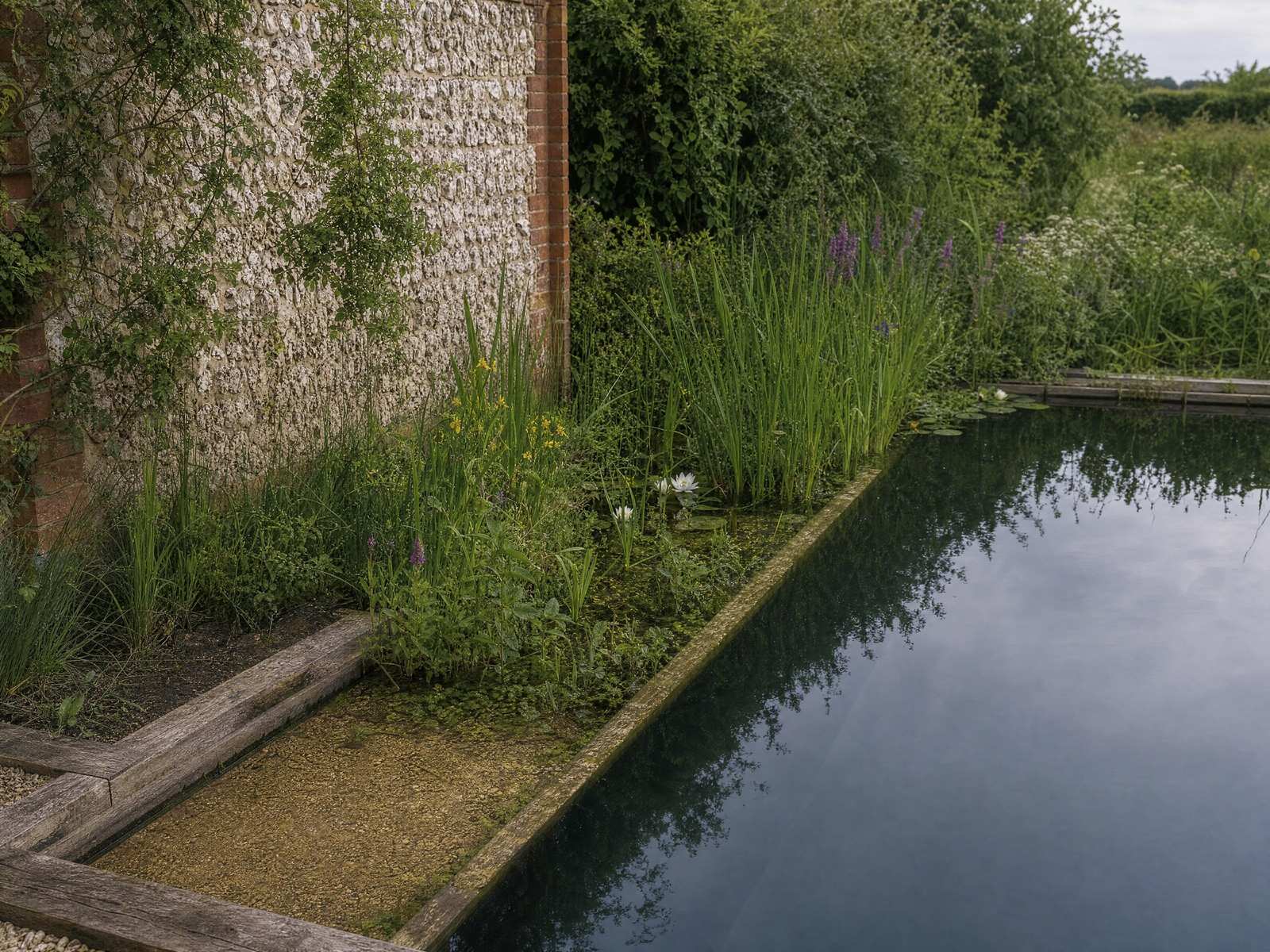
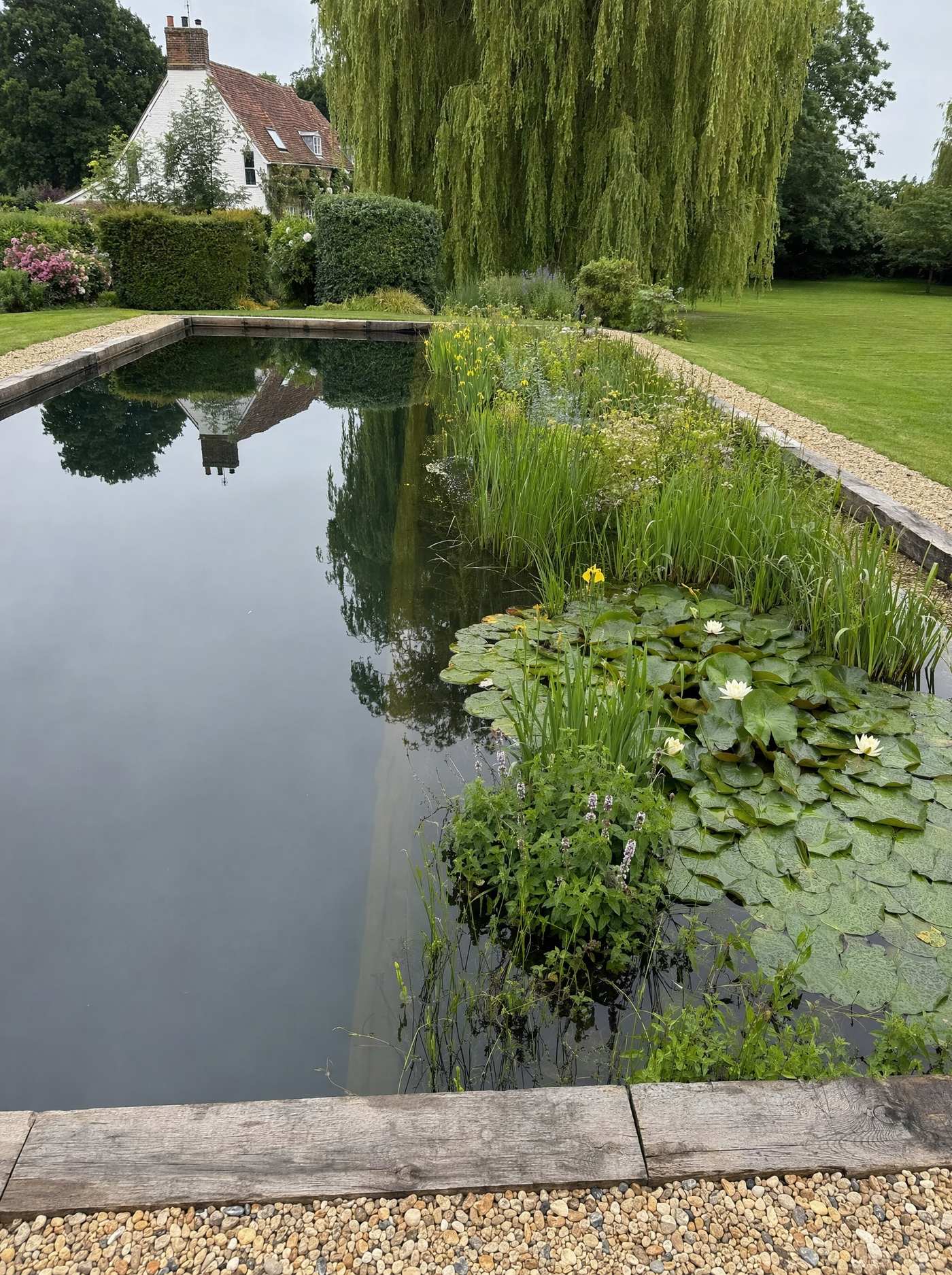
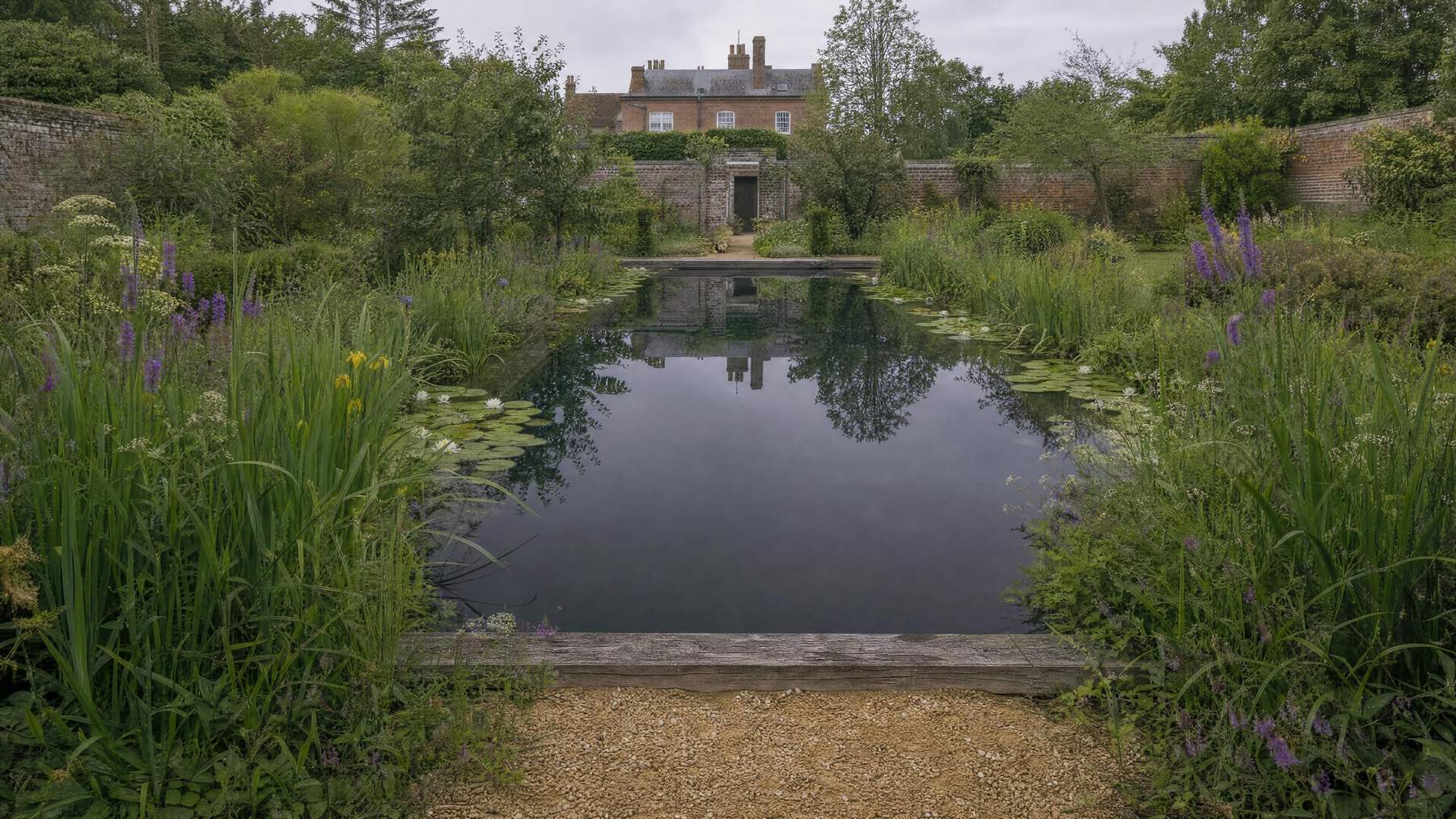
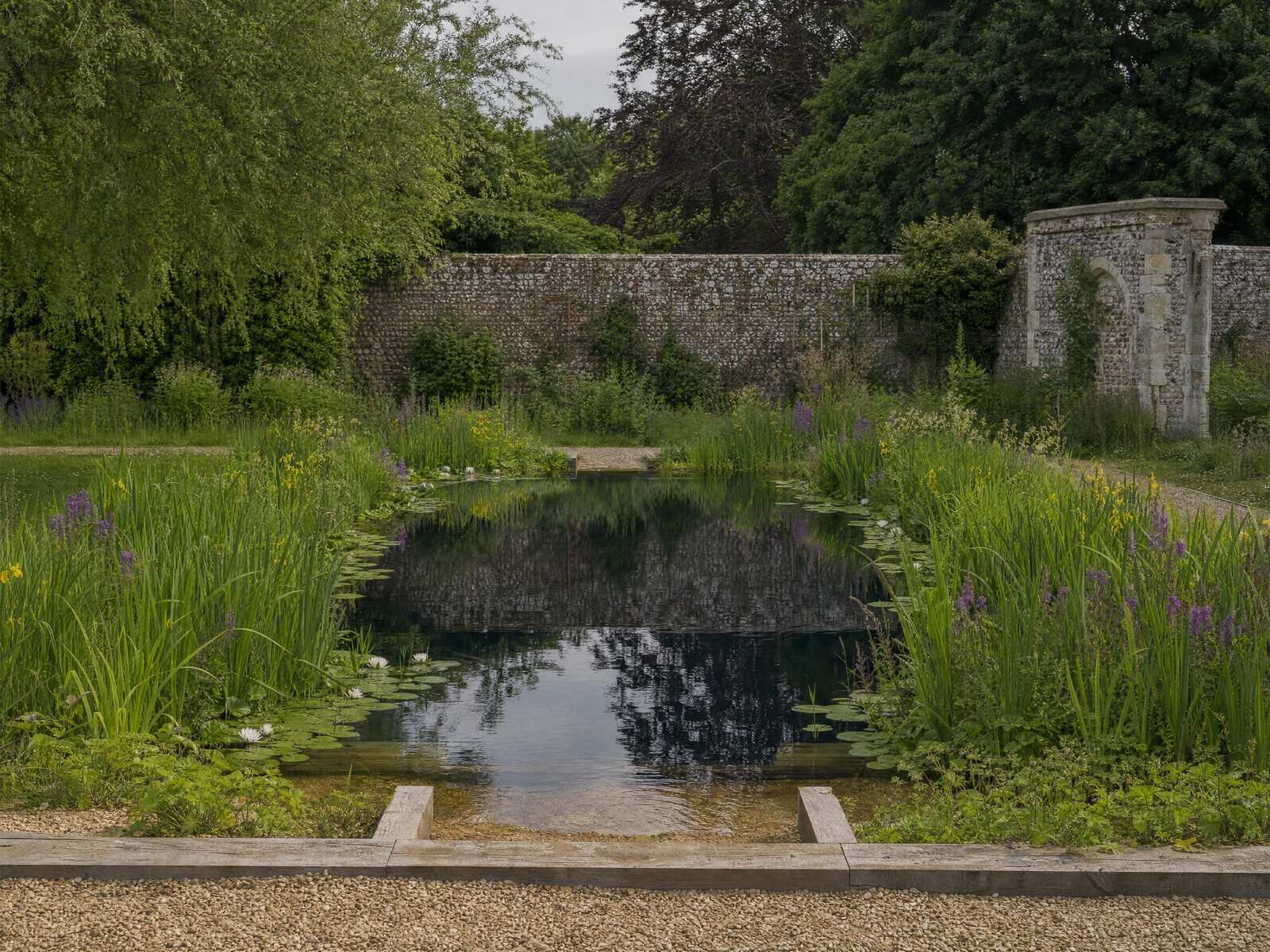
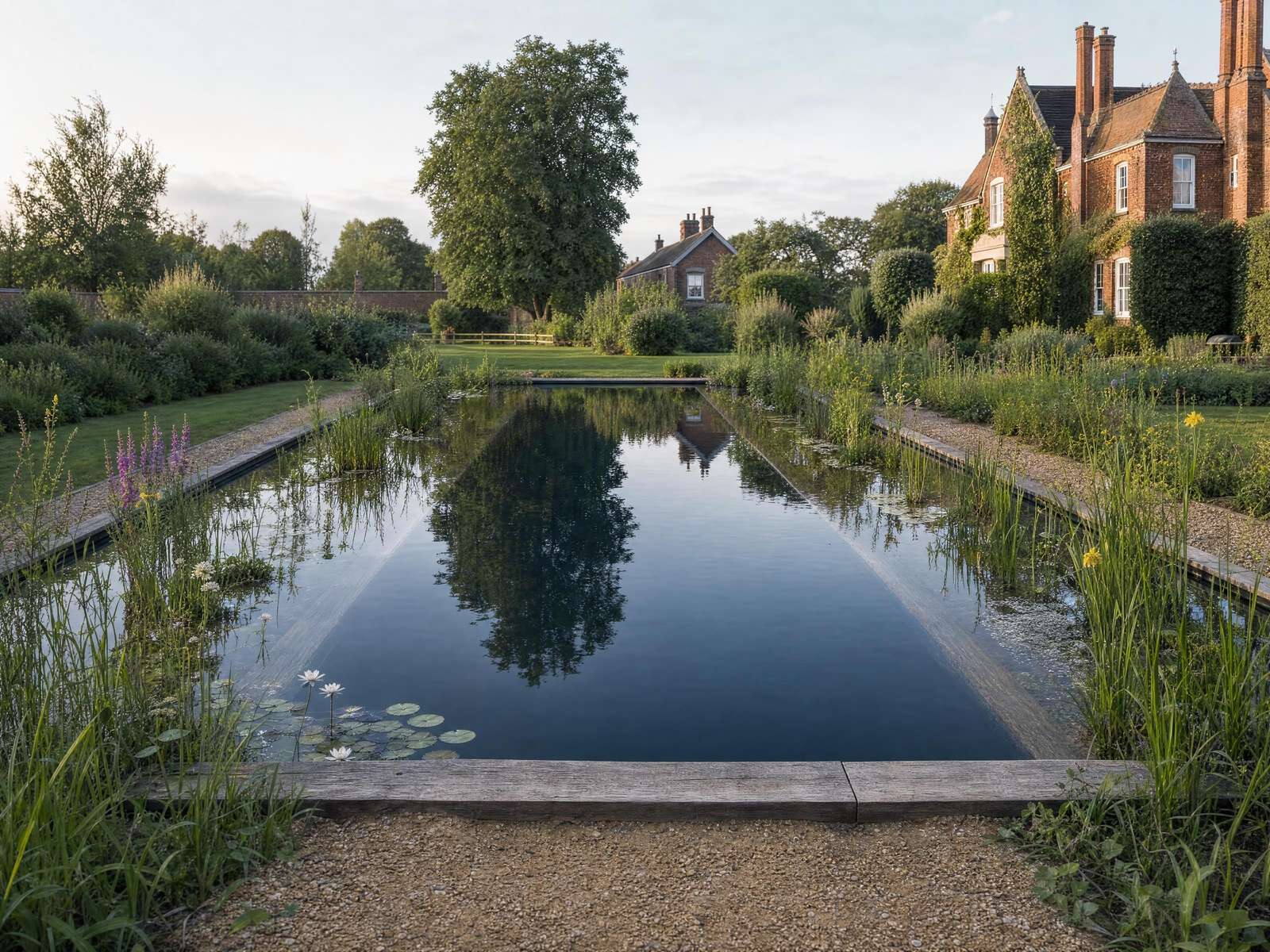
We are a Bury St Edmunds business. Luke brings twelve years of hands-on aquatic systems, from reef aquariums to koi ponds, and looks after the water chemistry and the regeneration zone. Elliot founded Suffolk Garden Maintenance, an estate specialist, and handles the landscape and the finish. A submerged oak beam divides the swim zone from the planting. Plants and biology keep the water clear, not chlorine.

Bury is covered by West Suffolk Council, which has 47 conservation areas across the district. The town centre conservation area was designated in 1973 and revised in 2012, and there is a second one at Victoria Street. Many domestic pools fall under permitted development, but it depends on the property and the site, and a listed building has no permitted development rights for a pool at all. Worth a conversation with the council before anything is drawn up.

The street grid was laid out by Abbot Baldwin around 1080, so the Georgian frontages on Angel Hill and Guildhall Street sit on a medieval plan. Behind them run long, narrow plots: good proportions for a swimming pond, tight for machine access. Out in the villages it is timber frame and colourwashed render, flint towards the Brecks, and white brick from Woolpit.
The Lark rises as a chalk stream south of Bury and runs north-west through the town towards Icklingham and Mildenhall. The Linnet comes down from near Chedburgh to join it. The upper Lark runs over boulder clay until the chalk becomes exposed near Lackford. Lackford Lakes, a few miles out, are flooded sand and gravel pits, which is a useful reminder that a hole in gravel here fills with groundwater rather than holding rainwater.

Near the rivers, expect alluvium, river terrace gravel and variable made ground. The Lark valley has deep drift-filled channels, so the depth to competent ground can change sharply across a single garden.

North-west towards Culford, West Stow, Icklingham and Elveden you are into Breckland sand over chalk. Easy digging, poor bank stability, and a liner every time.

On the plateau to the south and east, clay. Slower, dirtier and far more spoil to move, but the best chance of a pond that holds water without a liner.
Nearly all of this is inside twenty minutes of the town, so we can usually be on site the same morning.
North and west: Fornham All Saints, Fornham St Martin, Culford, Hengrave, Flempton, West Stow, Risby, Barrow, Icklingham, Great Livermere, Ampton.
South and south-west: Horringer, Nowton, Hawstead, Whepstead, Sicklesmere, Great and Little Whelnetham, Chevington, Brockley, Rede, Depden, Hartest.
East and north-east: Great Barton, Rougham, Thurston, Pakenham, Ixworth, Stanton, Hessett, Beyton, Woolpit, Elmswell, Rattlesden, Cockfield. Lavenham is about twenty-five minutes, Long Melford nearer thirty.
Guide prices are ex VAT: swimming ponds from £45,000, natural pools and living pools from £80,000, wildlife ponds from £12,000. Design takes two to four weeks, the build eight to sixteen. If you are in or near Bury we can usually come and look at the garden within the week. The design consultation is free and there is no obligation.