The Broads is its own local planning authority. It handles planning, listed building consent and tree work across the executive area, while the district council keeps building control and the rest. It is designated land, so permitted development is narrower here than in most of the country. The boundary follows rivers and grazing marsh rather than parish lines, so one field can be inside it and the next outside.
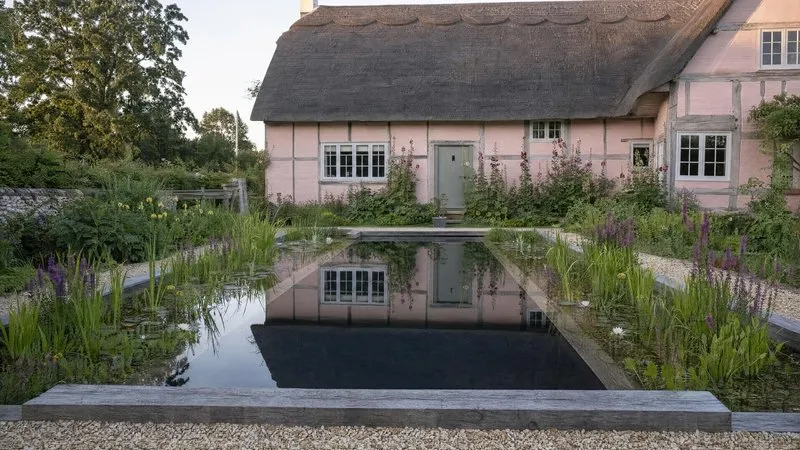
Dig in the Broads floodplain or the west Norfolk fen and you are likely in peat. The hole fills itself, which sounds ideal, but the level is set by the surrounding drainage rather than by your design, banks slump, and excavated peat cannot be stockpiled to dry. The Broads Authority has a specific peat policy and expects soil coring where mapped peat is close by.
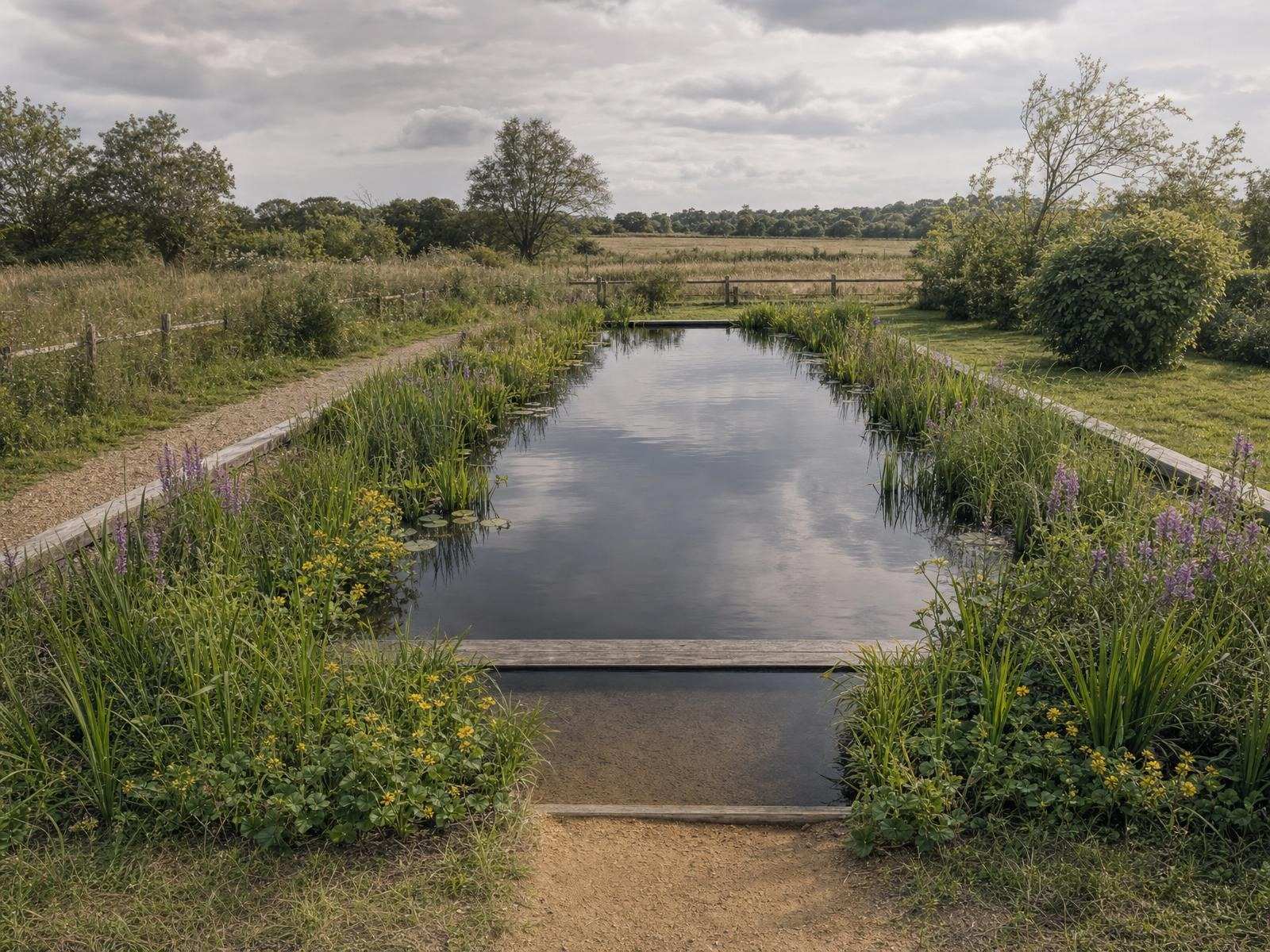
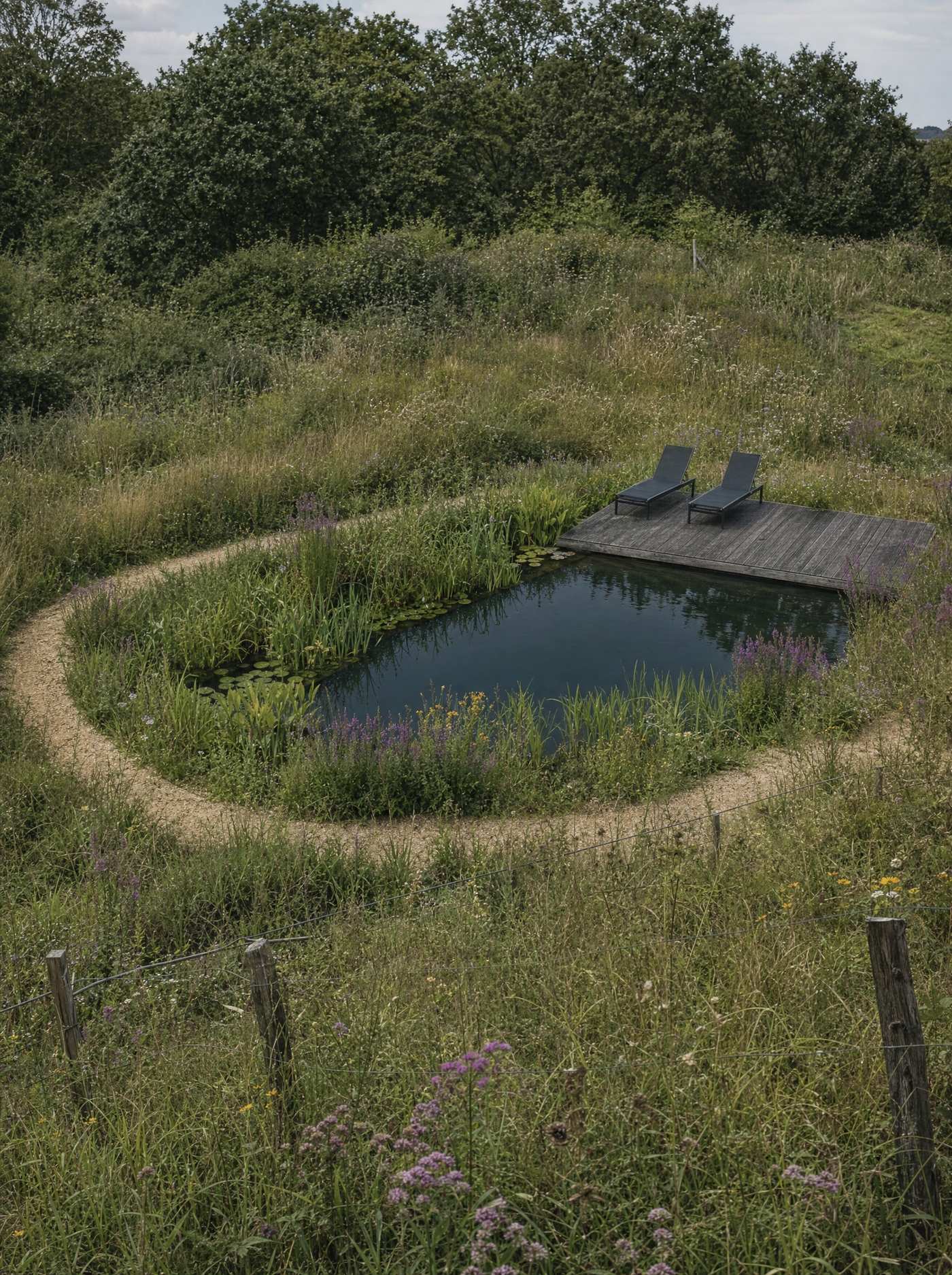
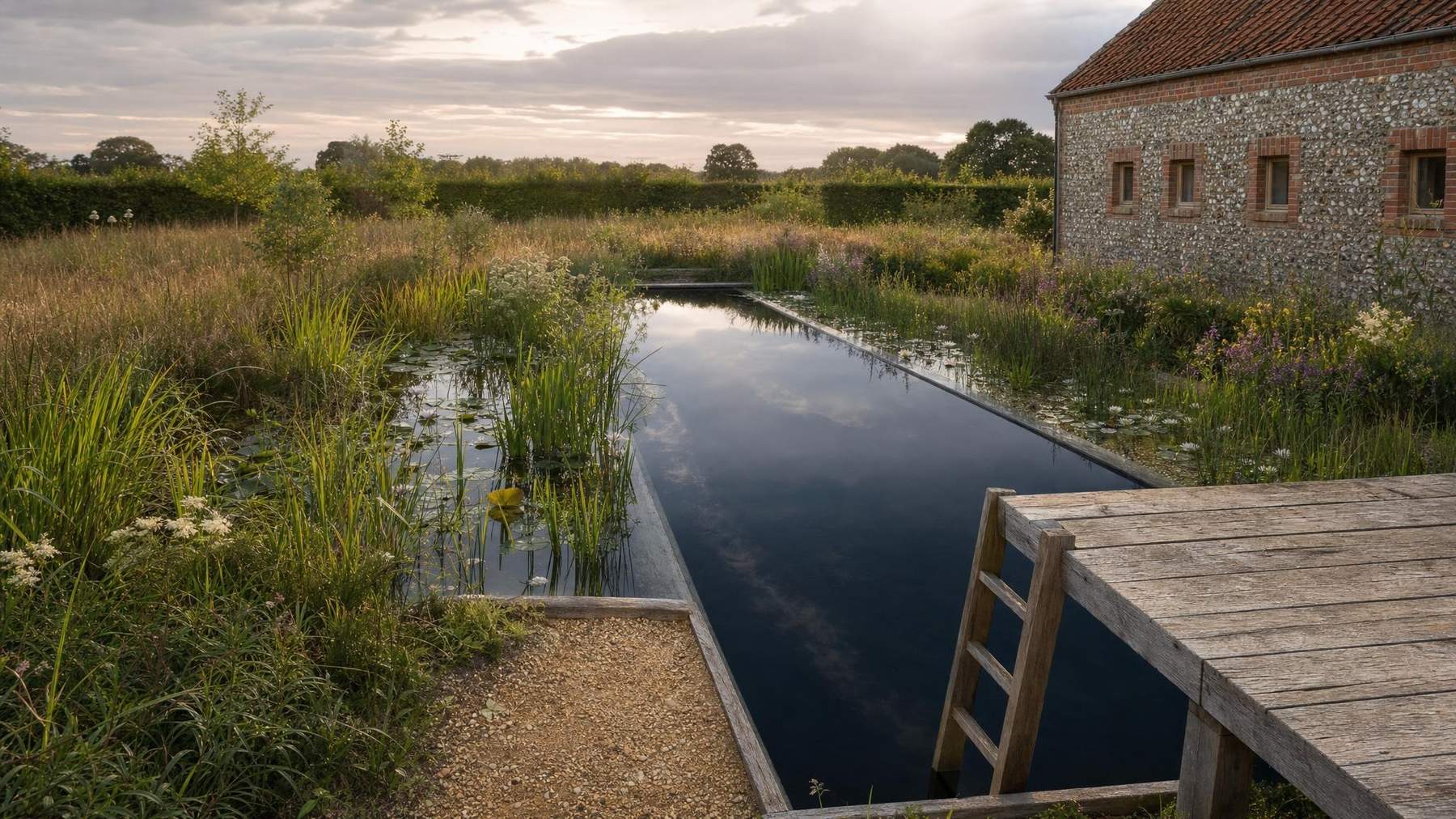
Trial pits, a read of how the site already handles water, then a design. Luke came to this through reef aquariums and koi ponds and looks after the water chemistry and the regeneration zone. Elliot founded Suffolk Garden Maintenance and handles the landscape and the finish. A submerged oak beam divides the swim zone from the planting. The water is kept clear by plants and biology, not chlorine.
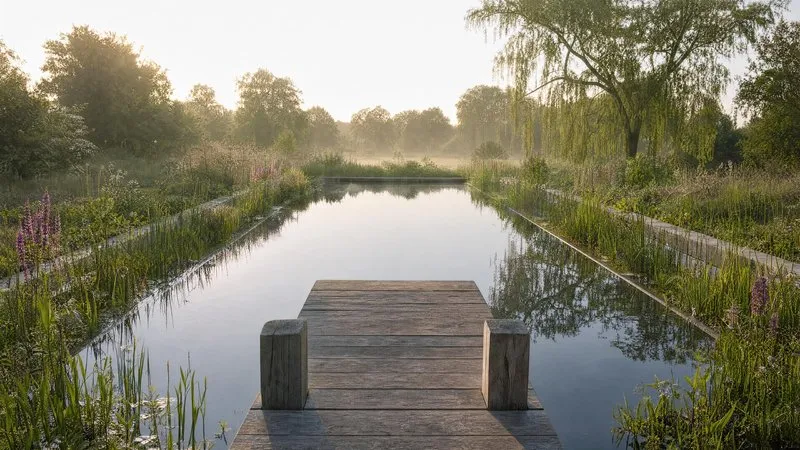
The Cromer Ridge and the north coast are glacial sand and gravel: easy to dig, free-draining, and interleaved with clay layers that perch water in unpredictable places. South Norfolk sits on the same chalky till as High Suffolk and holds water well. West of King's Lynn you meet carstone and the Sandringham Sands, where cemented bands are hard going and spring lines are common.
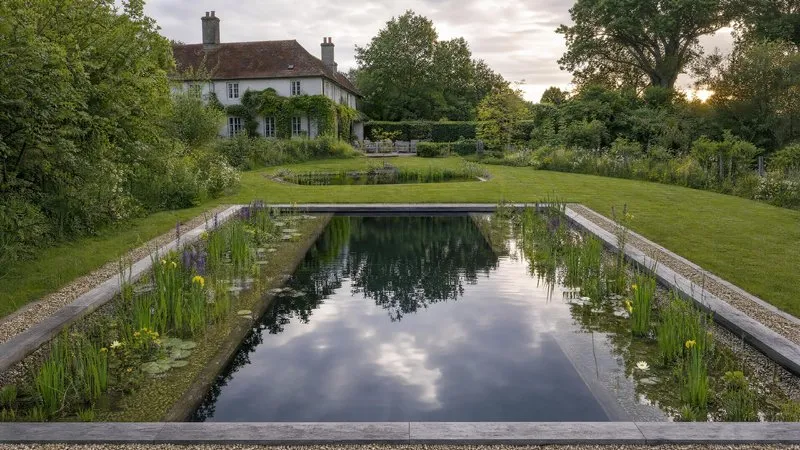
Rounded whole flint cobbles with buff brick dressings along the north coast, knapped black flint around Norwich, ginger carstone from King's Lynn up through Snettisham and Dersingham, pantile roofs almost everywhere. Coping and edging are picked to sit with the house. Humphry Repton, born in Bury St Edmunds and buried at Aylsham, worked out much of his thinking about water on Norfolk ground.
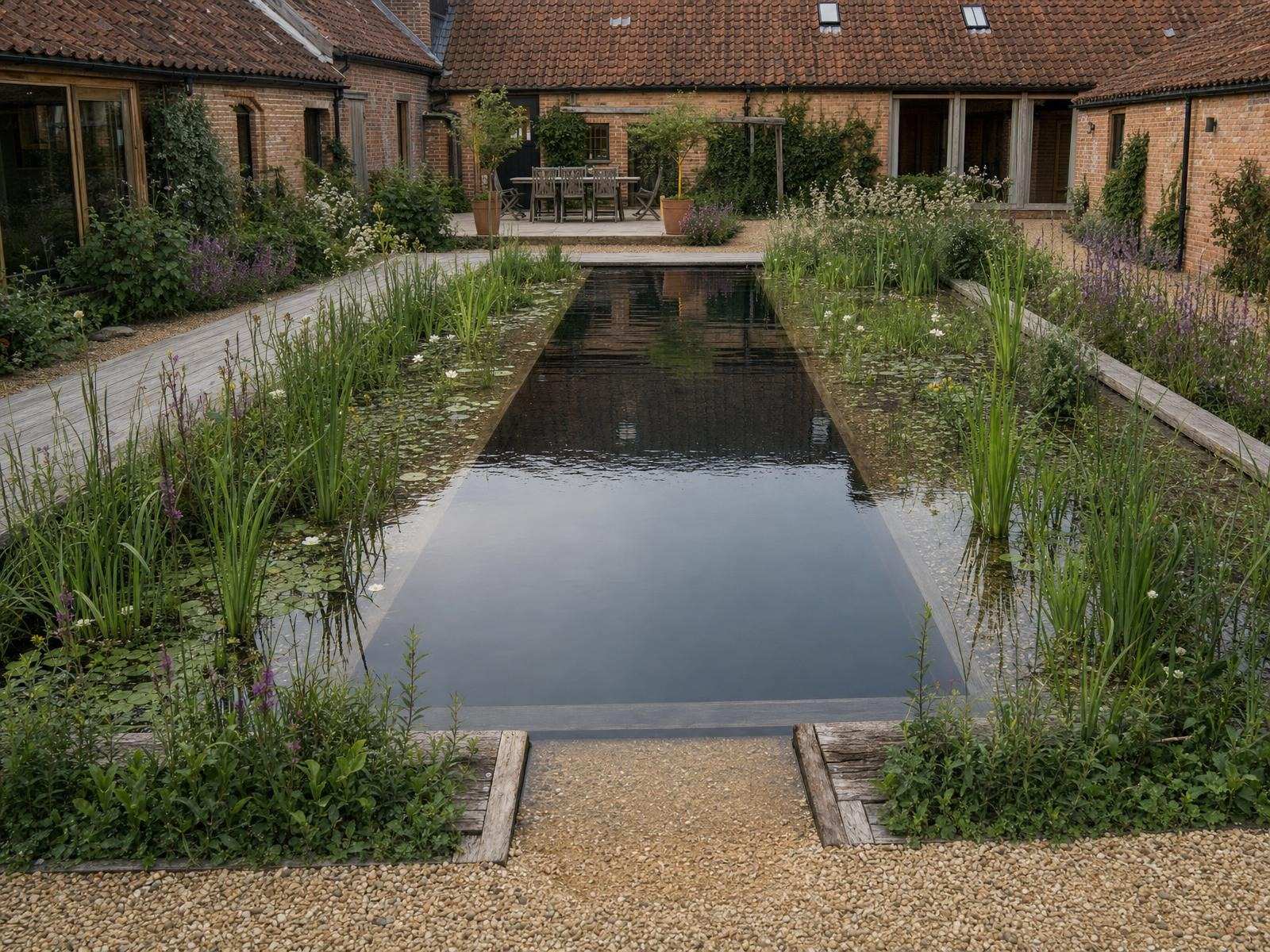
Outside the Broads, Norfolk is covered by Breckland, Broadland, Great Yarmouth, King's Lynn and West Norfolk, North Norfolk, Norwich City and South Norfolk councils. Three new unitary councils were confirmed for the county in March 2026 and take over in 2028; until then these are the authorities you apply to. Many domestic pools fall under permitted development, but it depends on the property and the site, so ask the local planning authority early.

The Norfolk Coast National Landscape runs in three separate sections and does not take in the built-up parts of Cromer, Sheringham or Mundesley. Where it does apply, siting matters: anything placed well away from the house is tightly limited.

A listed building has no permitted development rights for a pool at all, so planning permission is needed. Listed building consent is a separate question and turns on whether historic fabric is affected.

Internal Drainage Boards manage water levels across the Broads, the river valleys and the west Norfolk fen. Works near a board drain need their consent, which sits outside planning and cannot be obtained after the event.
We travel across the county from Bury St Edmunds. Places we work regularly:

South Norfolk and the Waveney valley: Diss, Harleston, Loddon, Wymondham, Long Stratton, Norwich.
The Broads and the north-east: Wroxham, Hoveton, Horning, Ludham, Acle, Brundall, Aylsham, Reepham.
The north coast and the west: Holt, Blakeney, Wells-next-the-Sea, Burnham Market, Fakenham, Hunstanton, Snettisham, King's Lynn, Swaffham, Castle Acre, Thetford.
Guide prices are ex VAT: swimming ponds from £45,000, natural pools and living pools from £80,000, wildlife ponds from £12,000. Allow two to four weeks for design and eight to sixteen for the build. The first design visit is free, wherever you are in the county.