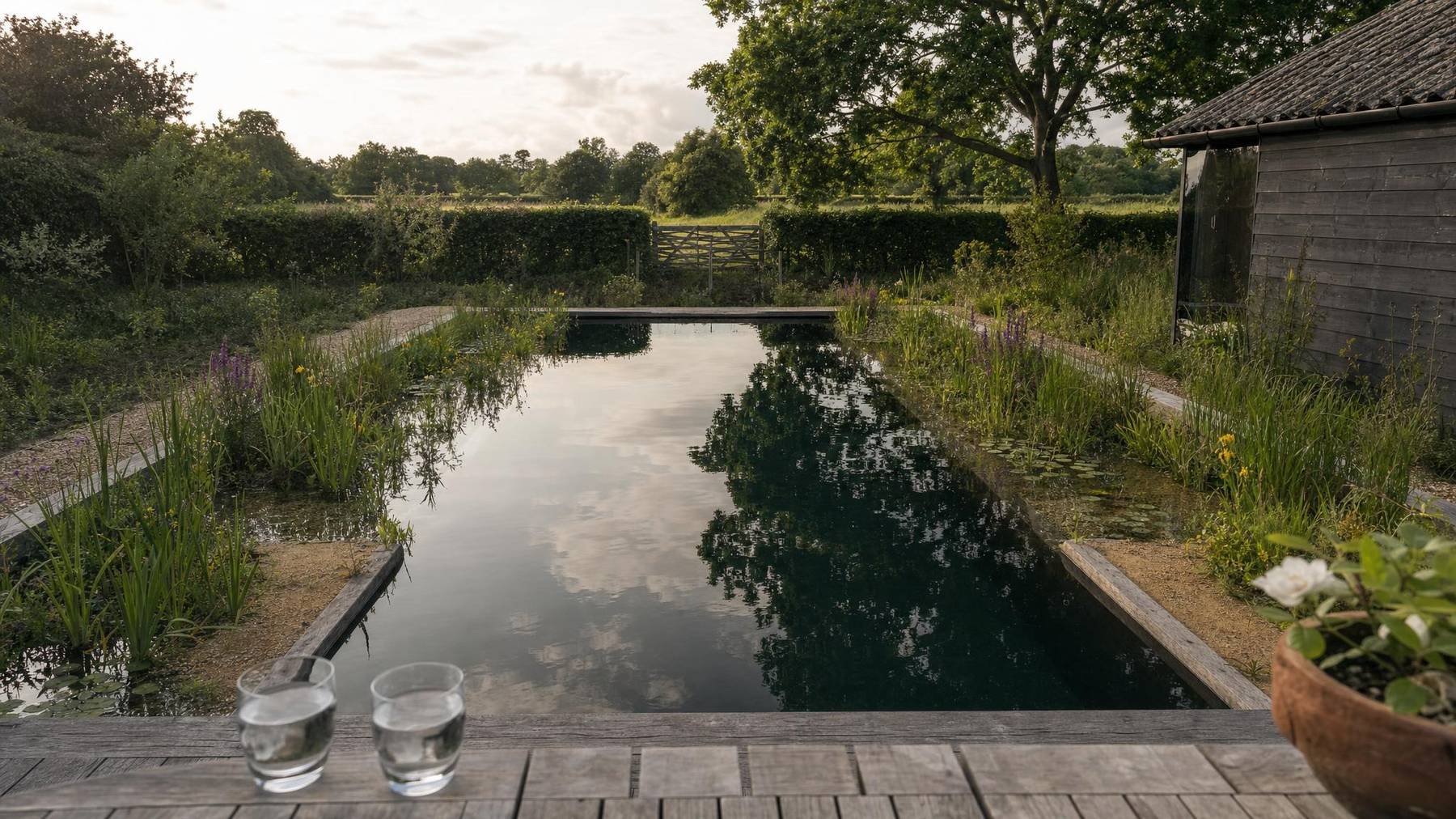
Our guide prices start at £65,000 for a swimming pond, £80,000 for a natural pool or a living pool, and £12,000 for a wildlife pond. All figures are ex VAT. The final number depends on size, ground conditions, access and finish, so we only give a real figure after seeing the site. Allow two to four weeks for design and eight to sixteen weeks to build.
Less than a chlorine pool. There is no chemical dosing, so no chlorine, stabiliser or pH correction to buy year after year. The main running cost is modest pump electricity to keep water moving through the regeneration zone, plus a little seasonal care of the planting. Heating, if you choose it, is the one thing that adds meaningfully to the bill.
Often not. Many domestic pools fall under permitted development, but it depends on the property and the site. Listed buildings, conservation areas, National Landscapes (AONBs) and the Broads Authority area are common reasons full permission is needed. Always check with your local planning authority before you commit, and we will flag anything on your site that looks like it needs consent.
A properly designed pool does not. Algae need nutrients, and the planted regeneration zone is built to strip those nutrients out of the water before algae can use them. You may see a short bloom in the first spring while the planting establishes and the biology settles. After that the water runs clear.
Yes. The water is kept clean by plants, filtration and biology rather than chemicals, and it is tested and managed the way any swimming water should be. Most people find it gentler than a chlorinated pool: no stinging eyes, no bleached swimwear, no chemical smell. It is safe for children and for dogs.
No more than any garden pond, and usually a good deal less. Mosquito larvae need still, stagnant water, and a natural pool is circulating constantly. The dragonflies, damselflies, newts and birds that arrive within the first season eat the larvae. In practice a well-built natural pool tends to reduce the mosquito population in a garden rather than add to it.
Yes. An air source heat pump is the usual choice and will extend the swimming season well into spring and autumn. We keep temperatures moderate, because pushing the water very warm works against the biology that keeps it clear. Heating is specified at design stage so the plant and pipework are sized for it from the start.
Roughly an hour a week through the growing season, and less in winter. Skim leaves off the surface, empty the skimmer and check the pump. The planting in the regeneration zone is cut back once a year, in late winter. We offer aftercare if you would rather we looked after it for you.