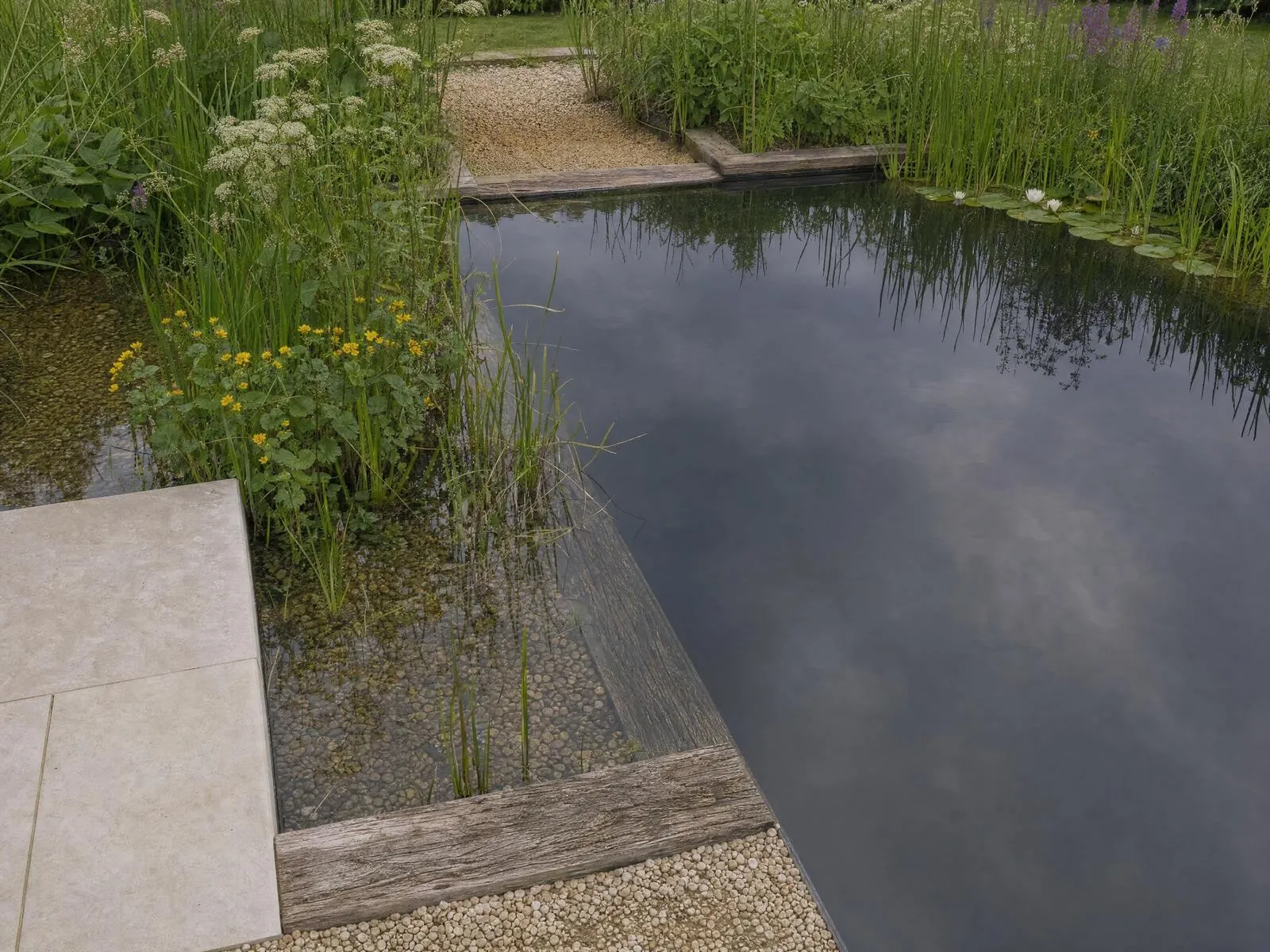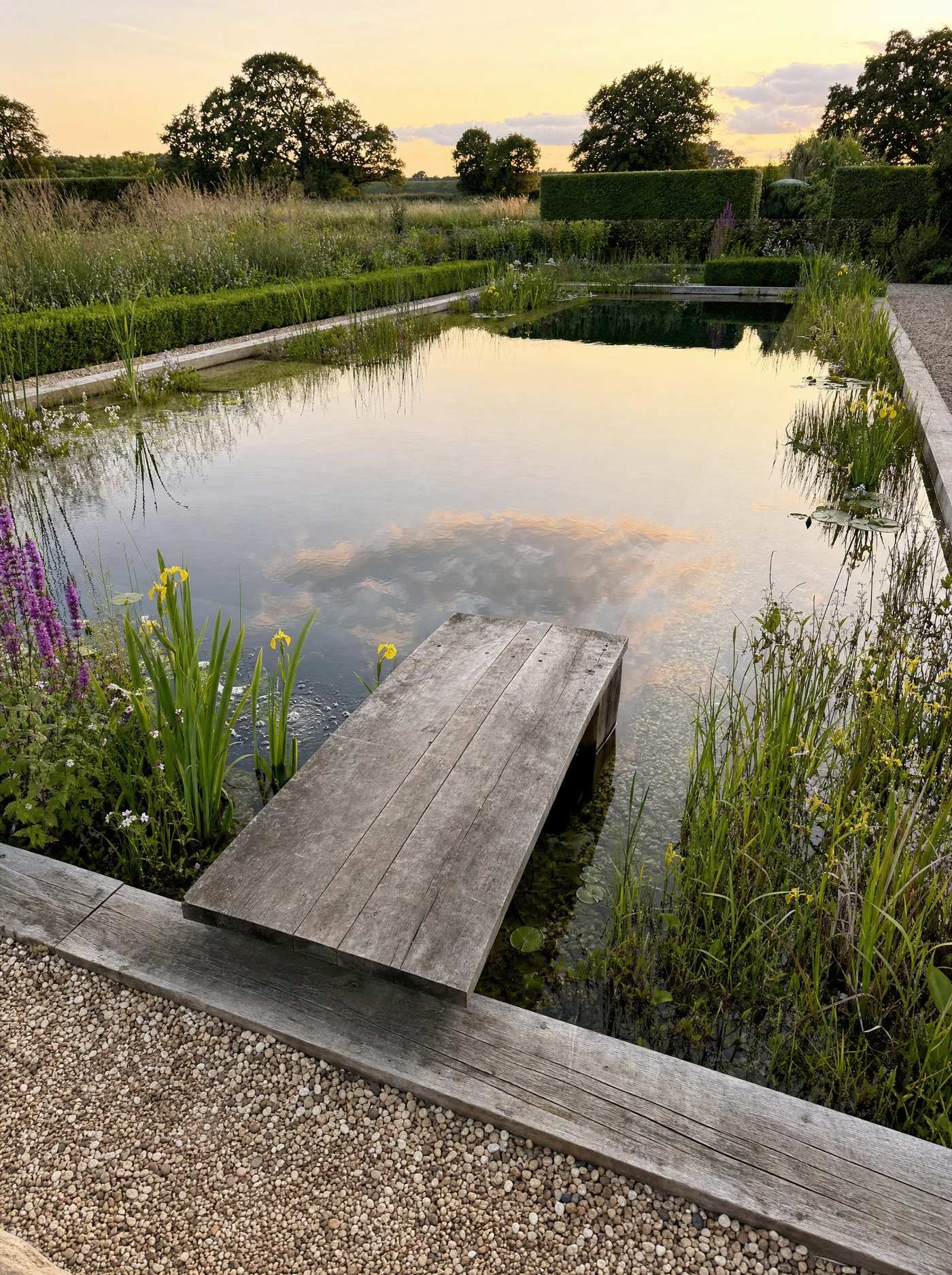
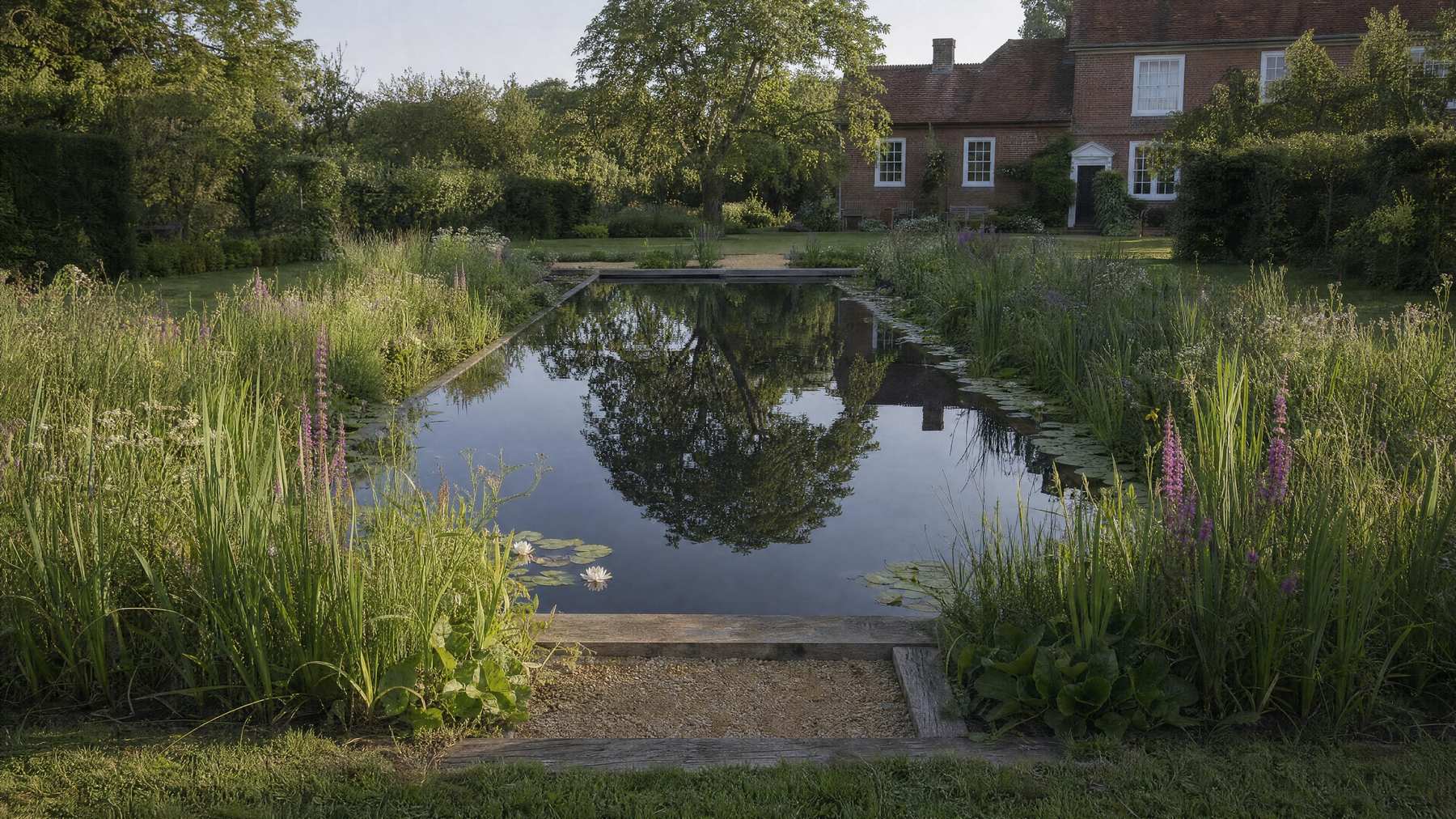
The softest of the four, and the least expensive way to swim. Dark, clear, reflective water. Planted margins of reeds and water lilies. An oak jetty to slip in from. Done well it looks as though it has always been there. From £45,000.
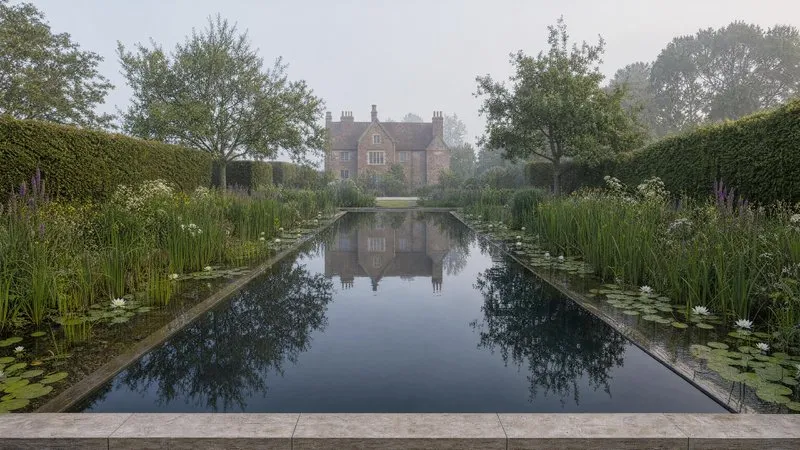
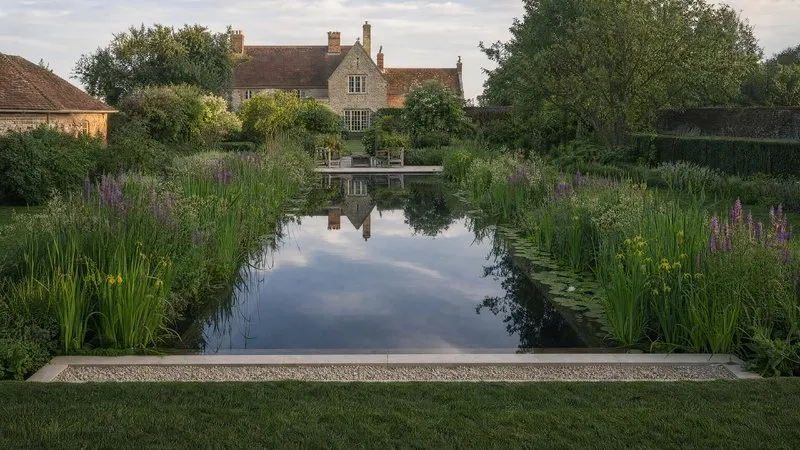
A designed pool that still feels natural. Clean lines and a considered shape, with the planted regeneration zone visible alongside the swimming area rather than hidden. The middle ground between garden and pool. From £80,000.
All four are biologically filtered, so none of them smell of chlorine or sting your eyes. The choice is about appearance, space and budget. A swimming pond disappears into the garden. A natural pool is designed but openly planted. A living pool looks like an ordinary swimming pool. A wildlife pond is built to be watched, not swum in.
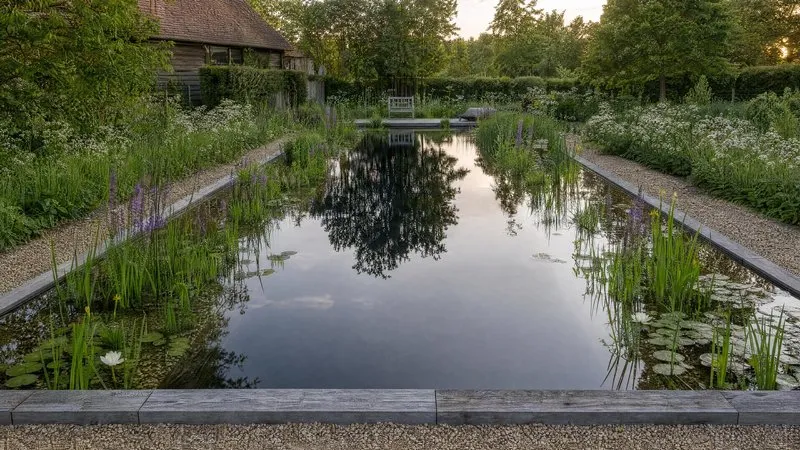
Reads as a conventional swimming pool. The filtration is hidden entirely out of sight, so the water body looks like any other pool, but the water is chemical free and biologically filtered. The one for contemporary and formal gardens. From £80,000.
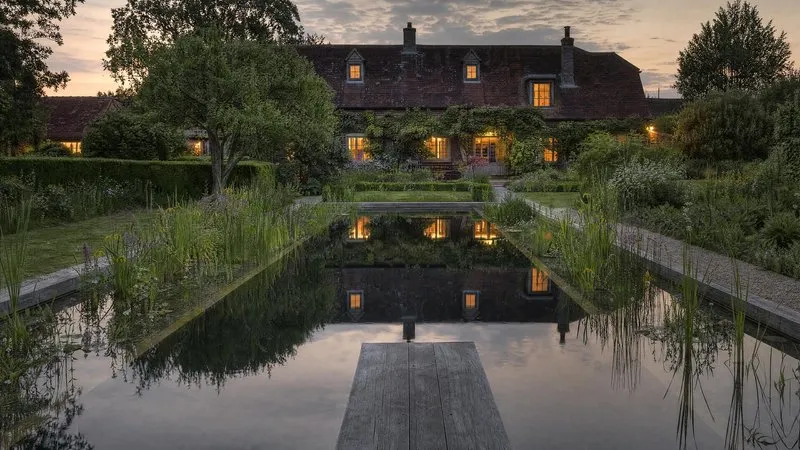
Not built for swimming, though nobody minds if you do. Native planting, shallow margins, and habitat for dragonflies, newts and frogs. The smallest commitment in both space and cost. From £12,000.
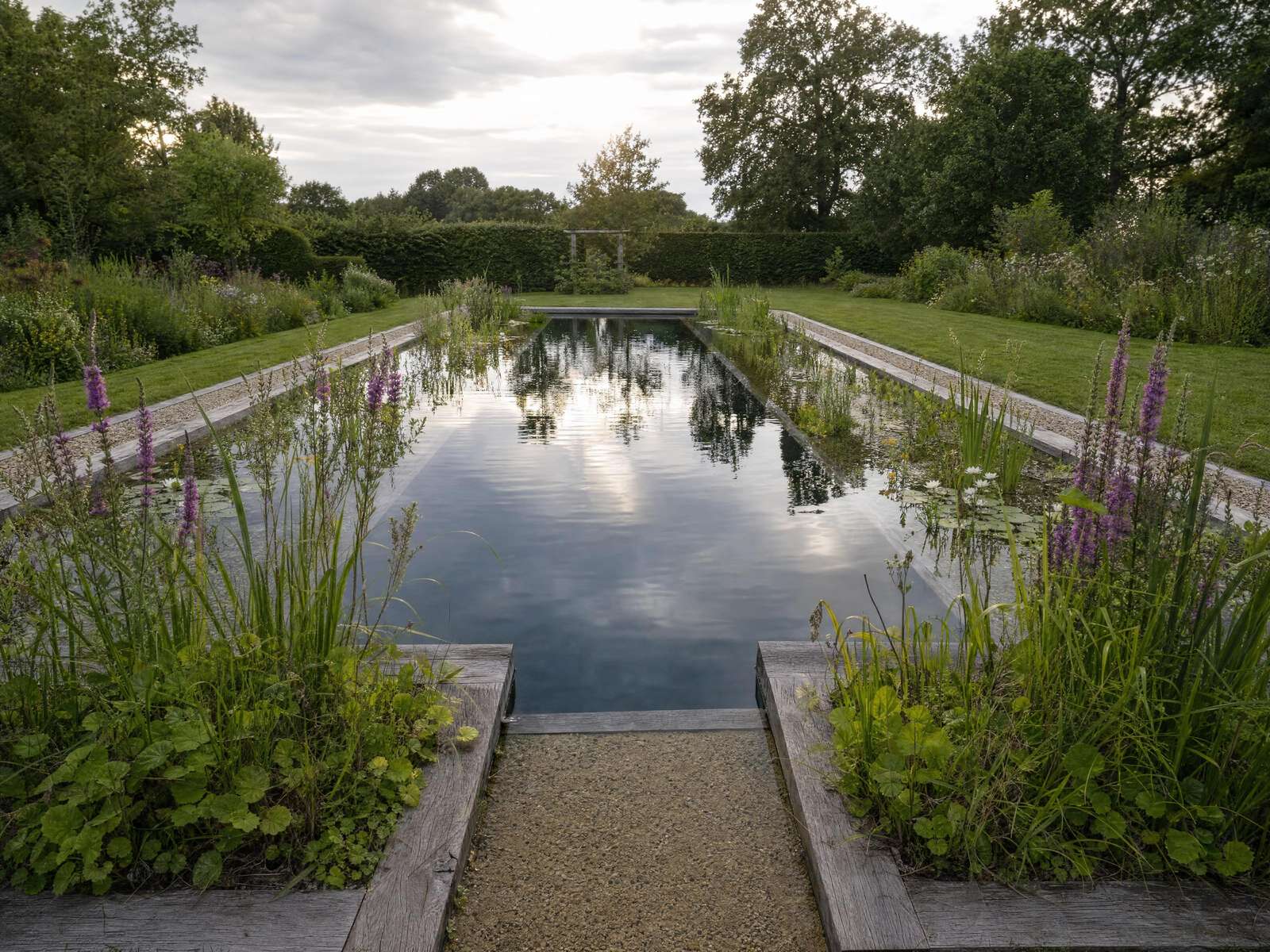
A wildlife pond will sit happily in an ordinary garden. Anything you swim in needs more, because the planted regeneration zone is part of the pool rather than an addition to it. A living pool is the tidiest of the three on plan, since its filtration is engineered out of sight instead of laid out in planting.

Wildlife pond from £12,000. Smallest footprint, lowest cost, no swimming.
Swimming pond from £45,000. The least expensive way to swim at home.
Natural pool and living pool from £80,000. More structure, more finish, more control over the shape.
None of them need dosing or testing. The work is gardening: skim the surface, cut the planting back once a year in autumn, keep the pump serviced. A wildlife pond asks the least. A living pool asks a little more of the equipment and a little less of the planting. Which one suits your garden usually settles itself once you look at the house.
Old brick, meadow grass, orchard: a swimming pond, dark water and reed margins.
A designed garden that still wants planting: a natural pool, regeneration zone in full view.
Contemporary or formal, clean edges and stone: a living pool, filtration out of sight.
Unheated, the water is comfortable to swim in from late spring into early autumn. Wildlife finds all four, and finds them fastest where the margins are shallow and planted. If you are still weighing it up, we will walk the garden with you and tell you plainly which one it should be. The design consultation is free and there is no obligation.