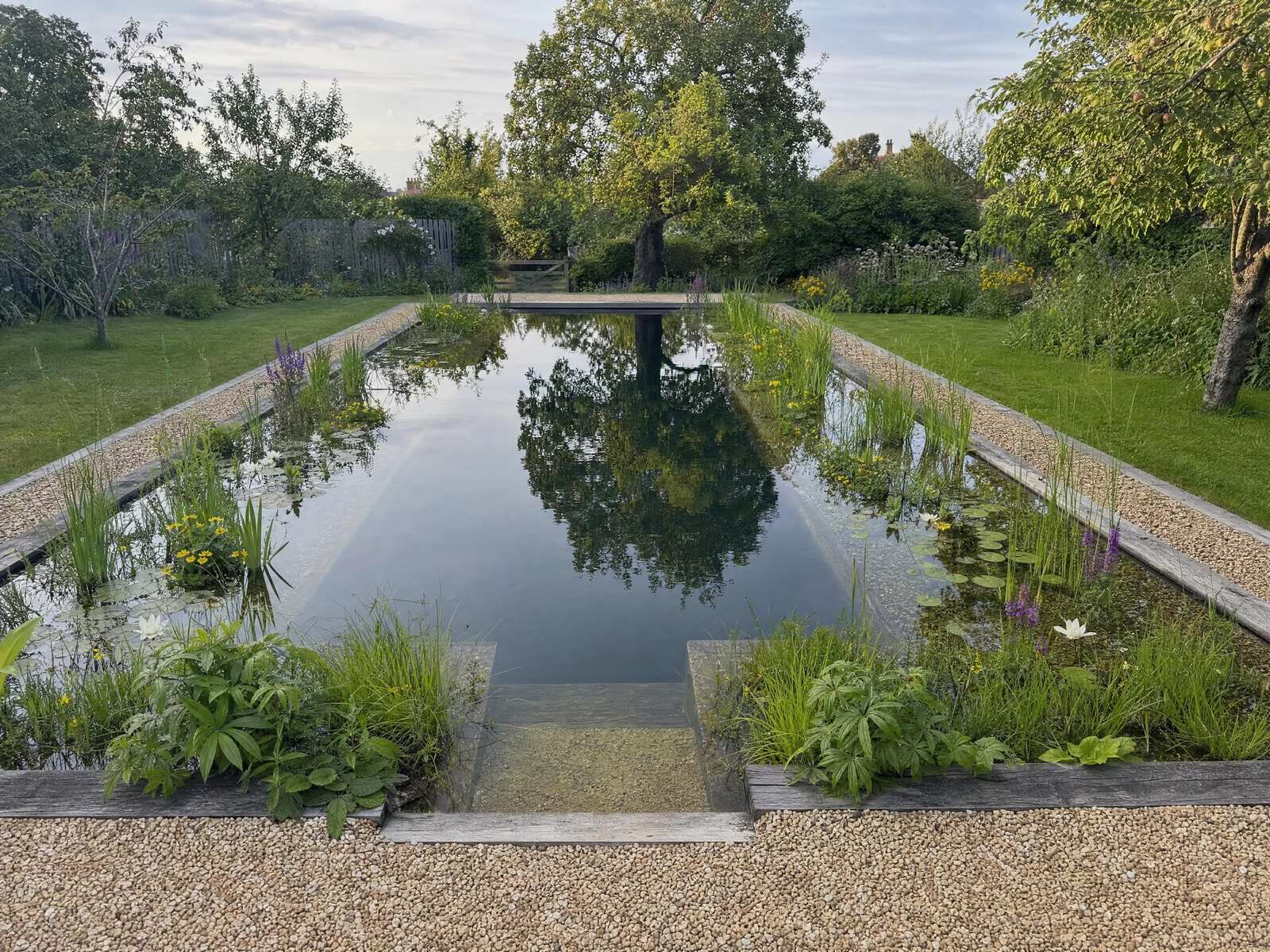
The most natural of the four. Planting runs down to the water and a submerged oak beam separates the swim zone from the regeneration zone. Softest look, lowest starting point, and the quickest to settle into an established garden.
A crisper, more architectural pool with a clearly defined swimming area and the regeneration zone set alongside it. Stone or oak edges and clean lines, with the water kept clear by plants and biology rather than chlorine.
The look of a conventional pool with the water kept clean by biological filtration engineered out of sight. The most technical build of the three, which is why it shares the higher starting point.
All figures above are guides and exclude VAT. Published market prices for this kind of work vary enormously, and anyone giving you a firm number without seeing the site is guessing. We visit, measure, and come back with a real one. No charge, no obligation.
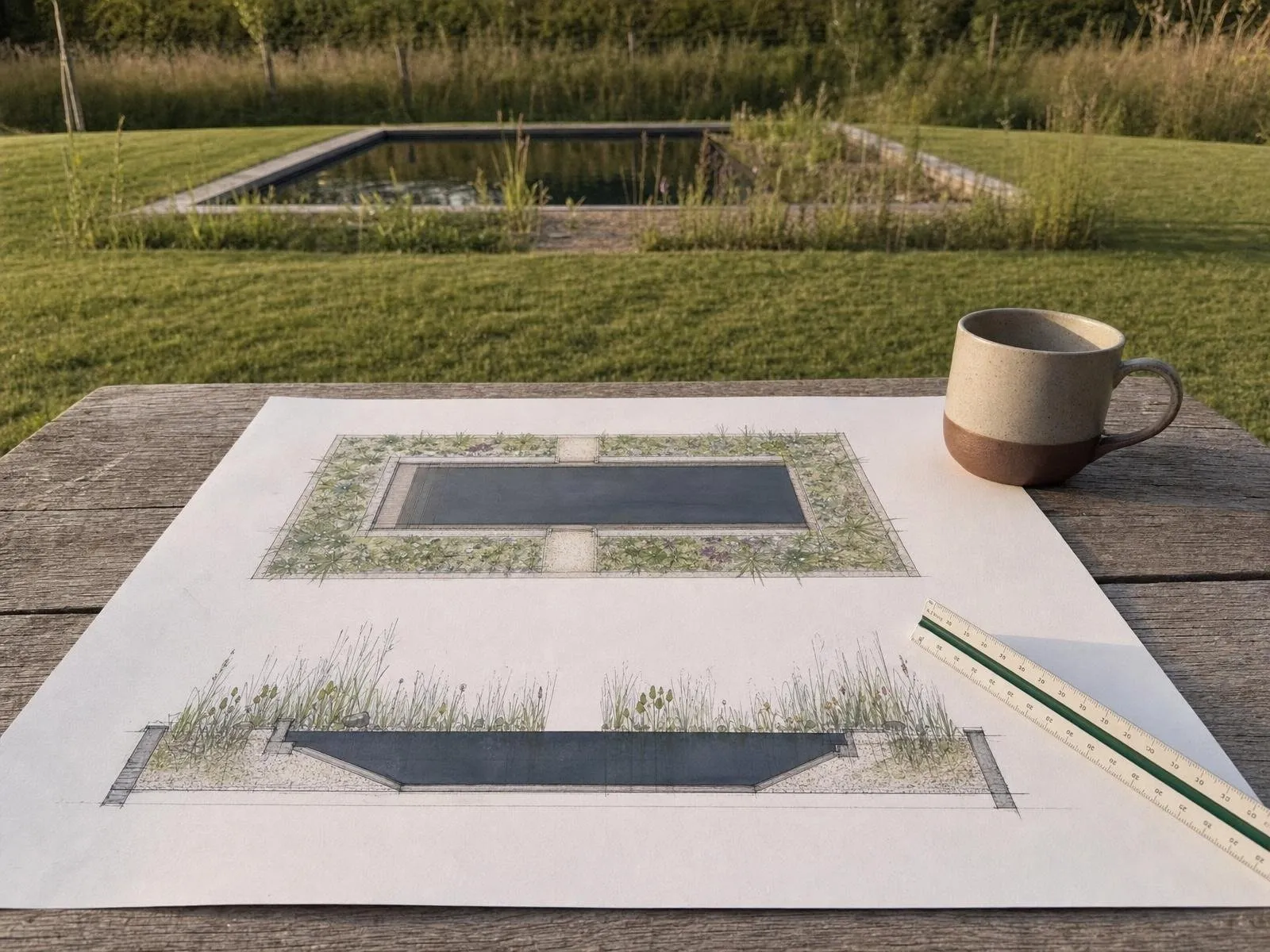
Checkatrade suggests around £350 per square metre. Homebuilding & Renovating says £300 to £600. One national builder publishes £85,000 to £270,000 per project; another starts at £75,000 including VAT. None of them are wrong. They are answers to different questions, and a natural pool complicates every one of them: the planted regeneration zone roughly matches the swim zone, so a 40 square metre swimming area is an 80 square metre build.

Per project, not per square metre. Half the area of a natural pool is regeneration zone, and ground and access swing the cost more than area does, so a per-metre rate invites comparisons between products that are not the same thing.
Ex VAT, like the rest of this trade. VAT at 20 per cent sits on top, and we quote this way so you can compare like with like.
Everything in the number. Design work, the regeneration zone, filtration and planting are all included. When we give you a firm figure after a site visit, it is the number.
Size and depth of the swimming zone come first, then ground conditions and how much has to be excavated. Access matters more than people expect: if a machine cannot reach the spot, the groundwork costs more. After that it is the finish, natural stone, oak or decking, the filtration we specify, the scale of the planting, and extras such as heating, a jetty or a sauna.
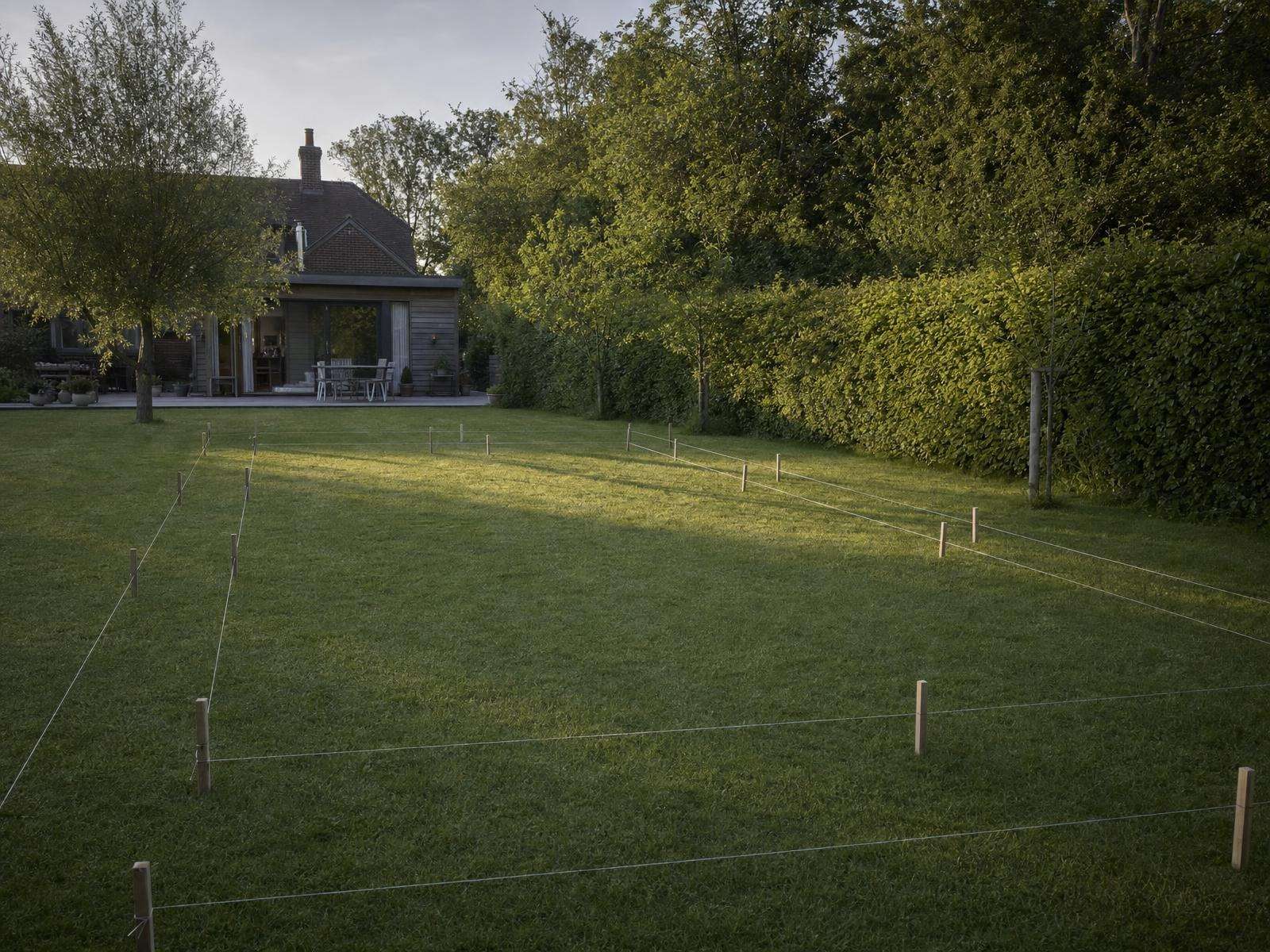
Size and depth of the swim zone set the baseline, and the regeneration zone roughly doubles the excavation. After that, the site itself decides more of the number than the design does.

The hole. Heavy boulder clay holds water but is slow to dig and produces large spoil volumes. Sand and Crag dig easily but always need a liner. This is why we do trial pits before we design.
Access. If a 13-tonne excavator can reach the spot, groundwork is quick. If the only way in is a garden gate, smaller machines take longer. Two identical pools can differ by five figures on access alone.
Structure and liner. A reinforced liner on most sites, concrete where the design or the ground demands it. Not a place to economise: everything else can be adjusted later, the shell cannot.

Filtration. A swimming pond leans on planting and slow circulation; a living pool carries the most equipment, which is what buys the conventional-pool look. We specify for the pool in front of us, not from a price list.
This is where the same pool ranges from simple to estate-grade, and it is the part you touch and see every day.
Edges and finish. Natural stone coping, oak decking, a gravel beach or a lawn edge. The same water reads formal or wild depending on what meets it.

Planting. Newly planted costs less and takes a season or two to knit in. Semi-mature planting costs more and looks established in its first summer.
Extras. Heating with an air source heat pump, a jetty, lighting, an outdoor shower, a sauna or plunge. None are needed for clear water, and all are easier to include at design stage than to add later.
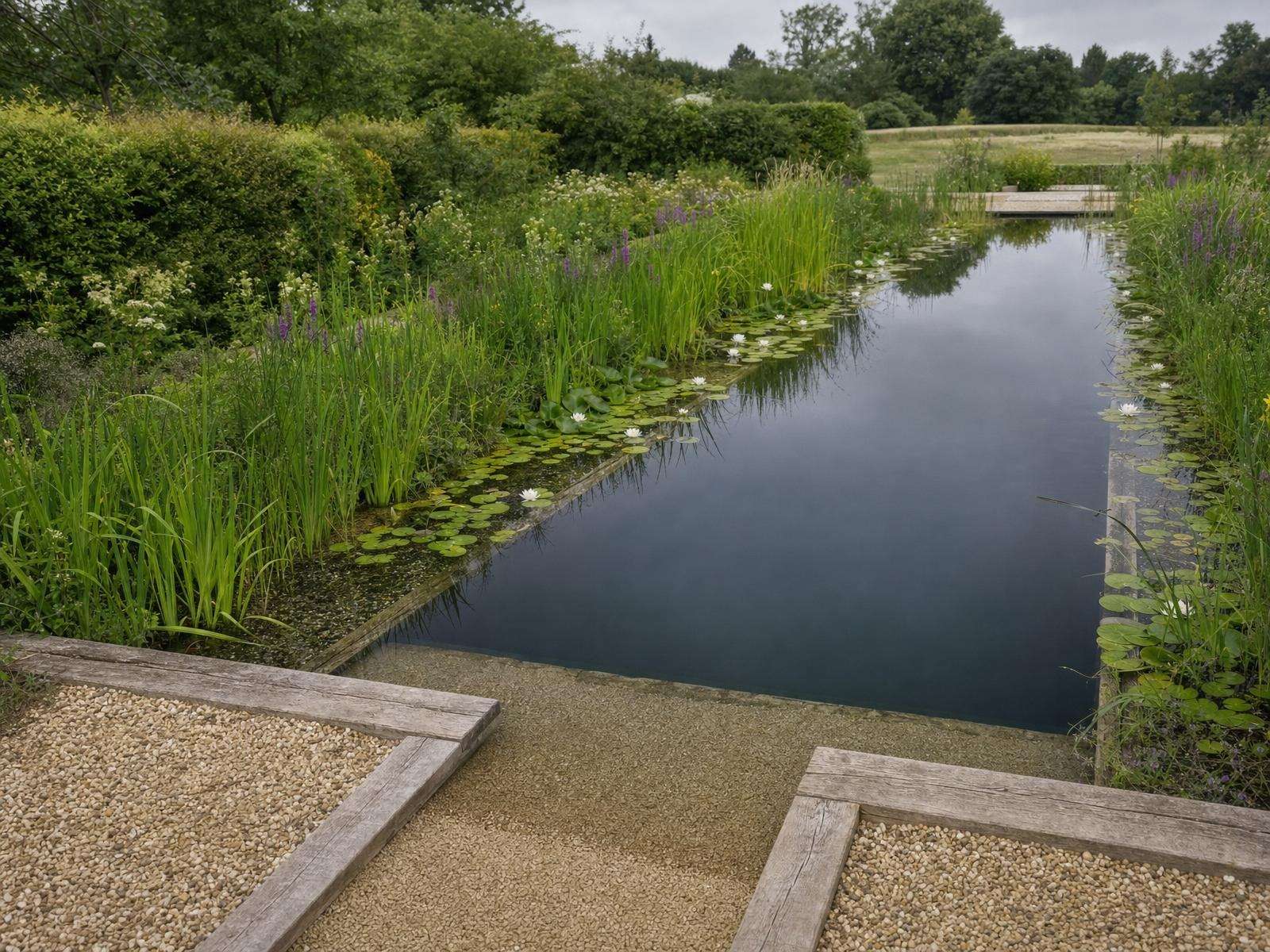
A modest swim zone with planted margins running down to the water, on a site with reasonable access and no surprises in the ground. Liner construction, a simple lawn or gravel edge, first-season planting. The quickest to settle into a garden.
A defined swim zone around 8 by 4 metres with the regeneration zone set alongside, stone or oak edges, engineered circulation, and planting at a scale that looks intended rather than colonised. Most of the pools we design sit in this band, and where they land within it is mostly finish, access and depth.
A 10 metre-plus swim zone, semi-mature planting, natural stone throughout, heating, lighting and a deck or jetty. At this scale the pool is doing the work of a landscape scheme, and it is priced like one.
These are illustrations rather than quotes. Every garden is different, and only a site visit produces a real number. If your budget sits below these figures, a wildlife pond from £12,000 brings water and planting into a garden without a swim zone.
Less than a chlorine pool, and the difference compounds. The recurring spend is electricity for a modest circulation pump, plus gardening rather than chemistry: about an hour a week in season, less in winter. There is no liner-bleaching chemistry and no replastering cycle, and the planting gets better every year. Heating is the one extra that changes the running cost materially.
The cheapest way in? A swimming pond, kept simple. That is the £45,000 starting point, and it is also the most natural-looking of the four.
Can it be phased? Sometimes. The excavation, shell and filtration happen together; decking, a sauna, heating and lighting can follow later, and designing for them up front costs little.
Is VAT on top? Yes, at 20 per cent, as with any building work of this kind. We quote ex VAT so you can compare like with like.
Why publish prices at all? Because we would want them published if we were buying. You arrive at the design consultation already knowing roughly where you stand.