The chalky boulder clay across the High Suffolk plateau is the most water-retentive ground in the county. It is the reason Suffolk has over 850 medieval moats and a high density of old farm ponds. It still needs trial pits. The same formation carries sand and gravel lenses that will quietly drain a basin.
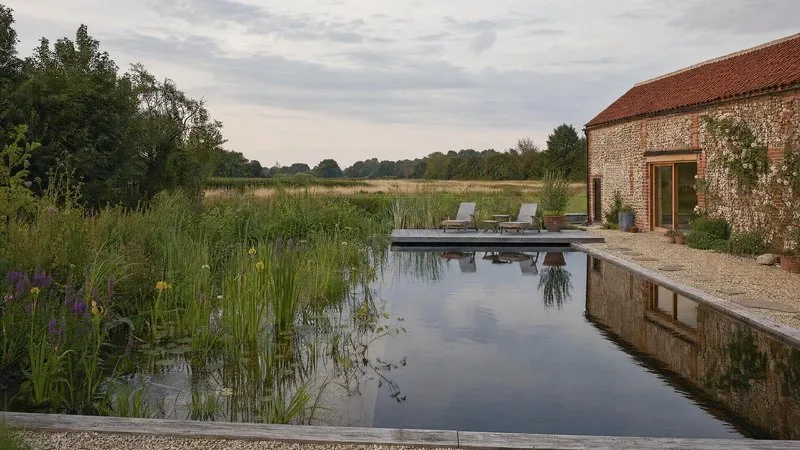
North-west towards Icklingham, Brandon and Elveden the ground is free-draining Breckland sand over chalk. Out on the Sandlings between Woodbridge and Aldeburgh it is Crag and blown sand. Neither holds water on its own, so those sites are designed around a liner from the first sketch.
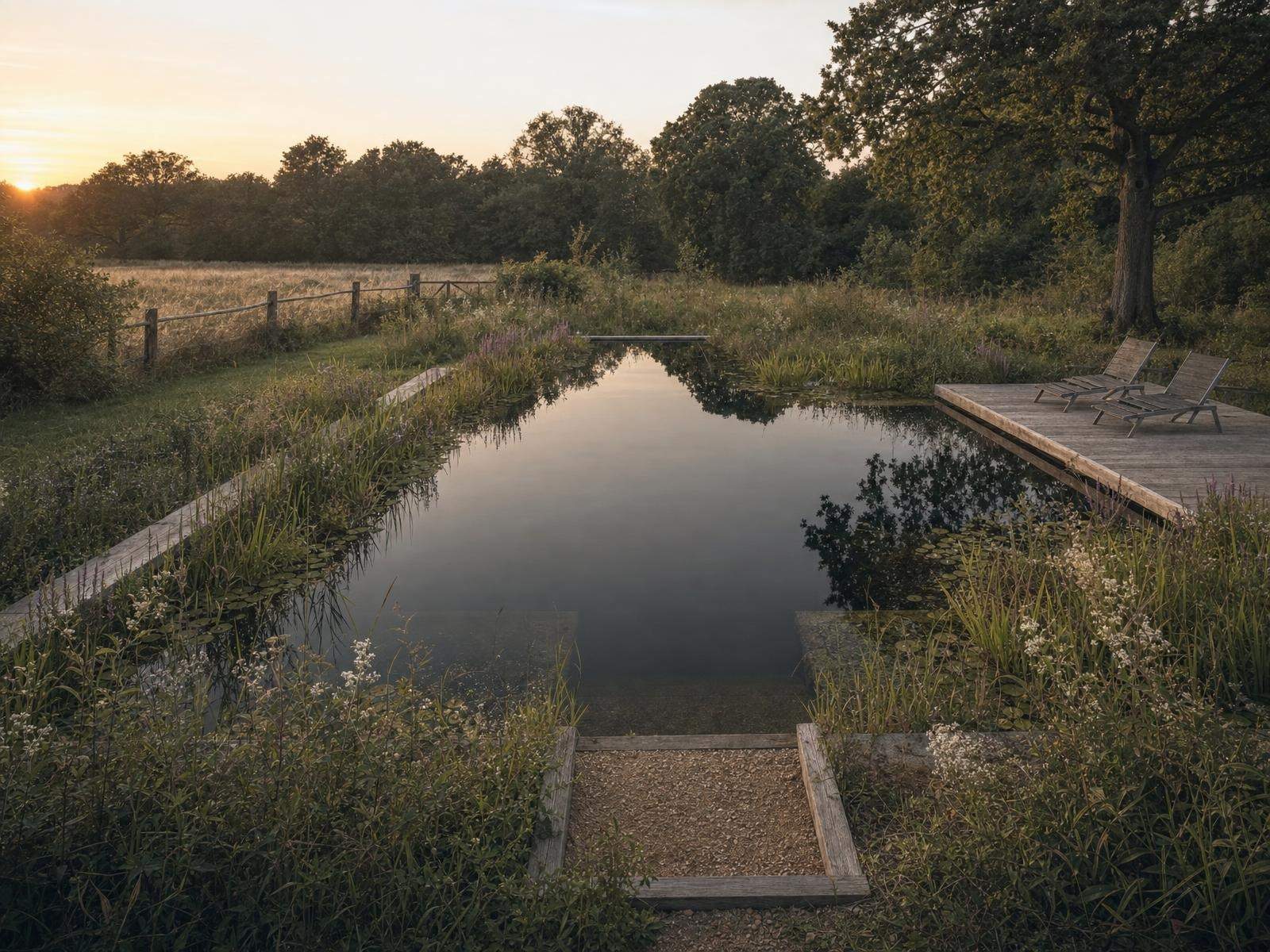
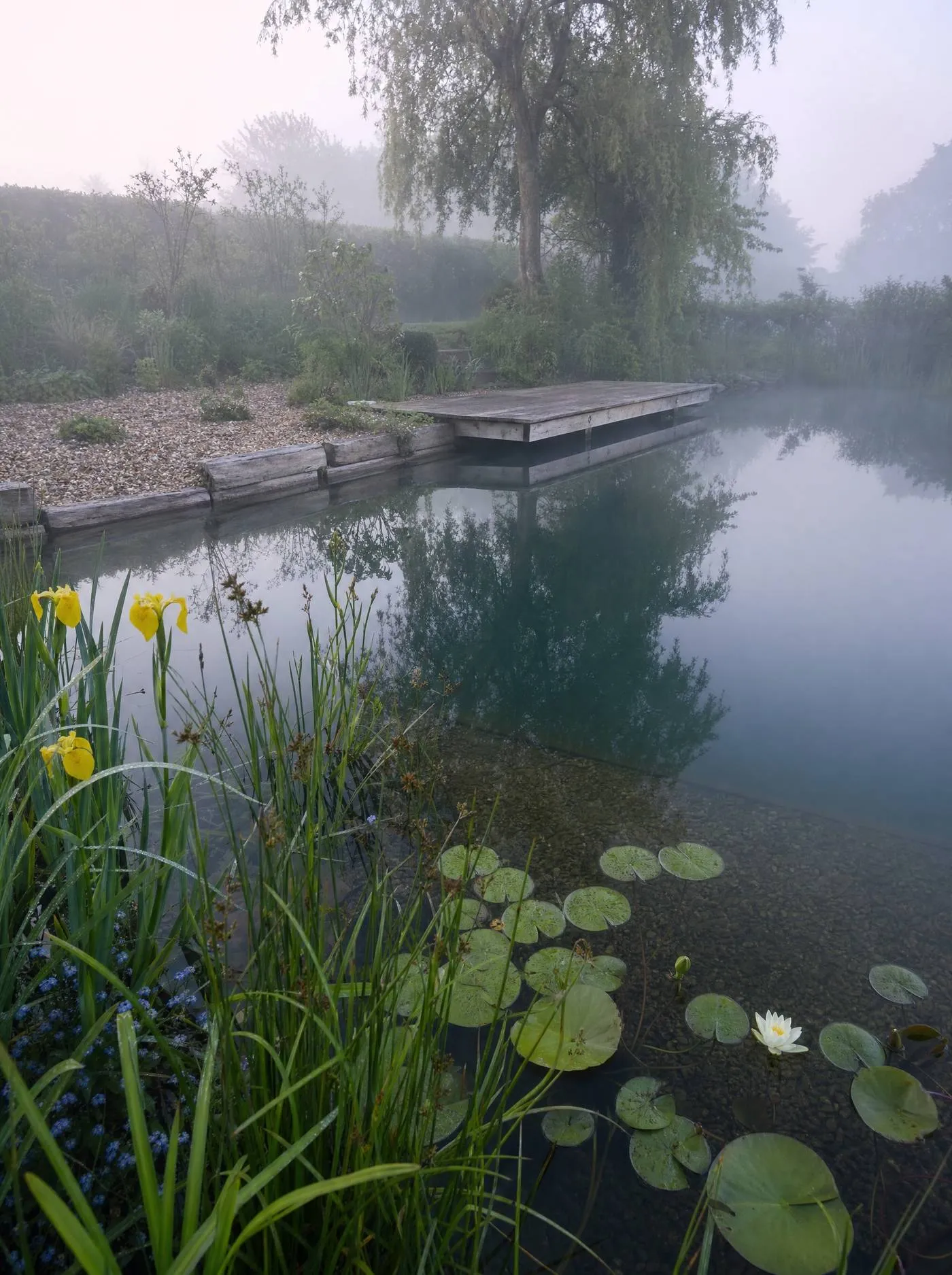
Trial pits first, then a design that works with the ground rather than against it. Luke handles the water: twelve years of hands-on aquatic systems, from reef aquariums to koi ponds, and the chemistry that keeps a regeneration zone stable. Elliot founded Suffolk Garden Maintenance and brings the landscape and the finish. A submerged oak beam separates the swim zone from the planting. No chlorine.
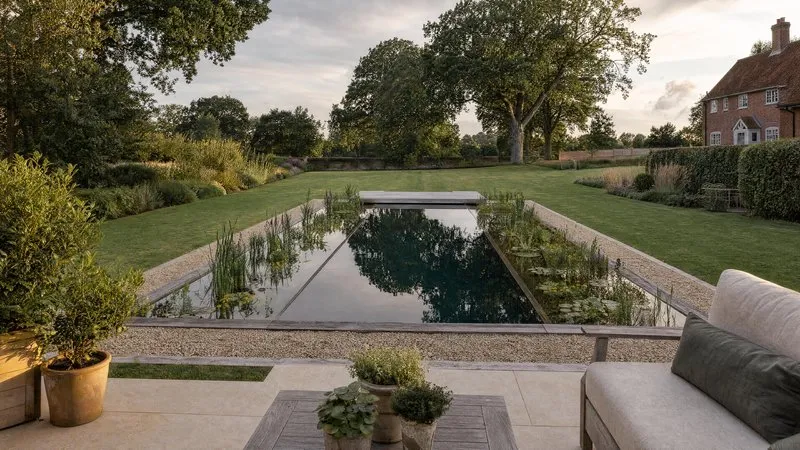
Suffolk is covered by Babergh, East Suffolk, Ipswich, Mid Suffolk and West Suffolk councils, and by the Broads Authority around Beccles, Bungay and Oulton Broad. Three new unitary councils were confirmed for the county in March 2026 but do not take over until 2028, so the existing councils are still the ones to apply to.
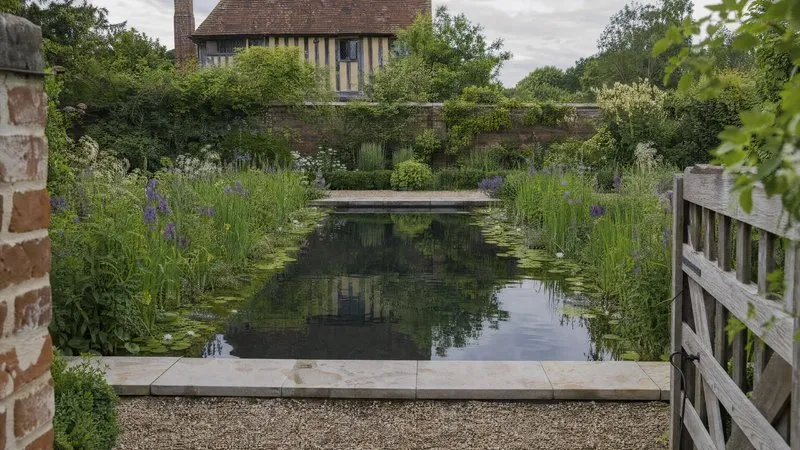
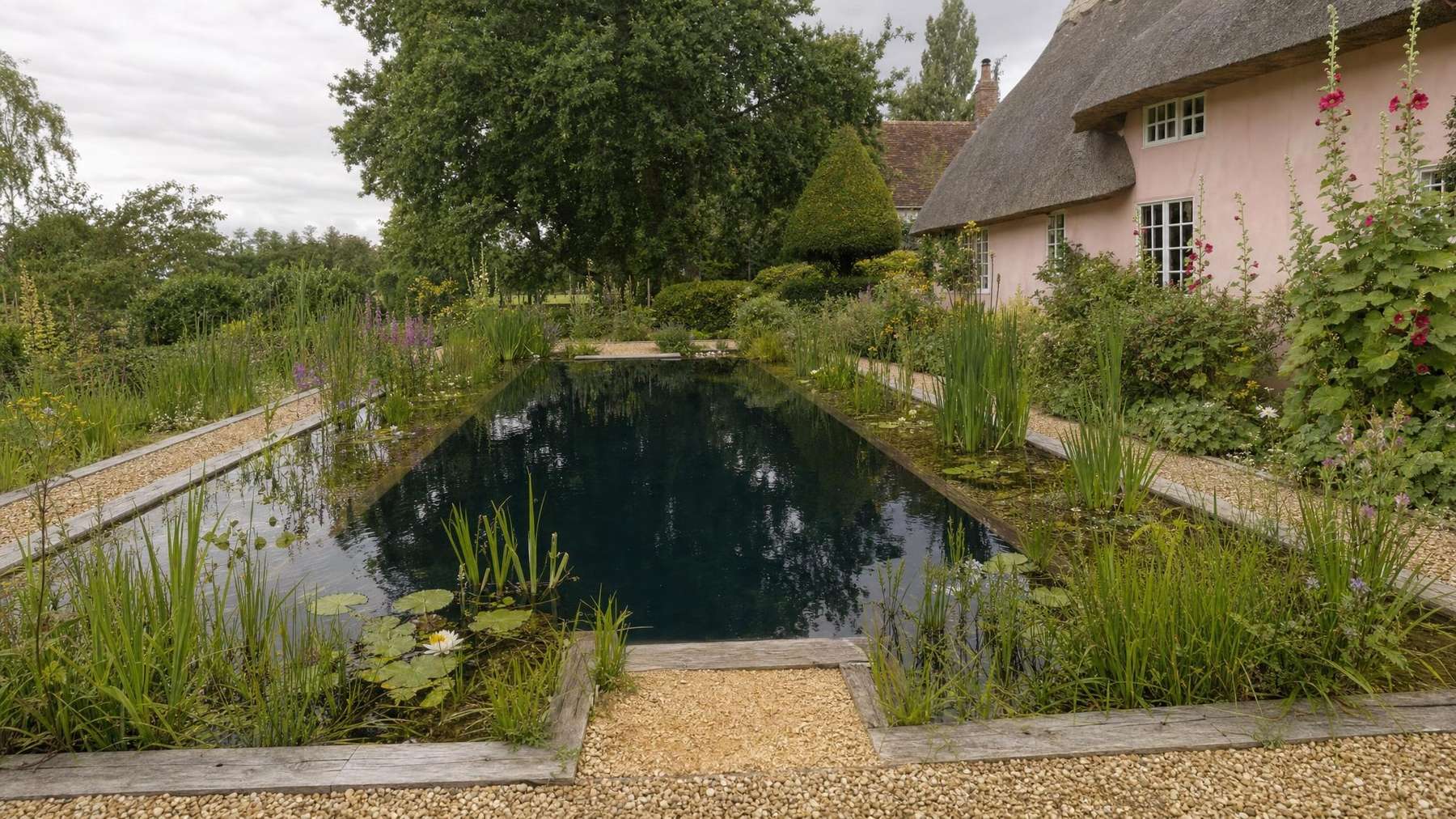
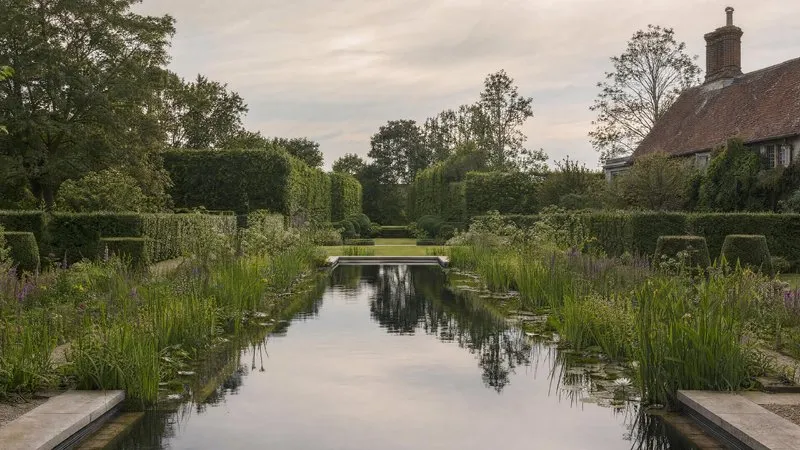
Timber frame and colourwashed render, longstraw thatch and peg tile in the south, black-glazed pantile towards the coast, crinkle-crankle walls, white brick from Woolpit, aisled barns. A pool in a garden like that should look settled rather than installed. Coping, edging and marginal planting are chosen against the house.
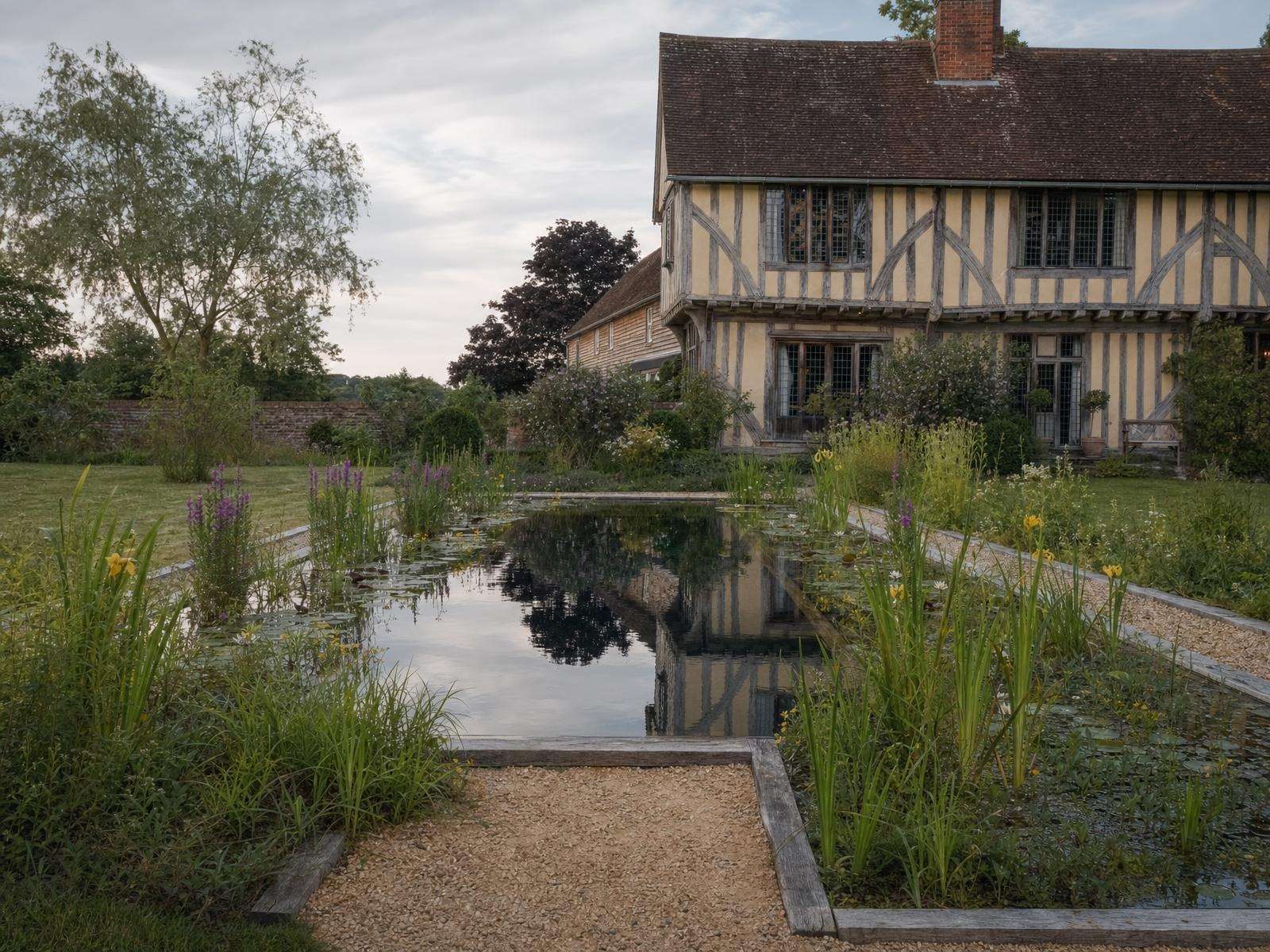
A broad diagonal band of chalky boulder clay runs across the county from Haverhill up to Lowestoft, and it holds water well. West and north-west of Bury it thins onto open chalk and Breckland sand. On the coast it is Crag. All three behave differently in a hole, and only trial pits settle which one you have.

Boulder clay on the High Suffolk plateau. Heavy going and large spoil volumes, but the one material here that can hold water without a liner, subject to testing.

Chalk under the Lark and Linnet valleys and across the west. Soft to dig but fissured, so it leaks. It is also a principal aquifer, which matters to the Environment Agency.

Breckland and Sandlings sand. Easy digging, poor bank stability, no retention without a liner. Crag groundwater near the coast runs high in dissolved iron and will stain.
Most of our Suffolk work sits within about an hour of Bury St Edmunds. Places we travel to regularly:
South Suffolk and the Stour valley: Lavenham, Long Melford, Clare, Cavendish, Sudbury, Boxford, Hadleigh, Kersey.
Central and north Suffolk: Woolpit, Stowmarket, Needham Market, Debenham, Eye, Framlingham, Halesworth.
The west and the coast: Newmarket, Mildenhall, Brandon, Haverhill, Woodbridge, Aldeburgh, Southwold.
Guide prices are ex VAT: swimming ponds from £45,000, natural pools and living pools from £80,000, wildlife ponds from £12,000. Design takes two to four weeks, the build eight to sixteen. Book a free design consultation and we will come and look at the site. No obligation.