No chlorine and no salt. Nothing to sting your eyes, dry your skin or bleach swimwear. You get out and you do not need to shower it off.
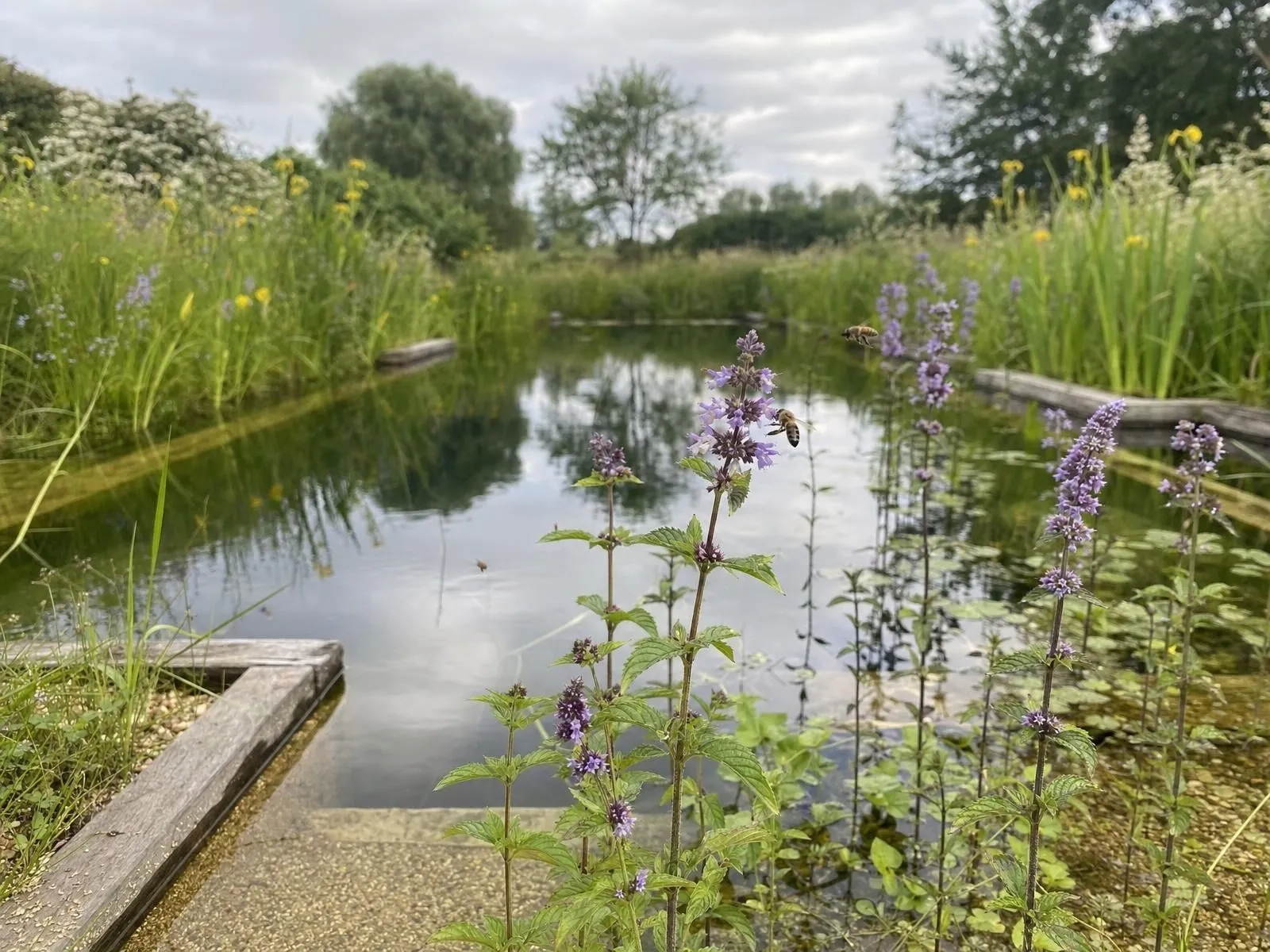
Swimming in living water is a different experience from a chlorine pool. Many owners keep swimming into the cooler months for the cold-water benefits.
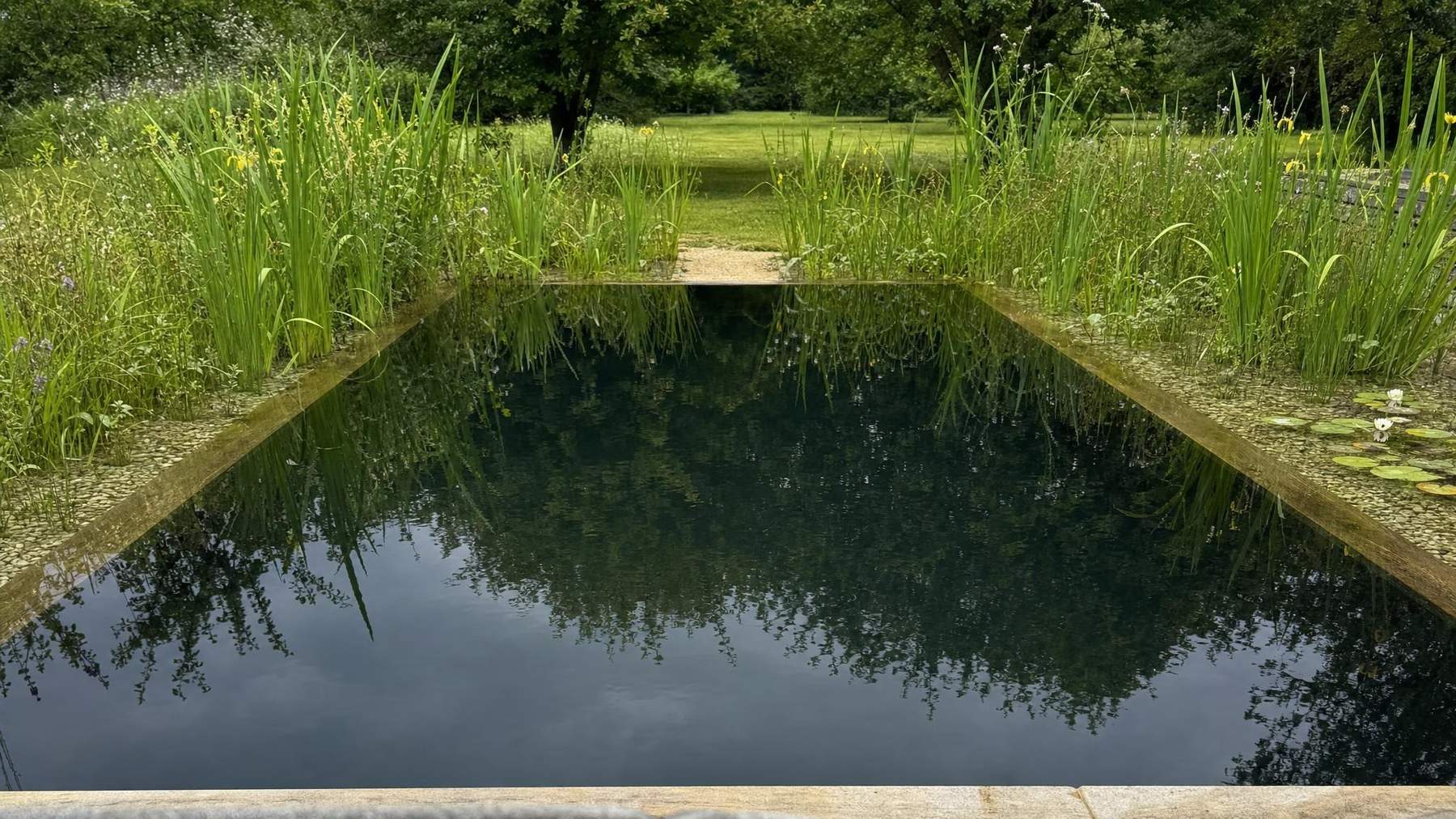
A natural pool works the way a healthy lake does. Aquatic plants and beneficial bacteria take up the nutrients that would otherwise feed algae, microscopic water life filters the water around the clock, and slow, continuous circulation carries the whole pool through that biology. Clear, soft water, held there by a working ecosystem rather than a chemical routine.
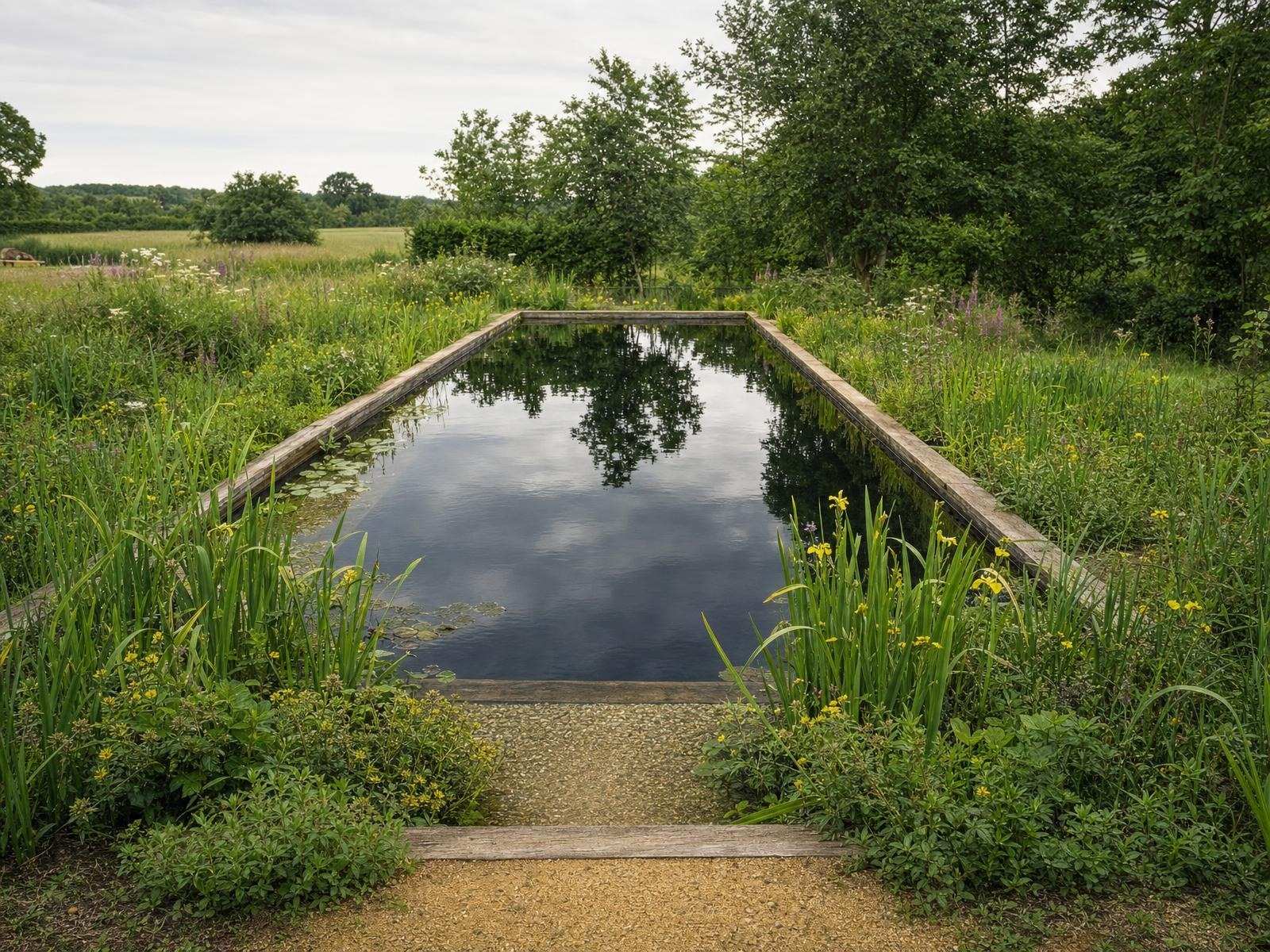
There are no chemicals to buy and dose, and the water is never drained and replaced. Running cost is mostly modest pump electricity, which comes in below a chlorine pool of the same size.
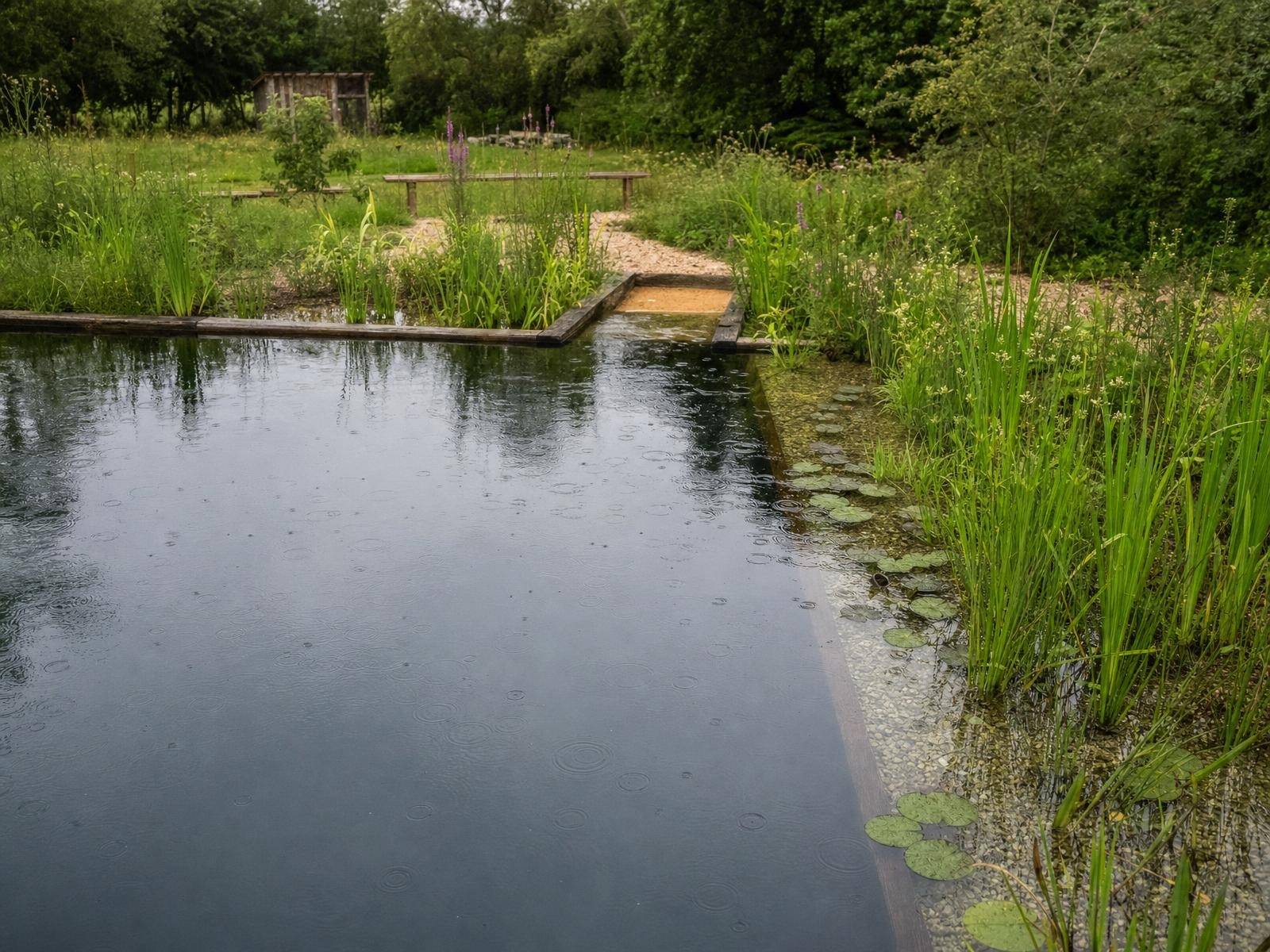
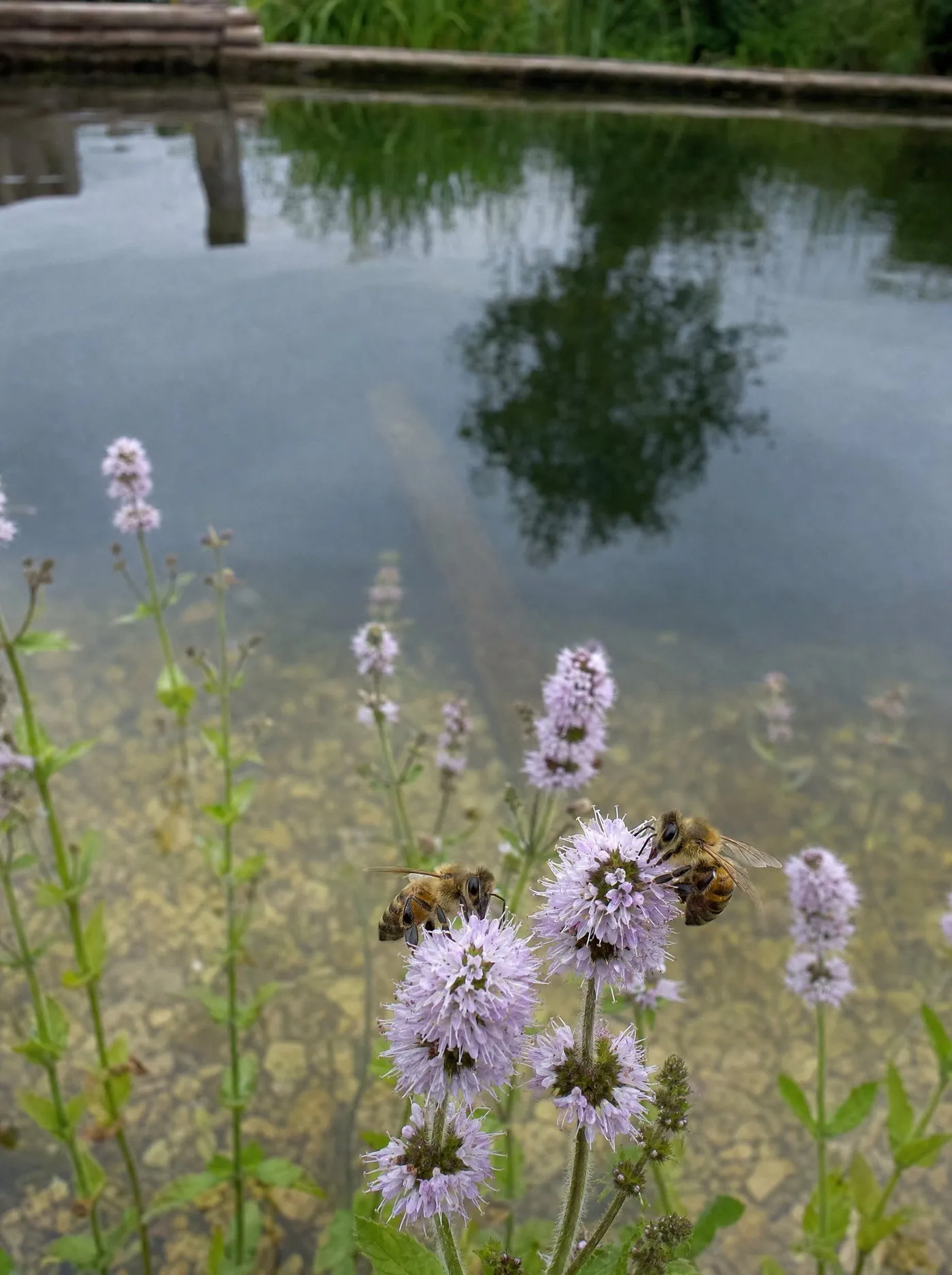
The planted zone brings dragonflies, frogs and birds into the garden, on their side of the pool rather than yours.
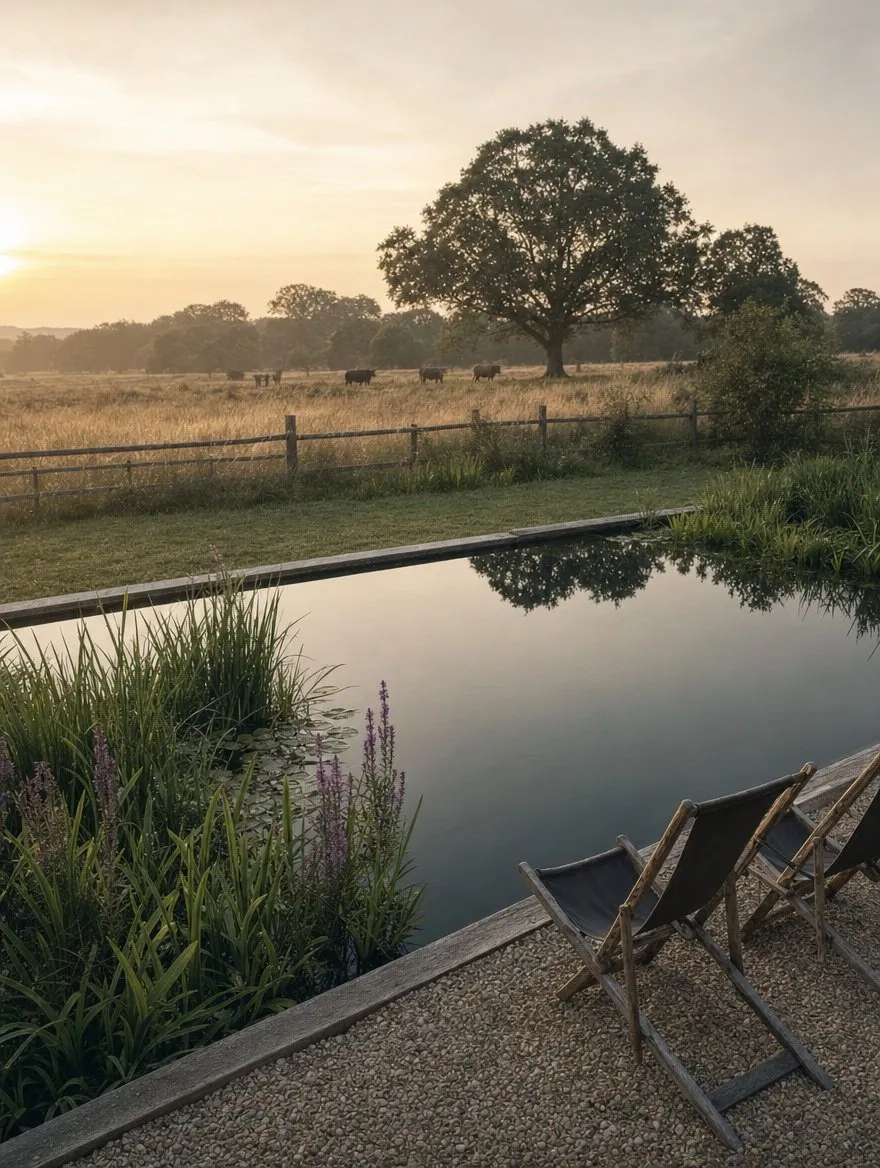
A natural pool is made of three parts. Each does a job, and it is the three working together that keep the water clear. Leave one out and the system does not hold.

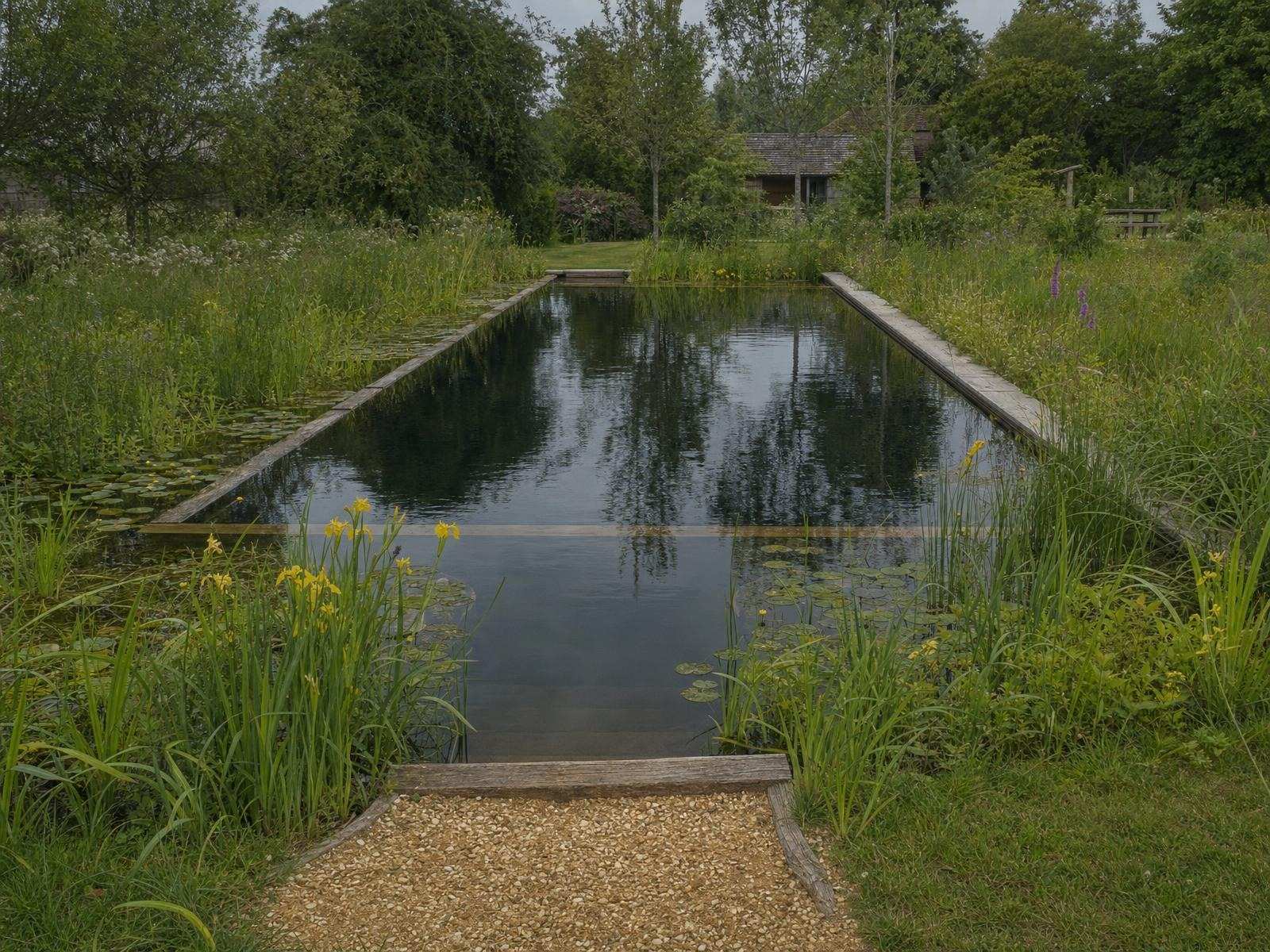
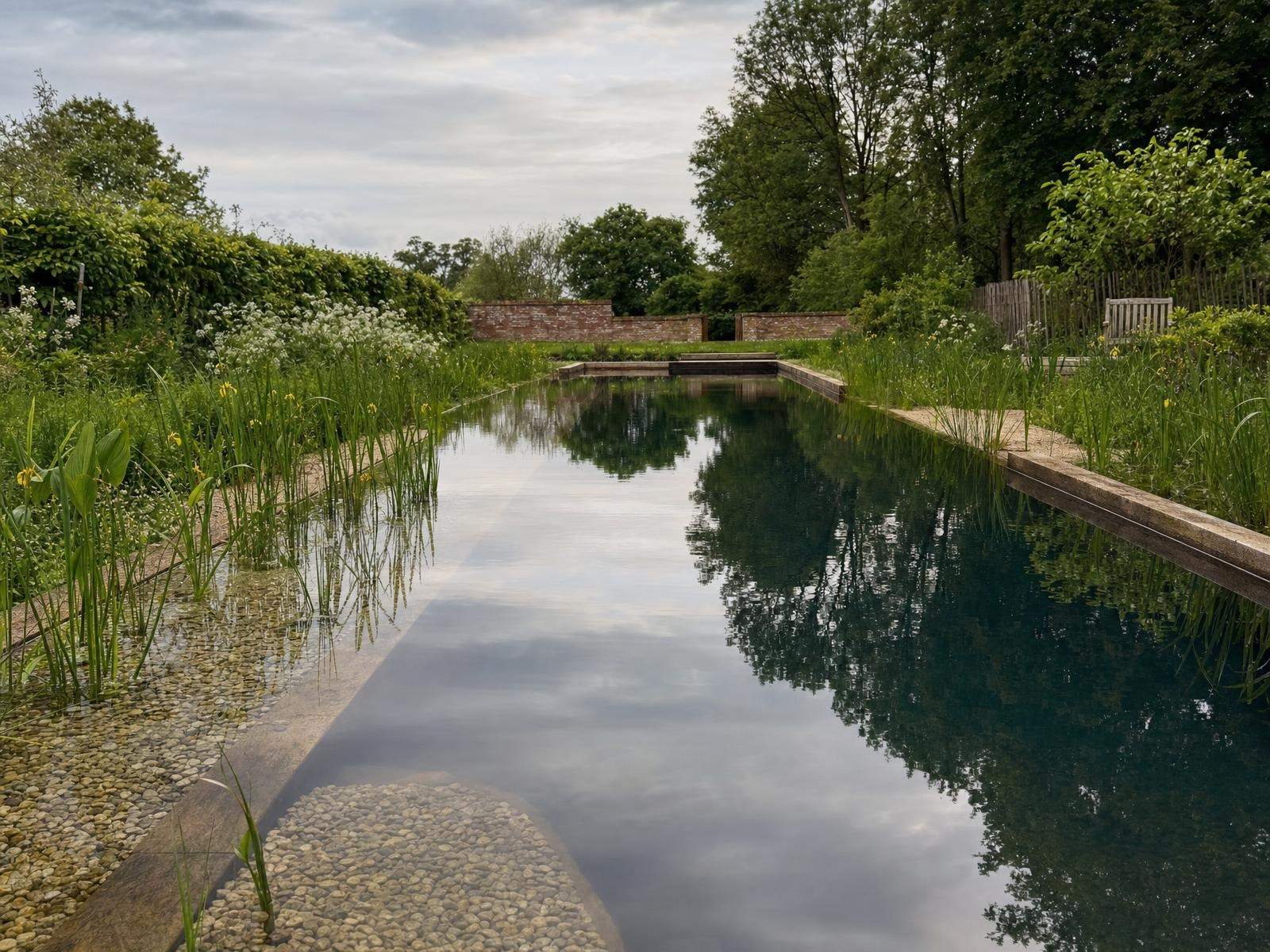
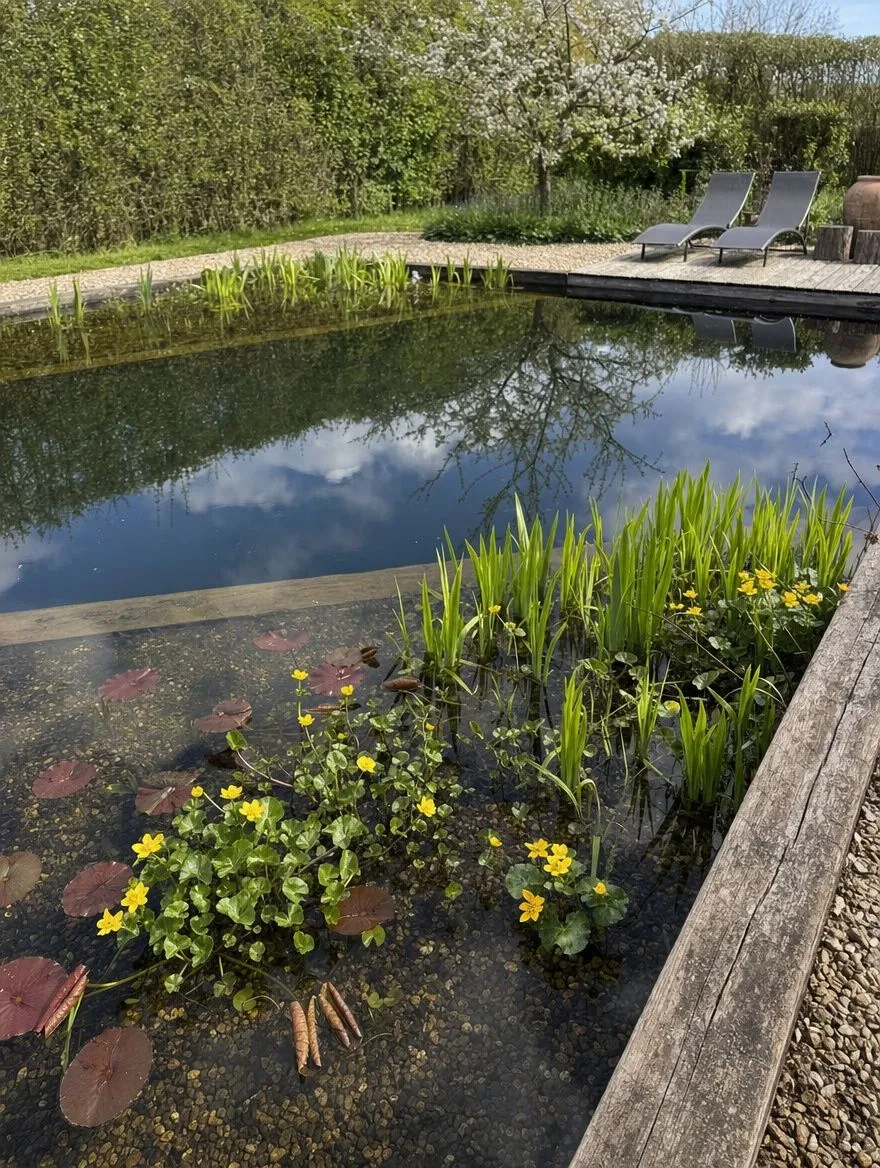
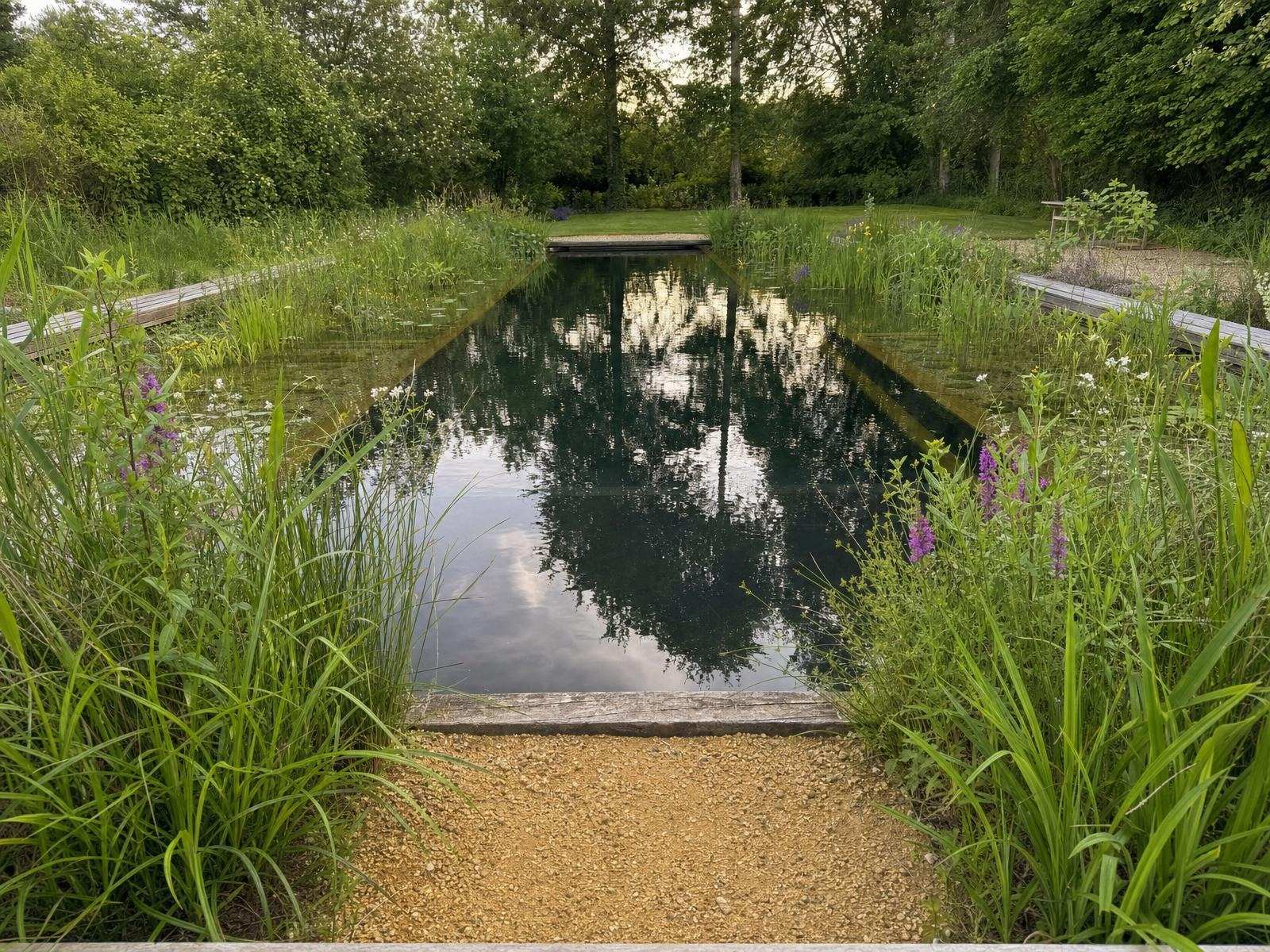
The swimming zone. Deep, clear and unplanted, with a smooth floor so swimmers stay visible. In our builds a submerged oak beam sits just below the surface, dividing the swim zone from the planting.
The regeneration zone. Shallower and planted, around half the pool's surface area, where plants and beneficial bacteria strip out the nutrients that would otherwise feed algae.
Circulation. A low-energy pump moves water slowly and continuously between the two zones, gently enough not to harm the life that does the filtering.
This is the objection everyone actually has. Green water is algae, and algae need nutrients, above all phosphorus. The regeneration zone strips them out, steady circulation carries the whole volume past the planting day and night, and the edges keep fertiliser-laden runoff out of the water. Plants alone treat the water they sit in. Plants plus circulation treat the pool.
Mosquitoes are not a problem. Larvae need still, stagnant water, and this water is always moving, in a pond full of the predators that eat them.
Maintenance is seasonal, not daily. Cut planting back, clear leaves in autumn, check the pump. No testing kit, no dosing.
It is as safe for children as any pool, and it can be heated. We never add fish, which eat the tiny creatures that polish the water. A wildlife pond is a different thing again, built for habitat rather than swimming.
If you are weighing a natural pool against a conventional one, the best next step is to look at your own garden. Book a free design consultation and we will visit, take measurements and talk through what would work on your site. No obligation.
Everything in a natural pool comes back to one element: phosphorus. Carbon and nitrogen can leave a pond as gas; phosphorus cannot. Whatever arrives stays until it is physically taken out, so the whole design works to keep it scarce. Starve the water of phosphorus and algae simply cannot get going.
Fill water matters. UK mains water carries added phosphate to protect the pipe network, so we design for rainwater fill and top-up wherever the site allows.
Run-off stays out. Rain washing off lawns and borders carries fertiliser, so the edges are detailed to shed it away from the pool rather than into it.
The autumn cut. Planting is cut back and taken away each autumn, physically removing the phosphorus it absorbed over the summer.
The planting is only half the workforce. Healthy pond water is alive with microscopic filter-feeders, daphnia among them, that sieve suspended algae out of the water day and night. Protect them and the water polishes itself.
No fish, ever. Fish eat the daphnia that keep the water clear, and a stocked pond soon turns green. It is the quickest way to undo a natural pool.
No ducks. Resident waterfowl damage planting and can carry the parasite behind swimmer's itch. Wild visitors passing through are no trouble.
Nothing introduced. Frogs, newts and dragonflies find the pool on their own within a season, and native planting does the rest.